Wednesday, November 26, 2008

The Greatest Nature Essay Ever

by Brian Doyle

Published in the November/December 2008 issue of Orion magazine

. . .would begin with an image so startling and lovely and wondrous that you would stop riffling through the rest of the mail, take your jacket off, sit down at the table, adjust your spectacles, tell the dog to lie down, tell the kids to make their own sandwiches for heavenssake, that’s why god gave you hands, and read straight through the piece, marveling that you had indeed seen or smelled or heard exactly that, but never quite articulated it that way, or seen or heard it articulated that way, and you think, man, this is why I read nature essays, to be startled and moved like that, wow.

The next two paragraphs would smoothly and gently move you into a story, seemingly a small story, a light tale, easily accessed, something personal but not self-indulgent or self-absorbed on the writer’s part, just sort of a cheerful nutty everyday story maybe starring an elk or a mink or a child, but then there would suddenly be a sharp sentence where the dagger enters your heart and the essay spins on a dime like a skater, and you are plunged into waaay deeper water, you didn’t see it coming at all, and you actually shiver, your whole body shimmers, and much later, maybe when you are in bed with someone you love and you are trying to evade his or her icy feet, you think, my god, stories do have roaring power, stories are the most crucial and necessary food, how come we never hardly say that out loud?

The next three paragraphs then walk inexorably toward a line of explosive Conclusions on the horizon like inky alps. Probably the sentences get shorter, more staccato. Terser. Blunter. Shards of sentences. But there’s no opinion or commentary, just one line fitting into another, each one making plain inarguable sense, a goat or even a senator could easily understand the sentences and their implications, and there’s no shouting, no persuasion, no eloquent pirouetting, no pronouncements and accusations, no sermons or homilies, just calm clean clear statements one after another, fitting together like people holding hands.

Then an odd paragraph, this is a most unusual and peculiar essay, for right here where you would normally expect those alpine Conclusions, some Advice, some Stern Instructions & Directions, there’s only the quiet murmur of the writer tiptoeing back to the story he or she was telling you in the second and third paragraphs. The story slips back into view gently, a little shy, holding its hat, nothing melodramatic, in fact it offers a few gnomic questions without answers, and then it gently slides away off the page and off the stage, it almost evanesces or dissolves, and it’s only later after you have read the essay three times with mounting amazement that you see quite how the writer managed the stagecraft there, but that’s the stuff of another essay for another time.

And finally the last paragraph. It turns out that the perfect nature essay is quite short, it’s a lean taut thing, an arrow and not a cannon, and here at the end there’s a flash of humor, and a hint or tone or subtext of sadness, a touch of rue, you can’t quite put your finger on it but it’s there, a dark thread in the fabric, and there’s also a shot of espresso hope, hope against all odds and sense, but rivetingly there’s no call to arms, no clarion brassy trumpet blast, no website to which you are directed, no hint that you, yes you, should be ashamed of how much water you use or the car you drive or the fact that you just turned the thermostat up to seventy, or that you actually have not voted in the past two elections despite what you told the kids and the goat. Nor is there a rimshot ending, a bang, a last twist of the dagger. Oddly, sweetly, the essay just ends with a feeling eerily like a warm hand brushed against your cheek, and you sit there, near tears, smiling, and then you stand up. Changed.

Invest in Blue Gold

With water becoming ever more valuable, an investment in necessary texts will help you grow new yields in and with water...ponds have excellent potential for many crops.
Earth Ponds: The Country Pond Maker's Guide to Building, Maintenance and RestorationEarth Ponds Sourcebook: The Pond Owner's Manual and Resource Guide, Second EditionEarth Ponds A to Z: An Illustrated Encyclopedia
Earth Ponds: The Country Pond Maker's Guide...
by Tim Matson
$16.46
Earth Ponds Sourcebook: The Pond Owner's Ma...
by Tim Matson
$14.93
Earth Ponds A to Z: An Illustrated Encyclop...
by Tim Matson
$12.89

Aquaculture: The Farming and Husbandry of Freshwater and Marine OrganismsEnvironmental Impacts of Aquaculture (Sheffield Biological Sciences)Aquaculture: Farming Aquatic Animals and Plants (Fishing News Books)
Aquaculture: The Farming and Husbandry of F...
by John E. Bardach
$150.00
Environmental Impacts of Aquaculture (Sheff...
Aquaculture: Farming Aquatic Animals and Pl...
$99.89
Changing the Face of the Waters: The Promise and Challenge of Sustainable Aquaculture (Agriculture and Rural Development Series) (Agriculture and Rural Development Series)Freshwater Crayfish Aquaculture in North America, Europe, and Australia: Families Astacidae, Cambaridae, and ParastacidaeDynamics of Pond Aquaculture
Changing the Face of the Waters: The Promis...
by World Bank
$25.00
Freshwater Crayfish Aquaculture in North Am...
by Jay Huner
$39.37
Dynamics of Pond Aquaculture
by Claude E. Boyd
Swimming in Circles: Aquaculture and the End of Wild OceansFreshwater Aquaculture: A Handbook for Small Scale Fish Culture in North AmericaUrban Aquaculture (Cabi Publishing)
Swimming in Circles: Aquaculture and the En...
by Paul Molyneaux
$12.44
Freshwater Aquaculture: A Handbook for Smal...
by William McLarney
Urban Aquaculture (Cabi Publishing)

Zombie Economics

By James Howard Kunstler for ClusterFuck Nation


Though Citicorp is deemed too big to fail, it's hardly reassuring to know that it's been allowed to sink its fangs into the Mother Zombie that the US Treasury has become and sucked out a multi-billion dollar dose of embalming fluid so it can go on pretending to be a bank for a while longer. I employ this somewhat clunky metaphor to point out that the US Government is no more solvent than the financial zombies it is keeping on walking-dead support. And so this serial mummery of weekend bailout schemes is as much of a fraud and a swindle as the algorithm-derived-securities shenanigans that induced the disease of bank zombification in the first place. The main question it raises is whether, eventually, the creation of evermore zombified US dollars will exceed the amount of previously-created US dollars now vanishing into oblivion through compressive debt deflation.

My guess, given the usual time-lag factor, is that the super-inflation snap-back will occur six to eighteen months from now. And the main result of all this will be our inability to buy the imported oil that comprises two-thirds of the oil we require to keep WalMart and Walt Disney World running. At some point, then, in the early months of the Obama administration, we'll learn that "change" is not a set of mere lifestyle choices but a wrenching transition away from all our familiar and comfortable habits into a stark and rigorous new economic landscape.

The credit economy is dead and the dead credit residue of that dead economy is going where dead things go. It came into the world as "money" and it is going out of this world as a death-dealing disease, and we're not going to get over this disease until we stop generating additional zombie money out of no productive activity whatsoever. The campaign to sustain the unsustainable is, besides war, the greatest pitfall this society can stumble into. It represents a squandering of our remaining scant resources and can only produce the kind of extreme political disappointment that wrecks nations and leads to major conflicts between them. I don't know how much Mr. Obama buys into the current adopt-a-zombie program -- his Treasury designee Timothy Geithner was apparently in on this weekend's Citicorp deal -- but the President would be wise to steer clear of whatever the walking dead in the Bush corner are still up to.


All the activities based on getting something-for-nothing are dead or dying now, in particular buying houses and cars on credit and so it should not be a surprise that the two major victims are the housing and car industries. Notice, by the way, that these are the two major ingredients of an economy based on building suburban sprawl. That's over, too. We're done building it and the stuff we've already built is destined to loose both money value and usefulness as the wrenching transition goes forward.

All this obviously begs the question: what kind of economy are we going to live in if the old one is toast? Well, it's also pretty obvious that it will have to be based on activities productively aimed at keeping human beings alive in an ecology that has a future. Once you grasp this, you will see that there is no reason to despair and more than enough for all of us to do, so we can recover from the zombie nation disease and get on with the next chapter of American history -- and I sure hope that Mr. Obama will get with the new program.

To be specific about this new economy, we're going to have to make things again, and raise things out of the earth, locally, and trade these things for money of some kind that we earn through our own productive activities. Don't make the mistake of thinking this is optional. The only other option is to go through a violent sociopolitical convulsion. We ought to know from prior examples in world history that this is not a desirable experience. So, to avoid that, we really have to put our shoulders to the wheel and get to work on things that matter, and do it at a scale that is consistent with what the world really has to offer right now, especially in terms of available energy.

In my view -- and I know this is controversial -- a much larger proportion of the US population will have to be employed in growing the food we eat. There are many ways of arranging this, some more fair than others, and I hope the better angels of our nature steer us in the direction of fairness and justice. The prospects of a devalued dollar imply that we very shortly will not be able to get the all the oil-and-gas based "inputs" that have made petro-agriculture possible the past century. The consequences of this are so unthinkable that we have not been thinking about it. And, of course, the further implications of current land-use allocation, and the property ownership issues entailed, suggests formidable difficulties in re-arranging the farming sector. The sooner we face all this, the better.

As the fiesta of "globalism" (Tom Friedman-style) draws to a close -- another consequence of currency problems -- we'll have to figure out how to make things in this country again. We will not be manufacturing things at the scale, or in the manner, we were used to in, say, 1962. We'll have to do it far more modestly, using much more meager amounts of energy than we did in the past. My guess is that we will get the electricity for doing this mostly from water. It may actually be too late -- from a remaining capital resources point-of-view -- to ramp up a new phase of the nuclear power industry (and there are plenty of arguments from the practical and economic to the ethical against it). But we have to hold a public discussion about it, if only to clear the air and get on with other things, namely the new activities of alt.energy. But I would hasten to warn readers (again!) that we'll probably have to do these things more modestly too (don't count on giant wind "farms"), and that we are liable to be disappointed by what they can actually provide for us (don't expect to run WalMart on wind, solar, algae-fuels, etc).

In any case, we're not going back to a "consumer" economy. We're heading into a hard work economy in which people derive their pleasures and gratification more traditionally -- mainly through the company of their fellow human beings (which is saying a lot, for those of you who have forgotten what that's about). Our current investments in "education" -- i.e. training people to become marketing executives for chain stores -- will delude Americans for a while about what kind of work is really available. But before long, the younger adults will realize that there are enormous opportunities for them in a new and very different economy. We will still have commerce -- even if it's not the K-Mart blue-light-special variety -- and the coming generation will have to rebuild all the local, multi-layered networks of commercial inter-dependency that were destroyed by the rise of the chain stores. In short, get ready for local business. It will surely be part-and-parcel of our local food-growing and manufacturing activities.

I hate to keep harping on this -- but since nobody else is really talking about it, at least in the organs of public discussion, the job is left to me -- we have to get cracking on the revival of the railroad system in this country, if we expect to remain a united country. This is such a no-brainer that the absence of any talk about it is a prime symptom of the zombie disease that has eaten away our brains. Automobiles (the way we use them) and airplanes are utterly dependent on liquid hydrocarbon fuels, and you can be certain we'll have trouble getting them. You can run trains by other means -- electricity being state-of-the-art in those parts of the world that do it most successfully. I know that California just voted to create a high-speed rail link between Los Angeles and San Francisco. It's an optimistic sign, but it shows more than a little techno-grandiose over-reach. High speed rail would require a mega-expensive re-do of the tracks. We need to scale our ambitions for this more realistically. California (and every other region of America) would benefit much more from normal-speed trains running every hour on the hour on tracks that already exist than from a mega-expensive, grandiose sci-fi program that might not get built for ten years. The dregs of the Big Three automakers can and should be reorganized to produce the rolling stock for a revived railroad system.

Even amidst the financial carnage underway right now, the public is enjoying a respite from high-priced gasoline, but it is due to be short-lived. As I've already said, we are in danger not just of oil prices going way back up again, but of losing access to our supplies from the exporting countries. In other words, we're just as likely to face shortages as high prices, and soon. Oil shortages are certain to produce a political freak-out here unless we get our heads screwed on right -- and this means that Mr. Obama had better prepare quickly for a comprehensive action plan in the face of such an emergency (which has to include a robust public information initiative).

In the meantime, Mr. Obama must dissociate himself from all activities aimed at the care-and-feeding of zombies. Mr. Obama is correct that there is one president and one government at a time, and since this is the case in reality, he must avoid being contaminated by the choices they make as their clock ticks out. Obviously, world markets might be more disturbed if Mr. Obama were to step up and actively contradict everything that is being done to cultivate zombies right now. He is in a very delicate position. But being a man of intelligence and sensibility, he may successfully navigate this rough passage.

That this melt-down is building straight into the Christmas holidays is one of those accidents of history that leaves one reeling in wonder and nausea. The cable networks better be prepared to bombard the public with round-the-clock showings of It's A Wonderful Life, because they're going to need all the moral support they can get as zombies stalk through the silent night, holy night.

Friday, November 21, 2008

"What is the most beautiful thing I can do?"

Money and the Crisis of Civilization

Charles Eisenstein

Suppose you give me a million dollars with the instructions, "Invest this profitably, and I'll pay you well." I'm a sharp dresser -- why not? So I go out onto the street and hand out stacks of bills to random passers-by. Ten thousand dollars each. In return, each scribbles out an IOU for $20,000, payable in five years. I come back to you and say, "Look at these IOUs! I have generated a 20% annual return on your investment." You are very pleased, and pay me an enormous commission.

Now I've got a big stack of IOUs, so I use these "assets" as collateral to borrow even more money, which I lend out to even more people, or sell them to others like myself who do the same. I also buy insurance to cover me in case the borrowers default -- and I pay for it with those self-same IOUs! Round and round it goes, each new loan becoming somebody's asset on which to borrow yet more money. We all rake in huge commissions and bonuses, as the total face value of all the assets we've created from that initial million dollars is now fifty times that.

Then one day, the first batch of IOUs comes due. But guess what? The person who scribbled his name on the IOU can't pay me back right now. In fact, lots of the borrowers can't. I try to hush this embarrassing fact up as long as possible, but pretty soon you get suspicious. You want your million dollars back -- in cash. I try to sell the IOUs and their derivatives that I hold, but everyone else is suspicious too, and no one buys them. The insurance company tries to cover my losses, but it can only do so by selling the IOUs I gave it!

So finally, the government steps in and buys the IOUs, bails out the insurance company and everyone else holding the IOUs and the derivatives stacked on them. Their total value is way more than a million dollars now. I and my fellow entrepreneurs retire with our lucre. Everyone else pays for it.

This is the first level of what has happened in the financial industry over the past decade. It is a huge transfer of wealth to the financial elite, to be funded by US taxpayers, foreign corporations and governments, and ultimately the foreign workers who subsidize US debt indirectly via the lower purchasing power of their wages. However, to see the current crisis as merely the result of a big con is to miss its true significance.

I think we all sense that we are nearing the end of an era. On the most superficial level, it is the era of unregulated casino-style financial manipulation that is ending. But the current efforts of the political elites to fix the crisis at this level will only reveal its deeper dimensions. In fact, the crisis goes "all the way to the bottom." It arises from the very nature of money and property in the world today, and it will persist and continue to intensify until money itself is transformed. A process centuries in the making is in its final stages of unfoldment.

Money as we know it today has crisis and collapse built into its basic design. That is because money seeks interest, bears interest, and indeed is born of interest.

Read the rest...

Green slime fuel farms in Colorado

Colorado Company to Take Algae-Based Fuel to the Next Level

AlgaeSolix’s prototype bioreactor harvests oil from algae. A planned production plant in southwest Colorado will be similar to this operation, though significantly larger in scale. (Photo: Solix)

A Colorado company will break ground early next year on an algae farm that is intended to produce thousands of gallons of substitutes for gasoline and diesel at a rate per acre far higher than current biofuel projects.

Solix Biofuels, of Fort Collins, said on Monday that it had raised $15.5 million in capital and would begin with a five-acre plot to produce “biocrude.’’ That will in turn be shipped to an oil refinery in place of crude oil, according to Douglas R. Henston, the company chief executive.

Investors include the Southern Ute Indian Tribe, on whose reservation, near Durango, the farm will be located; the Valero Energy Corporation, the refinery operator; and Infield Capital, an investment fund.

Algae has held special appeal for renewable energy researchers — and some investors — because the organism readily converts sunlight and carbon dioxide into a hydrocarbon fuel, producing an oil that can harvested for use as biodiesel. And the more CO2 present, the faster the algae grows. That holds the promise of cleaner-burning fuels that simultaneously scrub CO2 from the atmosphere during their production.

Algae can also regenerate at a remarkable rate, doubling its volume in a matter of hours under the right conditions, and yielding far more of its body weight in oil than any biofuel feed stock currently in use.

Solix has already achieved production of 1,500 gallons an acre per year at a test plot in Fort Collins, and the company is expecting yields of 2,500 to 3,000 gallons an acre per year, said Mr. Henston.

In contrast, soybeans, the main source of biodiesel used in this country, yields 50 to 70 gallons per acre.

But creating the right conditions for algae to serve as a biofuel feed stock at commercial scale remains an expensive proposition. Carbon dioxide needs to be pumped in from outside sources to induce the kind of rapid growth needed to make the process economically feasible. Water temperatures, too, need to be carefully controlled.

Solix uses a “photo-bioreactor system” to overcome these hurdles. These consist of long, narrow, sealed containers, immersed in water, into which carbon dioxide — harvested from a nearby natural gas well — and organic nutrients are circulated. Algae take hydrogen atoms from the water and carbon atoms from the carbon dioxide, to produce a hydrocarbon liquid, which is then recovered by centrifuge or solvent extraction.

The algae strain to be used in Colorado is a fresh-water variety, but other varieties, including marine algae, can be used, Mr. Henston said, because the system is “species agnostic.’’

The Competence Project: How to Get Competent, and What You Get If You Do

Sharon November 20th, 2008

Ok, there was a lot of enthusiasm for my first post on my new project - people seemed to think I was starting a challenge. That hadn’t occurred to me, but heck, I’m for it - a new challenge it is. I challenge each of you to pick some area of your skill set that’s kind of weak and strengthen it. And when you feel like you’ve gotten competent, well, pick a new skill.

In the other thread, Dewey had the best idea (thanks Dewey!) - I’m going hand out official “Competence Project Merit Badges” (and hope various scouting organizations won’t sue me ;-)) to people who meet their goals. So post your first project, and I’ll have periodic threads in which people can be awarded their merit badges for whatever skill set you are trying to gain. Merit badges are completely virtual, of course, but if someone wants to make up a spiffy visual that people can add to their blog, I’m all for it.

Several people asked how they should go about learning their skill set, and I have a few suggestions for resources. I’m sure the rest of you have some good ideas as well.

1. Apprentice yourself to someone - this is by far the very best way to learn a skill, and it can save you an awful lot of trial and error. Got a neighbor who is going hunting, fixing his roof or crocheting a sweater? Why not ask if you can help out/get some lessons from them. Barter is a great tool here.

2. Take a class. Local adult education courses often cover things like this - check out their offerings. And stores that sell craft or specialty items often have classes as well - for example, Home Depot offers regular courses, knitting and quilting shops have knitting and quilting classes, etc… Just make sure that the class you are getting works with the skill set you are trying to gain - for example, if you want to learn woodworking with hand tools, make sure that you are getting a class that teaches this.

2. Use internet video - this isn’t an option for me or the rest of the world afflicted with dial up, but it is awfully nice for those who can take advantage. That way, you can actually see how to take your radio apart, or how the purl stitch works.

3. Visit your local library and take out books designed for children. Kids books have to cut the extraneous stuff out, and offer extremely clear language and direct instructions. I finally learned how to knit by using Melanie Falick’s excellent children’s book on the subject, _Kids Knitting_ and I’ve often found books for kids and teens clearer than those for adults.

4. Find comprehensive book sources - besides the ubiquitous “Dummies” series (which varies a lot in quality), Reader’s Digest has an excellent series of how-to books that cover a wide range of skills including _The Complete Do-It Yourself Manual_ (which a builder friend noted would allow you to pretty much build a house from scratch with), _Practical Encyclopedia of Crafts_ and _Skills and Tools_. I’m also partial to Gene Logsdon’s _Practical Skills_ book.

5. Specialize, specialize. I’m a big fan of the personal library if you have space. I find it really useful to have books (or material printed from the internet - never know when the service will go down, computer will be fried or the power will be out) that give detailed information and allow you to get more advanced. Honestly, we’re not all going to get really good at a lot of these things - most of us will have pretty basic skills. Still, I think if you have the money (and these are the sorts of books that often show up quite cheaply on the internet, and frequently at yard sales) it is good to have specialized books for skills you might want or need to invest some energy in. So, for example, I think that while a general crafts book will probably teach you to knit or purl, you might want a sock knitting book, or a mitten book if you knit a lot of them. Basic woodworking stuff in the above books will get you fairly far, but if you dream of building outdoor structures, picking a book that focuses on building tools for farm and garden would be good. I find it is easiest to push myself to pick up a skill if I’m doing something I really want to do - so if you can’t bear the thought of sewing the traditional pair of pajama pants as a first project, it might be worth investing in a book that will teach you to make something you really do want to make.

Ok, everyone sign up for their first merit badge project, and in a week or two, we’ll all update each other on how it is going. My first project? I’ve got a toilet that needs replacing. Let’s just say that the replacement toilet has been sitting next to the defective toilet for a very, very long time.

Sharon

Sunday, November 16, 2008

Saturday, November 15, 2008

Learning to Stand Up - Regrowing a National Spine

Power to, for, of and by the people.....add your voice!!!!

The Backbone Campaign is a grassroots effort to embolden citizens and elected officials to stand up for progressive values. We are expanding the political dialogue by providing creative tools for citizens and the progressive movement. The backbone symbolizes an interlocking agenda, a coalition, and the personal courage necessary to fight for a future worthy of our children.

With this platform, we declare our commitment to common cause and our desire for clear commitments from our elected officials. This platform is founded in a shared vision of a sustainable and just economy with respect for the environment, human rights, and a culture of peace. It is grounded in the values of the United States Constitution, and Bill of Rights, the Universal Declaration of Human Rights, and the Earth Charter. Our platform is a bold, uncompromised position on the most fundamental questions of our democracy.

Please feel free to participate in the building of this document, whether that is by making comments on both the listing of issues and the issues themselves.

This Platform tool has evolved over the past year based on input from many people. We're working to improve it all the time.

This is a living document, the contents of which will evolve. We hope the spirit of common cause will guide us toward establishing a foundation built from our ability to agree, rather than our penchant for argument.

A Living Economy Emerges from the Dying Economy

Hearing BALLE founder Judy Wicks recently in Bloomington, IN was a real inspiration. You owe it to your neighborhood, town, city, region, state to learn more and get involved. BALLE will be an important group helping Americans relocalize their cultures and economies.

A Living Economy

The primary purpose of a true market economy is not to make money for the rich and powerful. When Adam Smith conceptualized the idea of the market economy in his classic The Wealth of Nations, he had in mind economies that allocate human and material resources justly and sustainably to meet the self-defined needs of people and community.

When enterprises are locally rooted, human-scale, owned by stakeholders, and held accountable to the rule of law by democratically elected governments, there is a natural incentive for all concerned to take human and community needs and interests into account. When income and ownership are equitably distributed, justice is served and political democracy is strong. When needs are met locally by locally owned enterprises, people have greater control over their lives, money is recycled in the community rather than leaking off into the global financial casino, jobs are more secure, economies are more stable, and there are the means and the incentives to protect the environment and to build the relationships of mutual trust and responsibility that are the foundation of community.

Our quality of life would be stunningly different if we based economic decisions on life values rather than purely financial values—a natural choice if owners had to live with the non-financial consequences of their decisions.

Full-cost pricing of energy, materials, and land use could expose the real inefficiencies of factory farming, conventional construction, and urban sprawl and make life-serving alternatives comparatively cost-effective.

Awakening majority

The ideal of a living economy might seem an impossible dream, except for the fact that so many of its elements are already in place. There are millions of for- and not-for-profit enterprises and public initiatives around the world aligned with the values and organizational principles of living economies. They include local independent businesses of all sorts, from bookstores to bakeries, community banks to independent media outlets. Indeed, independent, human-scale businesses are by far the majority of all businesses, provide most jobs, create nearly all new jobs, and are the source of most innovation.

So how do we get from a few million living enterprises that are struggling to survive at the fringes of the current global economy to a healthy planetary system of thriving living economies? The answer is, “We grow it into being.”

A system that no longer serves can be displaced only by a more powerful system. According to Margaret Wheatley, “This means that the work of change is to start over, to organize new local efforts, connect them to each other, and know that their values and practices can emerge as something even stronger.”

Making it happen

Those interested in helping to grow a living economy in their own community might start with a few simple questions. What do local people and businesses regularly buy that is or could be supplied locally by socially and environmentally responsible independent enterprises? Which existing local businesses are trying to practice living economy values? In what sectors are they clustered? Are there collaborative efforts aligned with living economy values already underway? The answers will point to promising opportunities.

Food is often a logical place to start. Everyone needs and cares about food, and food can be grown almost everywhere, is freshest and most wholesome when local, and is our most intimate connection to the land.

Countless local living economy initiatives are being launched all across North America and around the world. The greater the number and diversity of such initiatives, the more rapidly the web of an emergent planetary system of local living economies can grow, and the more readily each of us can redirect our life energy toward living economies in our shopping, employment, and investment choices. Through our individual and collective choices, we can grow into being the economic institutions, relationships, and culture of a just, sustainable, and compassionate world of living economies that work for all.

Adapted from "Economies for Life," by David Korten, YES! Magazine, Fall 2002.

The Business Alliance for Local Living Economies, or BALLE, is the world’s fastest growing network of sustainable businesses committed to building local economies and transforming the community economic development field. BALLE is comprised of nearly 60 local networks of independent businesses in a variety of locales across the US and Canada, and represents more than 20,000 entrepreneurs

BALLE believes that local, independent businesses are among our most potent change agents, uniquely prepared to take on the challenges of the twenty-first century with a nimbleness, sense of place, and relationship-based approach others lack. They are more than employers and profit-makers; they are neighbors, community builders and the starting point for social innovation, aligning commerce with the common good and bringing transparency, accountability, and a caring human face to the marketplace.

BALLE believes in the power of bottom-up, networked change. In the age of the Internet and social networking and the emergence of “glocalism” as a new form of social consciousness, we believe that never before have communities possessed as much power to determine their futures as they do today and in ways that are good for people, places and the planet.

By catalyzing and connecting local business networks dedicated to Living Economy principles, we are movement builders, growing an ever-expanding constituency for sustainable businesses and sustainable communities, from Main Street to the world.

By strengthening these networks, we are field leaders, deepening our understanding of community economic development frameworks and practices while experimenting with innovations aimed at building thriving local economies.

Friday, November 14, 2008

Collapse - Coming to a Country Near (VERY near) You

The Five Stages of Collapse

by Dmitry Orlov

1.
Hello, everyone! The talk you are about to hear is the result of a lengthy process on my part. My specialty is in thinking about and, unfortunately, predicting collapse. My method is based on comparison: I watched the Soviet Union collapse, and, since I am also familiar with the details of the situation in the United States, I can make comparisons between these two failed superpowers.

I was born and grew up in Russia, and I traveled back to Russia repeatedly between the late 80s and mid-90s. This allowed me to gain a solid understanding of the dynamics of the collapse process as it unfolded there. By the mid-90s it was quite clear to me that the US was headed in the same general direction. But I couldn't yet tell how long the process would take, so I sat back and watched.

I am an engineer, and so I naturally tended to look for physical explanations for this process, as opposed to economic, political, or cultural ones. It turns out that one could come up with a very good explanation for the Soviet collapse by following energy flows. What happened in the late 80s is that Russian oil production hit an all-time peak. This coincided with new oil provinces coming on stream in the West - the North Sea in the UK and Norway, and Prudhoe Bay in Alaska - and this suddenly made oil very cheap on the world markets. Soviet revenues plummeted, but their appetite for imported goods remained unchanged, and so they sank deeper and deeper into debt. What doomed them in the end was not even so much the level of debt, but their inability to take on further debt even faster. Once international lenders balked at making further loans, it was game over.

What is happening to the United States now is broadly similar, with certain polarities reversed. The US is an oil importer, burning up 25% of the world's production, and importing over two-thirds of that. Back in mid-90s, when I first started trying to guess the timing of the US collapse, the arrival of the global peak in oil production was scheduled for around the turn of the century. It turned out that the estimate was off by almost a decade, but that is actually fairly accurate as far as such big predictions go. So here it is the high price of oil that is putting the brakes on further debt expansion. As higher oil prices trigger a recession, the economy starts shrinking, and a shrinking economy cannot sustain an ever-expanding level of debt. At some point the ability to finance oil imports will be lost, and that will be the tipping point, after which nothing will ever be the same.

This is not to say that I am a believer in some sort of energy determinism. If the US were to cut its energy consumption by an order of magnitude, it would still be consuming a staggeringly huge amount, but an energy crisis would be averted. But then this country, as we are used to thinking of it, would no longer exist. Oil is what powers this economy. In turn, it is this oil-based economy that makes it possible to maintain and expand an extravagant level of debt. So, a drastic cut in oil consumption would cause a financial collapse (as opposed to the other way around). A few more stages of collapse would follow, which we will discuss next. So, you could see this outlandish appetite for imported oil as a cultural failing, but it is not one that can be undone without causing a great deal of damage. If you like, you can call it "ontological determinism": it has to be what it is, until it is no more.

I don't mean to imply that every part of the country will suddenly undergo a spontaneous existence failure, reverting to an uninhabited wilderness. I agree with John-Michael Greer that the myth of the Apocalypse is not the least bit helpful in coming to terms with the situation. The Soviet experience is very helpful here, because it shows us not only that life goes on, but exactly how it goes on. But I am quite certain that no amount of cultural transformation will help us save various key aspects of this culture: car society, suburban living, big box stores, corporate-run government, global empire, or runaway finance.

On the other hand, I am quite convinced that nothing short of a profound cultural transformation will allow any significant number of us to keep roofs over our heads, and food on our tables. I also believe that the sooner we start letting go of our maladaptive cultural baggage, the more of a chance we will stand. A few years ago, my attitude was to just keep watching events unfold, and keep this collapse thing as some sort of macabre hobby. But the course of events is certainly speeding up, and now my feeling is that the worst we can do is pretend that everything will be fine and simply run out the clock on our current living arrangement, with nothing to replace it once it all starts shutting down.

Now, getting back to my own personal progress in working through these questions, in 2005 I wrote an article called "Post-Soviet Lessons for a Post-American Century". Initially, I wanted to publish it on a web site run by Dale Alan Pfeiffer, but, to my surprise, it ended up on From The Wilderness, a much more popular site run by Michael Ruppert, and, to my further astonishment, Mike even paid me for it.

And ever since then, I've been asked the same question, repeatedly: "When? When is the collapse going to occur?" Being a little bit clever, I always decline to give a specific answer, because, you see, as soon as you get one specific prediction wrong, there goes your entire reputation. One reasonable way of thinking about the timing is to say that collapse can occur at different times for different people. You may never quite know that collapse has happened, but you will know that it has happened to you personally, or to your family, or to your town. The big picture may not come together until much later, thanks to the efforts of historians. Individually, we may never know what hit us, and, as a group, we may never agree on any one answer. Look at the collapse of the USSR: some people are still arguing over why exactly it happened.

But sometimes the picture is clearer than we would like. In January of 2008, I published an article on "The Five Stages of Collapse," in which I defined the five stages, and then bravely stated that we are in the midst of a financial collapse. And ten months later it doesn't seem that I went too far out on a limb this time. If the US government has to lend banks over 200 billion dollars a day just to keep the whole system from imploding, then the term "crisis" probably doesn't do justice to the situation. To keep this game going, the US government has to be able to sell the debt it is taking on, and what do you think the chances are that the world at large will be snapping up trillions of dollars of new debt, knowing that it is being used to prop up a shrinking economy? And if the debt can't be sold, then it has to be monetized, by printing money. And that will trigger hyperinflation. So, let's not quibble, and let us call what's happening what it looks like: "financial collapse".


2.
So here are the five stages as I defined them almost a year ago. The little check-mark next to "financial collapse" is there to remind us that we are not here to quibble or equivocate, because Stage 1 is pretty far along. Stages 2 and 3 - commercial and political collapse, are driven by financial collapse, and will overlap each other. Right now, it is unclear which one is farther along. On the one hand, there are signs that global shipping is grinding to a halt, and that big box retailers are in for a very bad time, with many stores likely to close following a disastrous Christmas season. On the other hand, states are already experiencing massive budget shortfalls, laying off state workers, cutting back on programs, and are starting to beg the federal government for bail-out money.

Even though the various stages of collapse drive each other in a variety of ways, I think that it makes sense to keep them apart conceptually. This is because their effects on our daily life are quite different. Whatever constructive ways we may find of dodging these effects are also going to be different. Lastly, some stages of collapse seem unavoidable, while others may be avoided if we put up enough of a fight.

Financial collapse seems to be particularly painful if you happen to have a lot of money. On the other hand, I run across people all the time, who feel that "Nothing's happened yet." These are mostly younger, relatively successful people, who have little or no savings, and still have good paying jobs, or unemployment insurance that hasn't run out yet. Their daily lives aren't much affected by the turmoil on the financial markets, and they don't believe that anything different is happening beyond the usual economic ups and downs.

Commercial collapse is much more obvious, and observing it doesn't entail opening envelopes and examining columns of figures. It is painful to most people, and life-threatening to some. When store shelves are stripped bare of necessities and remain that way for weeks at a time, panic sets in. In most places, this requires some sort of emergency response, to make sure that people are not deprived of food, shelter, medicine, and that some measure of security and public order is maintained. People who know what's coming can prepare to sit out the worst of it.

Political collapse is more painful yet, because it is directly life-threatening to many people. The breakdown of public order would be particularly dangerous in the US, because of the large number of social problems that have been swept under the carpet over the years. Americans, more than most other people, need to be defended from each other at all times. I think that I would prefer martial law over complete and utter mayhem and lawlessness, though I admit that both are very poor choices.

Social and cultural collapse seem to have already occurred in many parts of the country to a large extent. What social activity remains seems to be anchored to transitory activities like work, shopping, and sports. Religion is perhaps the largest exception, and many communities are organized around churches. But in places where society and culture remain intact, I believe that social and cultural collapse is avoidable, and that this is where we must really dig in our heels. Also, I think it is very important that we learn to see our surroundings for what they have become. In many places, it feels as if there just isn't that much left that's worth trying to save. If all the culture we see is commercial culture, and all the society we see is consumer society, then the best we can do is walk away from it, and look for other people who are ready to do the same.


3.
There is nothing particularly deep or magical about the five stages I chose, except that they seem convenient. They correspond to the commonly distinguished aspects of everyday reality. Each stage of collapse also corresponds to a certain set of beliefs in the status quo, that is about to go by the wayside.

It is always an impressive thing to observe when reality shifts. One moment, a certain idea is seen as preposterous, and the next moment it's being treated as conventional wisdom. There seems to be a psychological mechanism involved, where nobody wants to be seen as the last fool to finally get the picture. Everybody starts pretending that they've thought that way all along, or at least for a little while, for fear of appearing foolish. It is always awkward to ask people what caused them to suddenly change their minds, because with the fear of looking foolish comes a certain loss of dignity.

The most compelling example of lots of minds suddenly going "snap" is, to my mind, the sudden demise of the USSR. It happened with Boris Yeltsin standing atop a tank, and being asked the question: "But what will become of the Soviet Union?" And his answer, pronounced with maximum gravitas was: "Henceforth I shall only refer to it as the FORMER Soviet Union." And that was that. After that, whoever still believed in the Soviet Union appeared as not just foolish, but actually crazy. For a while, there were a lot of crazy old people parading around with portraits of Lenin and Stalin. Their minds were too old to go "snap".

Here in the US, we are yet to experience any of the really major, earth-shattering realizations, the ones that look preposterous immediately before and completely obvious immediately after they occur. We have had minor tremors, mostly relating to financial assumptions. Is real estate a good investment. Will private retirement allow you to retire? Will the government bail us all out? All the major realizations are yet to come, or, as my die-hard Yuppie friends keep telling me, "Nothing's happened yet."

But by the time something does happen, it will have been too late for us to start planning for it happening. It doesn't seem all that worthwhile for us to sit around waiting for the happy event of everybody else feeling foolish all at the same time. Arrogant though that may seem, we may be better off accepting their foolishness before they do, and keeping a safe distance ahead of the prevailing opinion.

Because if we do that, we may yet succeed in finding ways to cope. We may learn to dodge financial collapse by learning to live without needing much money. We may create alternative living arrangements and informal production and distribution networks for all the necessities before commercial collapse occurs. We may organize into self-governing communities that can provide for their own security during political collapse. And all of these steps put together may put us in a position to safeguard society and culture.

Or we can just wait until everyone starts agreeing with us, because we wouldn't want them to look foolish.

Read the rest of this brilliant talk from the 5th Annual Peak Oil and Community Solutions Conference

Must Watch


New York Times Special Edition Video News Release - Nov. 12, 2008 from H Schweppes on Vimeo.

All the News We Hope to Read - Pranksters Strike Again

Brilliant!

Published on Wednesday, November 12, 2008 by The Guardian/UK
Pranksters Distribute Fake New York Times Declaring 'Iraq War Over'
The Yes Men identified as the team behind the joke pages

by Ed Pilkington

The US defense department yesterday declared the end of the Iraq war and the immediate withdrawal of all troops, prompting an admission from Condoleeza Rice that the Bush administration knew all along that Saddam Hussein had no weapons of mass destruction, according to the New York Times.

On second thought, that introductory paragraph needs a little clarification. The New York Times proper didn't report the end of the Iraq war. But a spoof 14-page "special edition" of the newspaper, circulating free on the streets of Manhattan today, did carry those items. It was printed in a form that was so high quality and technically accurate that many New Yorkers were nonplussed, backed up by an entire "New York Times" website that equally faithfully mimicked the original.

Dated July 4 2009, and boasting the front-page motto: "All the news we hope to print" in a twist on the daily's famous phrase "All the news that's fit to print", the fake paper looks forward to the day the war ends, and envisages a chain of events that would be manna from heaven for American liberals.

In one story, ExxonMobil is taken into public ownership. In another, evangelical churches, the backbone of the Bush-supporting Christian right, open the doors of their mega-churches to Iraqi refugees.

The organizers of the high-quality and evidently expensive satire have cloaked themselves deliberately in a layer of mystery. They are connected at least to some degree to a group of activists calling themselves the Yes Men, a left-wing group that seeks to expose what it claims to be the "nastiness of powerful evildoers" through sophisticated pranks.

When the Guardian contacted the Yes Men, it received a swift response from a spokesman for the New York Times spoof going by the name of Wilfred Sassoon. He said that the Yes Men had helped with distribution, but that the paper itself had been produced by a number of anonymous writers from various New York dailies, including a couple from the New York Times itself.

"The idea behind it was to get people to exercise their imaginations," "Sassoon" said. "We have just elected a new president, and we have for the first time in eight years a chance to see real change happen. But it won't happen unless we keep the pressure up on politicians to do what they were elected to do."

The project, he said, had taken about six months and had been funded by a large number of small donors.

A main target of the prank is clearly the New York Times itself. The spoof contains an editorial apologizing for the paper's "botched reporting" of the run-up to the Iraq invasion, and a column from Thomas Friedman in which he declares that he has repented of his earlier backing of the war and decided never again to write for this or any other paper.

The New York Times said it was "in the process of finding out more" about its imitation. That, at least, could be taken at face value.

To visit the site, click here.

For the full pdf version of the Edition, click here.

Wednesday, November 12, 2008

Demand Fuel Efficient Cars & Trains from the Big 3 Automakers

Subject: We need real solutions to fight climate change.

Dear Friends,

Global climate change is perhaps the greatest challenge of our generation. What we do (or don't do) affects not only our nation, but the world. You might thank that, with a new president poised to take office, we're in a great position to take serious action to address climate change. Unfortunately, a grizzled legislator named John Dingell, known as the "Congressman from General Motors," is standing in our way.

The most important pieces of legislation addressing climate change must pass through the House Energy and Commerce Committee. As chair of that committee, Congressman Dingell has exerted his power time and again to kill bills that could roll back global warming. Dingell has lined his campaign war chest with millions of dollars of contributions from electric, oil and coal companies. His wife (and potential successor to his Congressional seat) is a senior executive at General Motors. What's more, until recently, he wouldn't even admit that climate change was a real threat.

I just signed a petition calling on my member of Congress to vote for Congressman Henry Waxman (a staunch environmentalist) to replace Dingell as the Energy and Commerce Chair -- I hope you will too.

Please have a look and take action.

http://act.credoaction.com/campaign/energy_chair/?r_by=-743059-3SEhjgx&rc=paste

Thanks!
Keith Johnson

Change Your Fuel - Change the World

Just watched the trailer for this film. Looking forward to the rest...

Fuel
In theaters: November 14, 2008
Record high oil prices, global warming, and an insatiable demand for energy: these issues will be the catalyst for heated debates and positive change for many years to come. 2008 Sundance award-winning film FUEL exposes shocking connections between the auto industry, the oil industry and the government, while exploring alternative energies such as solar, wind, electricity and non-food-based biofuels. Josh Tickell and his Veggie Van take us on the road as we discover the pros and cons of biofuels, how America’s addiction to oil is destroying the U.S. economy and how green energy can save us, but only if we act now.

As the media begins to "get" the film, we're beginning to receive questions that are far more diverse. The connection between our national addiction to oil and our failing economy is becoming clearer by the day. (I was disheartened to see Circuit City is closing over 100 stores - right before the holiday season - ouch!) And now, with yet another bailout for automakers on the table, we see another issue covered in FUEL - how to restart America's dying auto industry. My personal feeling is the $25 billion would be better spent with new companies that are already producing green cars. GM's 40 mile per charge VOLT is a joke, especially when independent car companies already have 120 mile per charge vehicles on their production lines. Why subsidize the fossil car companies? They've destroyed their home city Detroit, they've kept innovation out of the marketplace through monopolistic activity and they have displayed a lack of leadership and a consistent distaste for progressive ideas that cut the use of FUEL. We go to Detroit in the movie FUEL - once people see what's really going on with these car companies - I think they'll agree that the big 3 should be giving the American public $25 billion back - not the other way around.


Genre:Documentary
Director:Josh Tickell
Cast:Barbara Boxer, Sir Richard Branson, Sheryl Crow, Larry David, Laurie David, Larry Hagman, Woody Harrelson

New Sharon Astyk Book!!!

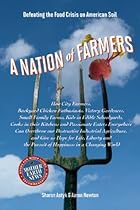
A Nation of Farmers: Defeating the Food Crisis On American Soil

by Sharon Astyk

Once we could fill our grocery carts with cheap and plentiful food, but not anymore. Cheap food has gone the way of cheap oil. Climate change is already reducing crop yields worldwide. The cost of flying in food from far away and shipping it across the country in refrigerated trucks is rapidly becoming unviable. Cars and cows increasingly devour grain harvests, sending prices skyrocketing. More Americans than ever before require food stamps and food pantries just to get by, and a worldwide food crisis is unfolding, overseas and in our kitchens.

We can keep hunger from stalking our families, but doing so will require a fundamental shift in our approach to field and table. A Nation of Farmers examines the limits and dangers of the globalized food system and shows how returning to the basics is our best hope. The book includes in-depth guidelines for:

  • Creating resilient local food systems
  • Growing, cooking, and eating sustainably and naturally
  • Becoming part of the solution to the food crisis

The book argues that we need to make self-provisioning, once the most ordinary of human activities, central to our lives. The results will be better food, better health, better security, and freedom from corporations that don’t have our interests at heart.

This is critical reading for anyone who eats and cares about high-quality food.

Sharon Astyk farms in New York, and is the author of Depletion and Abundance.

Aaron Newton is a sustainable systems land planner in North Carolina, and is the founding editor of Groovy Green.

Do-It-Yourself Microbiological fuel cells from dirt?

Basic Science with an Applied Product

Geobacter species are of interest because of their novel electron transfer capabilities, impact on the natural environment and their application to the bioremediation of contaminated environments and harvesting electricity from waste organic matter. The first Geobacter species (initially designated strain GS-15) was isolated from the Potomac River, just down stream from Washington D.C. in 1987. This organism, known as Geobacter metallireducens,

G. metallireducens [larger image]
© 2005 eye of science
was the first organism found to oxidize organic compounds to carbon dioxide with iron oxides as the electron acceptor. In other words, Geobacter metallireducens gains its energy by using iron oxides (a rust-like mineral) in the same way that humans use oxygen. As outlined in the publication links, Geobacter metallireducens and other Geobacter species that have subsequently been isolated provide a model for important iron transformations on modern earth and may explain geological phenomena, such as the massive accumulation of magnetite in ancient iron formations.

Geobacter species are also of interest because of their role in environmental restoration. For example, Geobacter species can destroy petroleum contaminants in polluted groundwater by oxidizing these compounds to harmless carbon dioxide. As understanding of the functioning of Geobacter species has improved it has been possible to use this information to modify environmental conditions in order to accelerate the rate of contaminant degradation. As outlined under the Bioremediation link, Geobacter species are also useful for removing radioactive metal contaminants from groundwater.

Geobacter species also have the ability to transfer electrons onto the surface of electrodes. As outlined under the Microbial Fuel Cell link, this has made it possible to design novel microbial fuel cells which can efficiently convert waste organic matter to electricity.

As outlined under the Genomics and Systems Biology link, the genomes of several Geobacter species have been sequenced and are being incorporated into a computer model that can predict Geobacter metabolism under different environmental conditions. This systems biology approach is greatly accelerating the understanding of how Geobacter species function and the optimization of bioremediation and energy harvesting applications.

[The following found at 12 Degrees of Freedom]

“You can just literally make energy from dirt”

Buckminster Fuller often talked about the difference between making money and making sense. Focusing exclusively on the former leads us down the road of over-consumption, environmental degradation, loss of biodiversity, social injustice and the global climate change.

Fuller practices something he called Comprehensive Anticipatory Design Science. Simply put he sought to solve problems of human life support by observing Nature and developing technologies based on her design strategy of "doing more with less".

Some of the best discoveries emerging from this process will not make the discoverer rich, but will make the world a better place for everyone.


Last year I was visiting the University of Massachusetts in Amherst and met Professor Derek Lovely. He was working with a bacteria known as Geobacter that possess electron transfer abilities capable of generating electricity in soils. I thought this was a very exciting concept, but had forgotten about it until I came across the following article. (GW)

For Africa, ‘Energy From Dirt’

START-UP companies around the world are looking at Africa — where 74 percent of the population lives without electricity — as a test market for new, off-the-grid lighting technologies.

Many of these efforts involve wind or solar power. But one group in Cambridge, Mass., is working to develop fuel cells made from the bacteria that occur in soil or waste.

“You can just literally make energy from dirt,” said Aviva Presser, a graduate student at the Harvard School of Engineering and Applied Sciences. “And there’s a lot of dirt in Africa.”

Ms. Presser is one of the founders of Lebone Solutions, which is being financed by a $200,000 World Bank grant and private investments. Lebone’s idea is a microbial fuel cell, a battery that makes a small amount of energy out of materials like manure, graphite cloth and soil, which are common to African households.

But Lebone — which means “light stick” in the Sotho language — does not just want to make the batteries and sell them to African consumers. The group hopes that eventually, as the technology becomes more refined, each household will be able to build a battery at a one-time cost of no more than $15.

“Africans are very, very creative,” said Hugo Van Vuuren, a Lebone founder. “It’s very entrepreneurial, just not in the way we traditionally define entrepreneurial.”

Mr. Van Vuuren, who is from Pretoria, South Africa, and who graduated from Harvard last year with a degree in economics, likened the simplicity of the battery to “the potato experiment that most of us did in high school class,” a two-step reaction that produces a simple charge.

But the bacteria in a microbial fuel cell produce electrons while doing what they naturally are supposed to do: metabolize organic waste, like dead leaves or grass or compost, for energy. The electrons then stick to an electrode, like a piece of graphite, and the chemical reaction that follows creates a small charge sufficient to power a small lamp or cellphone.

“It can be made by people with minimal training,” Ms. Presser said. “It doesn’t take a massive investment.”

The founders of the Lebone team were classmates at Harvard, and looking at sustainable lighting technologies for Africa was their class project. Last summer, they took the technology to Leguruki, a village in Tanzania, to see how the batteries work in households. For three hours each night, six families used batteries made of manure, graphite cloth and buckets, and a copper wire to conduct the current to a circuit board.

While in Leguruki, Mr. Van Vuuren said, the group learned as much about the people who used the batteries as the batteries themselves.

“People walk an hour or more a day to the local high schools to get their phones charged for two or three days,” he said, noting that the phones were sources of light as well as communication devices. The batteries are also used to power radios, Mr. Van Vuuren said, as important a medium of communication in Africa as the cellphone.

“Ideally, they would like to have a refrigerator,” Mr. Van Vuuren said. “But right now, their key need is a cellphone.”

Mr. Van Vuuren and several of his fellow Lebone researchers know the challenges of Africa personally, which he credits for the group’s commitment to focusing on Africa first.

“We are a group of Africans that have had the privilege of a first-rate education,” he said. “There are very few people who have insights into both. We lived through it.”

The group is expanding the refined prototypes into Namibia, where, over the next two years, it will examine how more easily available materials, like chicken wire, will create electricity. Mr. Van Vuuren said his group wanted to test the microbial cell batteries in African settings before bringing them to the American market.

Eventually, Lebone wants to create a new business model for energy distribution in Africa, helping to funnel fuel cells and other technologies tested in Africa to distributors there, rather than reducing developed technologies to meet African needs.

“If you work within those constraints, you can create something that works in the developed and developing world,” Mr. Van Vuuren said. “There’s no reason that people need to A: starve, or B: can’t read at night.”

http://www.geobacter.org/press/2007-05-15-biocycle.pdf
Bug Powered Batteries interview w/ Derek Lovely, researcher.

Tell YOUR Peak Oil Blues story.....

Are you 'coping' or 'freaking out' about Peak Oil?

What's a 'normal' reaction to learning about a post-oil world?

Fear? Anxiety? Shock? Depression?

No one really knows.

Many people say preparation is "90% mental," but how do you separate out what's "mental preparation" from what's just "acting mental?"

At Peak Oil Blues we explore what we've learned about various emotional reactions.

The goal of Peak Oil Blues is to help you build the kind of world you want to live in. Sanely.

[I just added them to the blogroll. KJ]

New Books in Pc Activist Catalog

Now we need a book about farming and gardening responses to climate change.

Extreme Weather Hits Home
Protecting Your Buildings from Climate Change
By John C. Banta
256pp, 2007, $23

We know how to prepare our homes for each seasonal change, but do we know how to prepare for climate change? Violent weather events like floods, tornadoes, ice storms and hurricanes only tell part of the story. Climate change is frequently more subtle but its effects on our homes and properties can still be devastating.

Nearly 50 percent of North America has a potential for structural damage from shifting moisture in expansive clay soils; a condition that is already costing billions of dollars each year. Humidity is projected to increase, trapping moisture in wall cavities and resulting in deterioration. As the climate changes and moisture levels adjust, there are a number of proactive steps that can be taken to prevent or lessen expensive repairs.

Extreme Weather is the only book of its kind that shows how to protect your home or business from climate change, by focusing on the following areas:

* Risk and causal assessment, due to region and soil
* Extreme weather’s rapid and slow effects
* Site, foundation, wall, and roof considerations and modifications
* Insurance options
* Anticipated changes for the United States, Canada and Mexico

Post Carbon Cities: Planning for Energy and Climate Uncertainty:
A Guidebook on Peak Oil and Global Warming for Local Governments

by Daniel Lerch 2007, 113pp, $28

Post Carbon Cities: Planning for Energy and Climate Uncertainty is a guidebook on peak oil and global warming for people who work with and for local governments in the United States and Canada. It provides a sober look at how these phenomena are quickly creating new uncertainties and vulnerabilities for cities of all sizes, and explains what local decision-makers can do to address these challenges.

Post Carbon Cities fills an important gap in the resources currently available to local government decision-makers on planning for the changing global energy and climate context of the 21st century.

"How will we cope with a future of energy scarcity? As a policy maker I look to other communities for inspiration and ideas, but there's been a lack of information on what local governments are doing to adapt to Peak Oil. Post Carbon Cities fills this gap: herein lies the roadmap plotted by the cities that are leading the way. Enthusiastically recommended!"
Dave Rollo, City Council President, Blooomington, Indiana

"Post Carbon Cities is an exceptionally clear and comprehensive call-to-action to those who actually work in the trenches of city governance. We don't have any more time to waste getting ready for an energy-scarcer future, and for those who remain dazed and confused, this book is an excellent place to start."
--James Howard Kunstler, author of The Long Emergency and The Geography of Nowhere

Tuesday, November 11, 2008

Oilfields in rapid decline....11 more years?

"Nine Percent"

By Richard Heinberg for the Post Carbon Institute

The Financial Times has leaked the results of the International Energy Agency's long-awaited study of the depletion profiles of the world's 400 largest oilfields, indicating that, "Without extra investment to raise production, the natural annual rate of output decline is 9.1 per cent."

This is a stunning figure.

Considering regular crude oil only, this means that 6.825 million barrels a day of new production capacity must come on line each year just to keep up with the aggregate natural decline rate in existing oilfields. That's a new Saudi Arabia every 18 months.

The Financial Times story goes on:

"The findings suggest the world will struggle to produce enough oil to make up for steep declines in existing fields, such as those in the North Sea, Russia and Alaska, and meet long-term demand. The effort will become even more acute as [oil] prices fall and investment decisions are delayed."

This is putting it mildly. Investment capital is being vaporized almost daily in a global deflationary bonfire of unprecedented ferocity. Oil production projects are being mothballed left and right.
Inter alia, the IEA takes the requisite swat at "peak oil theorists," who, the agency somehow still believes, are saying that the world is "running out of oil." Of course that's NOT what peak oil theorists say, but a correct summation of their position would have to be followed with a statement to the effect that, "Our research supports their position," which would be just too embarrassing.

Sadly, the IEA feels it must pull its punch even further. With adequate investment in new small oilfields and unconventional sources like tarsands, it insists, the world can still achieve higher levels of production. In other words, if the $12 trillion that vanished from the world stock markets last week were invested in new tarsands projects, then theoretically a few more years of total oil production growth could be eked out (not growth in net energy production, mind you, but in the gross—and I do mean gross—production of exotic, very expensive stuff that it's physically possible to run your car on, assuming you could afford to do so).

Of course, any realistic assessment either of the likelihood of that level of investment appearing, or of the ability of new projects to really produce a sufficient rate of flow regardless of the size of the cash infusion, would end merely in a hearty belly-laugh.

Evidently peeved about being scooped on its planned November 12 press conference roll-out of the study, the IEA has disavowed the Financial Times story. But if nine percent is even close to being the final figure, then it's absolutely clear: July 2008 was the all-time peak in world oil production. Don't expect anyone at the IEA to officially admit that fact until 2025 or so. But among those who pay attention to the evidence and the terms of the debate, further ink need not be spilled in speculation.

Peak oil is history.

Monday, November 10, 2008

Farming in the Suicide Belt

The GM genocide: Thousands of Indian farmers are committing suicide after using genetically modified crops

By Andrew Malone
Last updated at 12:48 AM on 03rd November 2008

When Prince Charles claimed thousands of Indian farmers were killing themselves after using GM crops, he was branded a scaremonger. In fact, as this chilling dispatch reveals, it's even WORSE than he feared.

The children were inconsolable. Mute with shock and fighting back tears, they huddled beside their mother as friends and neighbours prepared their father's body for cremation on a blazing bonfire built on the cracked, barren fields near their home.

As flames consumed the corpse, Ganjanan, 12, and Kalpana, 14, faced a grim future. While Shankara Mandaukar had hoped his son and daughter would have a better life under India's economic boom, they now face working as slave labour for a few pence a day. Landless and homeless, they will be the lowest of the low.

Indian farmer

Human tragedy: A farmer and child in India's 'suicide belt'

Shankara, respected farmer, loving husband and father, had taken his own life. Less than 24 hours earlier, facing the loss of his land due to debt, he drank a cupful of chemical insecticide.

Unable to pay back the equivalent of two years' earnings, he was in despair. He could see no way out.

There were still marks in the dust where he had writhed in agony. Other villagers looked on - they knew from experience that any intervention was pointless - as he lay doubled up on the ground, crying out in pain and vomiting.

Moaning, he crawled on to a bench outside his simple home 100 miles from Nagpur in central India. An hour later, he stopped making any noise. Then he stopped breathing. At 5pm on Sunday, the life of Shankara Mandaukar came to an end.

As neighbours gathered to pray outside the family home, Nirmala Mandaukar, 50, told how she rushed back from the fields to find her husband dead. 'He was a loving and caring man,' she said, weeping quietly.

'But he couldn't take any more. The mental anguish was too much. We have lost everything.'

Shankara's crop had failed - twice. Of course, famine and pestilence are part of India's ancient story.

But the death of this respected farmer has been blamed on something far more modern and sinister: genetically modified crops.

Shankara, like millions of other Indian farmers, had been promised previously unheard of harvests and income if he switched from farming with traditional seeds to planting GM seeds instead.

Prince Charles

Distressed: Prince Charles has set up charity Bhumi Vardaan Foundation to address the plight of suicide farmers

Beguiled by the promise of future riches, he borrowed money in order to buy the GM seeds. But when the harvests failed, he was left with spiralling debts - and no income.

So Shankara became one of an estimated 125,000 farmers to take their own life as a result of the ruthless drive to use India as a testing ground for genetically modified crops.

The crisis, branded the 'GM Genocide' by campaigners, was highlighted recently when Prince Charles claimed that the issue of GM had become a 'global moral question' - and the time had come to end its unstoppable march.

Speaking by video link to a conference in the Indian capital, Delhi, he infuriated bio-tech leaders and some politicians by condemning 'the truly appalling and tragic rate of small farmer suicides in India, stemming... from the failure of many GM crop varieties'.

Ranged against the Prince are powerful GM lobbyists and prominent politicians, who claim that genetically modified crops have transformed Indian agriculture, providing greater yields than ever before.

The rest of the world, they insist, should embrace 'the future' and follow suit.

So who is telling the truth? To find out, I travelled to the 'suicide belt' in Maharashtra state.

What I found was deeply disturbing - and has profound implications for countries, including Britain, debating whether to allow the planting of seeds manipulated by scientists to circumvent the laws of nature.

For official figures from the Indian Ministry of Agriculture do indeed confirm that in a huge humanitarian crisis, more than 1,000 farmers kill themselves here each month.

Simple, rural people, they are dying slow, agonising deaths. Most swallow insecticide - a pricey substance they were promised they would not need when they were coerced into growing expensive GM crops.

It seems that many are massively in debt to local money-lenders, having over-borrowed to purchase GM seed.

Pro-GM experts claim that it is rural poverty, alcoholism, drought and 'agrarian distress' that is the real reason for the horrific toll.

But, as I discovered during a four-day journey through the epicentre of the disaster, that is not the full story.

Monsanto

Death seeds: A Greenpeace protester sprays milk-based paint on a Monsanto research soybean field near Atlantic, Iowa

In one small village I visited, 18 farmers had committed suicide after being sucked into GM debts. In some cases, women have taken over farms from their dead husbands - only to kill themselves as well.

Latta Ramesh, 38, drank insecticide after her crops failed - two years after her husband disappeared when the GM debts became too much.

She left her ten-year-old son, Rashan, in the care of relatives. 'He cries when he thinks of his mother,' said the dead woman's aunt, sitting listlessly in shade near the fields.

Village after village, families told how they had fallen into debt after being persuaded to buy GM seeds instead of traditional cotton seeds.

The price difference is staggering: £10 for 100 grams of GM seed, compared with less than £10 for 1,000 times more traditional seeds.

But GM salesmen and government officials had promised farmers that these were 'magic seeds' - with better crops that would be free from parasites and insects.

Indeed, in a bid to promote the uptake of GM seeds, traditional varieties were banned from many government seed banks.

The authorities had a vested interest in promoting this new biotechnology. Desperate to escape the grinding poverty of the post-independence years, the Indian government had agreed to allow new bio-tech giants, such as the U.S. market-leader Monsanto, to sell their new seed creations.

In return for allowing western companies access to the second most populated country in the world, with more than one billion people, India was granted International Monetary Fund loans in the Eighties and Nineties, helping to launch an economic revolution.

But while cities such as Mumbai and Delhi have boomed, the farmers' lives have slid back into the dark ages.

Though areas of India planted with GM seeds have doubled in two years - up to 17 million acres - many famers have found there is a terrible price to be paid.

Far from being 'magic seeds', GM pest-proof 'breeds' of cotton have been devastated by bollworms, a voracious parasite.

Nor were the farmers told that these seeds require double the amount of water. This has proved a matter of life and death.

With rains failing for the past two years, many GM crops have simply withered and died, leaving the farmers with crippling debts and no means of paying them off.

Having taken loans from traditional money lenders at extortionate rates, hundreds of thousands of small farmers have faced losing their land as the expensive seeds fail, while those who could struggle on faced a fresh crisis.

When crops failed in the past, farmers could still save seeds and replant them the following year.

But with GM seeds they cannot do this. That's because GM seeds contain so- called 'terminator technology', meaning that they have been genetically modified so that the resulting crops do not produce viable seeds of their own.

As a result, farmers have to buy new seeds each year at the same punitive prices. For some, that means the difference between life and death.

Take the case of Suresh Bhalasa, another farmer who was cremated this week, leaving a wife and two children.

As night fell after the ceremony, and neighbours squatted outside while sacred cows were brought in from the fields, his family had no doubt that their troubles stemmed from the moment they were encouraged to buy BT Cotton, a geneticallymodified plant created by Monsanto.

'We are ruined now,' said the dead man's 38-year-old wife. 'We bought 100 grams of BT Cotton. Our crop failed twice. My husband had become depressed. He went out to his field, lay down in the cotton and swallowed insecticide.'

Villagers bundled him into a rickshaw and headed to hospital along rutted farm roads. 'He cried out that he had taken the insecticide and he was sorry,' she said, as her family and neighbours crowded into her home to pay their respects. 'He was dead by the time they got to hospital.'

Asked if the dead man was a 'drunkard' or suffered from other 'social problems', as alleged by pro-GM officials, the quiet, dignified gathering erupted in anger. 'No! No!' one of the dead man's brothers exclaimed. 'Suresh was a good man. He sent his children to school and paid his taxes.

'He was strangled by these magic seeds. They sell us the seeds, saying they will not need expensive pesticides but they do. We have to buy the same seeds from the same company every year. It is killing us. Please tell the world what is happening here.'

Monsanto has admitted that soaring debt was a 'factor in this tragedy'. But pointing out that cotton production had doubled in the past seven years, a spokesman added that there are other reasons for the recent crisis, such as 'untimely rain' or drought, and pointed out that suicides have always been part of rural Indian life.

Officials also point to surveys saying the majority of Indian farmers want GM seeds - no doubt encouraged to do so by aggressive marketing tactics.

During the course of my inquiries in Maharastra, I encountered three 'independent' surveyors scouring villages for information about suicides. They insisted that GM seeds were only 50 per cent more expensive - and then later admitted the difference was 1,000 per cent.

(A Monsanto spokesman later insisted their seed is 'only double' the price of 'official' non-GM seed - but admitted that the difference can be vast if cheaper traditional seeds are sold by 'unscrupulous' merchants, who often also sell 'fake' GM seeds which are prone to disease.)

With rumours of imminent government compensation to stem the wave of deaths, many farmers said they were desperate for any form of assistance. 'We just want to escape from our problems,' one said. 'We just want help to stop any more of us dying.'

Prince Charles is so distressed by the plight of the suicide farmers that he is setting up a charity, the Bhumi Vardaan Foundation, to help those affected and promote organic Indian crops instead of GM.

India's farmers are also starting to fight back. As well as taking GM seed distributors hostage and staging mass protests, one state government is taking legal action against Monsanto for the exorbitant costs of GM seeds.

This came too late for Shankara Mandauker, who was 80,000 rupees (about £1,000) in debt when he took his own life. 'I told him that we can survive,' his widow said, her children still by her side as darkness fell. 'I told him we could find a way out. He just said it was better to die.'

But the debt does not die with her husband: unless she can find a way of paying it off, she will not be able to afford the children's schooling. They will lose their land, joining the hordes seen begging in their thousands by the roadside throughout this vast, chaotic country.

Cruelly, it's the young who are suffering most from the 'GM Genocide' - the very generation supposed to be lifted out of a life of hardship and misery by these 'magic seeds'.

Here in the suicide belt of India, the cost of the genetically modified future is murderously high.

Unabashed plea for your support.....Thanks, Keith

The (4 part-time) folks who keep the Pc Activist going (now for it's 24th year) could use some help. Quick, while your money still has some value, check out the Permaculture Activist Holiday SALE at Cafe Press!!! All prices reduced. While you're at it, look over the large selection of VERY useful, solution-rich books and videos from our catalog. Thank you for supporting the work of the Permaculture Activist magazine by purchasing these products. We hope they will help you start a conversation, make a difference, have fun, find new friends, propagate love and justice, help the earth heal, and earn the praise of your descendants.

Mercury and Autism and.................?

Another argument for radically increasing the amount of carbon sequestration in soils. Beyond reducing atmospheric CO2, it helps bind toxic elements so they cannot be taken up by plants. The following maps should be a startling wake up call. Click the maps for a larger view.

Rain, Autism, and Mercury
(click title for full story)

...a recent study of federal data showed that the percentage of Americans with detectable levels of inorganic mercury in their blood increased eightfold between 2000 and 2004.

These are the same years that we see burgeoning levels of mercury being spewed into the atmosphere from industrializing areas of the world, particularly in China and other Asian countries.

The US Government has detected "mercury plumes" that carry the dangerous neurotoxin in great quantities across the Pacific and, within five days, found them hovering just offshore of San Diego, California. (See Map HERE)

At a recent vaccine forum at Hackensack University Medical Center, in New Jersey, I made this observation, and mentioned that the mercury carried aloft through the atmosphere will come down in the form of rain along the west coast or, during drier periods, continue eastward until it finds wetter, rainier parts of the country, where it is washed to the ground.

Economic Rape of the whole planet by (who else, but) the Bush gang

Voters are rightly furious at the proposal to spend $700 billion that the government doesn't have, just to bail out Wall Street bankers who created the current economic crisis in the first place.

But did you know about the trillions of dollars the Federal Reserve is pumping into the system on top of that?

Or the trillions missing from the Pentagon?

Do you know what the real cost of the bailout of Wall Street may end up being?

Saturday, November 8, 2008

A Solar Assisted Rickshaw for Relocalized Transport

solar assisted rickshaw proposed for london photo

We have seen eco-cabs, electric motor-assisted rickshaws in Toronto; Now London's Solarlab, the team that brought us the Solar boat that Bonnie sailed on the Serpentine, adds solar. "The solar generatior will create 80% of the total power needed to drive the vehicle, while the remaining 20% will be provided by the drivers' pedal-power. The physical exertion needed will be dramatically less than that of even a standard bicycle, much less than a traditional rickshaw, allowing any driver, not just athletes, to drive the vehicle."

Found at Treehugger

Conservation of angular momentum for fun and fitness!!

I had never heard of this thing until I stumbled upon it today. It's been around for several years. Looks like a lot of fun. I want one.

Trikke (pronounced trike) three-wheeled cambering vehicles are human powered machines that utilize Trikke Tech’s patented 3CV technology to allow a rider to propel a chainless, pedal-less device forward without ever touching foot to ground. This elegantly simple construct provides a stable 3-point platform that leans into the turn with the rider while all three wheels remain in contact with the ground. A rider may reach speeds of up to 18 mph on flat ground, ride 50 miles in one day, and climb the steepest of hills (with practice!).

Trikke’s design allows the rider to naturally engage his entire body throughout the ride. Legs are active for balancing and shock-absorption and arms punch for power-thrusts and hang on for stability and control. The Trikke 3-wheeler allows you, the rider, to feel the miracle of your own body and mind working in graceful unison. The bi-products of the ride are joy, health, fitness and a renewed appreciation for yourself and your life.

Trikke cambering vehicles allow a rider to utilize a fundamental physics principle known as the Conservation of Angular Momentum. While traveling on a slalom-like path, a rider moves his center of gravity (his mass) from left to right (for example) while leaning the vehicle into a right turn; this movement of the rider’s mass is towards the center of the turn, thus decreasing the radius of an imaginary circle which is formed around the center point of the rider’s turn. This movement of mass to the center of the circle acts in the same way that an ice-skater increases her velocity if she pulls in her arms (decreasing her radius) while she is spinning on the ice.
Because of the vehicle’s design, a rider can learn to maximize the velocity generated from making each turn and then transfer that momentum into the next turn, and so on and so on. Propulsion can be so effortless that it feels like magic, or as strenuous as a full-blown sprint. Your choice.

In the simplest of terms, you rock & roll to make a cambering vehicle go. An experienced rider uses the entire body in a gracefully coordinated motion that leans the vehicle into each turn and transfers the momentum of each forward thrust into the next turn and the next. A trikke ride combines the utility of human powered transportation with the thrill of carving deep surf and ski style turns. Like in other carving sports, everyone develops their own unique, individual riding style. Each ride becomes a personal expression session.

Click the image below for more info. Be aware, these are so popular that the manufacturer can barely keep up.

Trikke - Take a Ride.

Friday, November 7, 2008

Change We Need!!

http://www.countercurrents.org/images/Index_02.gif

How Peak Oil Changed My Life

By Aaron Wissner

11 January, 2008
Countercurrents.org
Peak oil changed my life by altering my expectations and hopes for the future.

I was once a techno-science lover. I looked to the future, and saw technology changing the world, and solving all of its problems: outposts on the moon and Mars, a cure for all diseases and maybe even a cure for death, certainly much longer life spans, and the end to war and poverty. Yes, it was a fantastic vision, supported by the incredible progress of recent years, of men on the moon, the development of the internet, and all those technological marvels and scientific discoveries that seemed to be increasing at an unstoppable rate. I dreamed of journeying into space, traveling to every country, living well past my hundredth birthday, driving a 100 mile per gallon car, and having a better and happier life thanks to incredible new advancements of science and technology.

Then, I found out about peak oil, and my life was divided into the time before, and the time after. This epiphany was more lasting and dramatic than the ones that I thought I'd experienced only a few years earlier. One shock was my discovery of the cruelty and harms of industrialized agriculture and factory farms, and my complicity in these industries. The other, as I survived what I fully expected to be a fatal car crash. After each shocking realization, I thought to myself, "Now I truly understand. My eyes are open. My life is changed forever."

And indeed, these first two events did change me. To respond to the cruelties our civilization inflicts upon animals, I became vegan swore off eating any animal products, and embarked on a voracious campaign to educate myself to the scope of the problem. After my near-fatal car accident, I began looking at my future differently, decided that I would start getting involved, and making my life count: lest I find myself dying without really having done anything of lasting value or note.

Peak oil set me straight. Those prior epiphanies were simply preparing me for the big one: that civilization as I knew it might very well end, not only in my lifetime, but within the decade. What I saw looming ahead was the very real possibility of the collapse of the global economy. This vision included the loss of all value of money, the loss of all jobs, the loss of all fuels and the transportation system they support, the loss of electricity, and the loss of the entire food distribution system. To me, societal collapse was a previously unthinkable scenario; that we may have painted ourselves in the corner, and that the paint was about to catch on fire.

Everywhere around me, I began to see our petroleum dependence: my morning shower, my imported clothes, my breakfast cereal, the fuel in my car, the maintenance of the roads, the lights at home and at work, etc... It all depends on oil.

Soon after my peak oil awakening, while driving to visit family, we drove through the nearest mega-city. The consumption of energy blinded me; the lights of cars, and buildings, and billboards... the airplanes coming and going... the trains carrying people… the trucks carrying food and goods... Everything depends on fuel, and that fuel is oil.

As with the earlier discovery of animal cruelty, I knew I had to find the solution. With factory farms, I could simply become vegan and my soul was absolved of my past evil deeds. No, I couldn't stop animal cruelty, but at least I could wash my hands of my direct complicity. For peak oil, a solution I sought, and what I found was not pleasant: civilization may not have a chance.

This concept was hard to swallow: no matter how desperately we wanted to switch to renewable fuels, there simply was not enough time, money, energy, or raw materials to do it. Yes, we could transition a portion of our electricity supply to renewables, with some new generation from the sun and the wind. Yes, we could build some electric vehicles, but not enough… not nearly enough… to prevent the collapse of the entire economic system.

Upon that realization, I recognized that I was going to have to change myself. I needed to prepare, not only for the possibility of a rapid collapse of the system, but also for the possibility that this descent would take place gradually, over many years, or even decades. To prepare for a rapid collapse, I started doing things and buying things that would help me live apart from the global system, at least for a time: a new pantry stocked with food, containers for water, extra gasoline, extra heating fuel, insulating the windows and door, preparing a large garden, etc. To get ready for a slow decline, I started planning a zero-energy home, to be built on an ample piece of fertile land, near a stream or lake, away from the huge populations of the cities.

Peak oil now informs everything I do. It tells the story of a future of great challenge and difficulty, for which I must be prepared.

Peak oil shortens my time horizon. No longer do I worry about my son's college or my own retirement. Now I worry about being able to provide him with the bare necessities. And I wonder, will money be worth anything at all by the time I reach retirement age?

Peak oil informs all of my purchases. I always ask myself, would this be useful during a rapid collapse? How about during a slow decline? If neither, why buy it?

Peak oil alters the way I think about the future. It makes me scoff at the rosy prognostications of our many societal sages; well-paid, kind of heart, but tragically uninformed.

Peak oil drives me to share what I know, and to go further, to illuminate the fundamental failure of our global culture to plan and prepare for its own future. The bleak reality is this: peak oil is not really about the decline of our most precious energy resource. Peak oil is one symptom of our civilization’s inability to find and follow a cultural vision of sustainability.

Aaron Wissner has taught public school students for sixteen years. He is the founder of the international Local Future Network, a non-profit educational organization dedicated to saving Earth through cultural change. In his spare time, he http://valuesystem.livejournal.com writes articles organizes education events, and gives presentations. Aaron lives in Michigan with his wife Kimberly and his newborn son Michael.


Organic Transitions: Beyond the Gloom & Doom of Economic Depression, Climate Change, & Peak Oil

OCA is happy to announce a new grassroots-powered campaign called Organic Transitions, inspired in part by the UK's fast-growing Transition Towns [see link list] movement. Organic Transitions is designed to mobilize organic consumers and local communities to start planning and implementing “transition” strategies so as to survive and thrive in the turbulent times ahead, with organic food and farming providing the healthy cornerstone for a new, more localized and sustainable green economy.

First the bad, or shall we say the really bad, news. Not since the Great Depression have Americans been challenged by anything comparable to the current unfolding disaster: economic meltdown, global warming, climate chaos, escalating energy and resource costs, looming shortages, endless war, biodiversity erosion, and deteriorating public health—metastasized and abetted by a corporate elite and indentured federal government that apparently doesn’t know what to do, or, worse, doesn’t care. Even with likely regime change on November 4, we are in very deep trouble, according to leading scientists, economists, agronomists, and public health experts.

Fortunately a critical mass of people are waking up to the fact that we must get organized and find holistic solutions, not mere band-aids, for our crisis. Millions of us are heartened by the indisputable fact that organic, green, commonsense solutions for all of our life-or-death problems are at hand, including appropriate technology and innovative public policy and legislation. We don’t have to wait for Washington bureaucrats or corporate marketers to tell us what to do. We can join together with our fellow citizens and begin the absolutely essential process of organizing Organic Transitions committees and campaigns in our local areas, starting with local organic food buying clubs, house parties, and study and action circles.

Times are indeed grim and frightening, but certainly not hopeless. We still have a strategic window of opportunity to take back control over our political, cultural, and economic institutions; to create millions of urban and rural green jobs; to transform our educational systems; and to make a smooth transition from fossil fuels, climate chaos, and resource wars to a renewable, peaceful, solar-based agriculture and economy. But time is of the essence.


There is no longer any doubt that we must quickly move away from fossil fuels and greenhouse gas pollution if we are to avoid climate catastrophe. Likewise there is no doubt that we are quickly running out of cheap oil, and other essential resources such as water, forests, wetlands, and plant and animal biodiversity. You are likely familiar with the term “Peak Oil”, the notion that global oil production has peaked and will now become inexorably more expensive and scarce, even as global demand continues to rise. What you may not realize is that we stand on the cusp of Peak Everything, where nearly all of our essential natural resources are reaching their limits.


We obviously can no longer afford trillion-dollar bailouts for Wall Street speculators, nor trillion-dollar wars for oil and empire in Iraq and Afghanistan. There is temporarily enough food, fiber, and fuel on the planet to feed, clothe, and shelter everyone (that is, if these necessities are distributed equitably), but the days of fossil fuel-intensive, chemical-intensive agriculture, transportation, utilities, and housing are drawing to an end. Natural gas-derived chemical fertilizers and petroleum-based pesticides, transportation, and processing are absolutely essential to supercharge America’s current system of industrialized and globalized food and farming, but as economists point out, these inputs will be literally unaffordable within a decade. Chemical fertilizer and diesel costs alone have gone up 80% in the last two years, with global food costs rising comparably. Gasoline in the U.S. now costs about $3 dollars a gallon (over $10 a gallon in some EU nations), while natural gas for heating is $2.50. Multiply these costs by two over the next couple of years, by four over the next five years, and by ten or so over the next decade and you get the picture.

There’s a silver lining in the collapse of our energy-intensive, chemical-intensive, hyper-consumerist society. We’re likely to be a lot happier and healthier after we make the Organic Transitions we need. Most of us will not be making as much money as we once did, or buying as many consumer products, but as we green and relocalize our economy and our politics, we’re likely to be a lot healthier, less alienated, and stressed-out. We’ll certainly be driving and flying less, and millions more of us will be involved in organic gardening and farming and other green jobs, but OCA’s belief is that we’ll likely be happier and more at peace with ourselves, our local communities, and the Earth. Please join up with the OCA as active participants in our Organic Transitions campaign. And please support us financially as we move beyond the gloom and doom of the present crisis.

Obama cites Michael Pollan article

Glad to hear that Barack has people on his team keeping him abreast of critical food issues. Here are Obama's comments based upon his reading of Pollan's article:

"I was just reading an article in the New York Times by Michael Pollen about food and the fact that our entire agricultural system is built on cheap oil. As a consequence, our agriculture sector actually is contributing more greenhouse gases than our transportation sector. And in the mean time, it's creating monocultures that are vulnerable to national security threats, are now vulnerable to sky-high food prices or crashes in food prices, huge swings in commodity prices, and are partly responsible for the explosion in our healthcare costs because they're contributing to type 2 diabetes, stroke and heart disease, obesity, all the things that are driving our huge explosion in healthcare costs. That's just one sector of the economy. You think about the same thing is true on transportation. The same thing is true on how we construct our buildings. The same is true across the board."

Wednesday, November 5, 2008

The Green Collar Economy

Provocative, personal, and inspirational, The Green Collar Economy is not a dire warning but rather a substantive and viable plan for solving the biggest issues facing the country—the failing economy and our devastated environment. From a distance, it appears that these two problems are separate, but when we look closer, the connection becomes unmistakable.

In The Green Collar Economy, acclaimed activist and political advisor Van Jones delivers a real solution that both rescues our economy and saves the environment. The economy is built on and powered almost exclusively by oil, natural gas, and coal—all fast-diminishing nonrenewable resources. As supplies disappear, the price of energy climbs and nearly everything becomes more expensive. With costs and unemployment soaring, the economy stalls. Not only that, when we burn these fuels, the greenhouse gases they create overheat the atmosphere. As the headlines make clear, total climate chaos looms over us. The bottom line: we cannot continue with business as usual. We cannot drill and burn our way out of these dual dilemmas.

Instead, Van Jones illustrates how we can invent and invest our way out of the pollution-based grey economy and into the healthy new green economy. Built by a broad coalition deeply rooted in the lives and struggles of ordinary people, this path has the practical benefit of both cutting energy prices and generating enough work to pull the U.S. economy out of its present death spiral.

The Food and Farming Transition

by Richard Heinberg
MuseLetter 199/November 2008

The only way avert a food crisis resulting from oil and natural gas price hikes and supply disruptions while also reversing agriculture’s contribution to climate change is to proactively and methodically remove fossil fuels from the food system.

The removal of fossil fuels from the food system is inevitable: maintenance of the current system is simply not an option over the long term. Only the amount of time available for the transition process, and the strategies for pursuing it, can be matters for controversy.

Given the degree to which the modern food system has become dependent on fossil fuels, many proposals for de-linking food and fuels are likely to appear radical. However, efforts toward this end must be judged not by the degree to which they preserve the status quo, but by their likely ability to solve the fundamental challenge that will face us: the need to feed a global population of 7 billion with a diminishing supply of fuels available to fertilize, plow, and irrigate fields and to harvest and transport crops.

If this transition is undertaken proactively and intelligently, there could be many side benefits—more careers in farming, more protection for the environment, less soil erosion, a revitalization of rural culture, and more healthful food for everyone.

Some of this transformation will inevitably be driven by market forces, led simply by the rising price of fossil fuels. However, without planning the transition may be wrenching and destructive, since market forces acting alone could bankrupt farmers while leaving consumers with few or no options.

The Transition

To remove fossil fuels from the food system too quickly, before alternative systems are in place, would be catastrophic. Thus the transition process must be a matter for careful consideration and planning.

In recent years there has been some debate on the problem of how many people a non-fossil fueled food system can support. The answer is still unclear. But we will certainly find out, because there is likely to be no alternative, given that substitute liquid fuels—including coal-to-liquids, biofuels, tar sands, and shale oil—are all problematic and cannot be relied upon to replace cheap crude oil and natural gas as these deplete.

There are reasons for hope: a recent report on African agriculture from the United Nations Environmental Programme (UNEP) suggests that "organic, small-scale farming can deliver the increased yields which were thought to be the preserve of industrial farming, without the environmental and social damage which that form of agriculture brings with it."

Nevertheless, given that we do not know whether non-fossil fuel agriculture can in fact feed a population now approaching seven billion—and given that current fuels-based agriculture cannot be relied upon to do so for much longer, given the reality of fuel depletion—the prudent path forward would surely be to tie agricultural policy to population policy.

Indeed, coordination will be essential also between agriculture policies and education, economic, transport, energy policies. The food system transition will be comprehensive, and will require integration with all segments and aspects of society.

This document is intended to serve as the basis for the beginning of that planning process. Our aim is to develop a template that can be used to strategically plan the transition of food and farming across the world, region by region, and at all scales (from the farm to the community to the nation).

Elements of Transition

The following are some key strategic elements of the food systems transition process that will need to be addressed at all levels of scale, from the household to the nation and beyond.

Re-Localization

In recent decades the food systems of Britain and most other nations have become globalized. Food is traded in enormous quantities—and not just luxury foods (such as coffee and chocolate), but staples including wheat, maize, meat, potatoes, and rice.

The globalization of the food system has had advantages: people in wealthy countries now have access to a wide variety of foods at all times, including fruits and vegetables that are out of season (apples in May or asparagus in January), and foods that cannot be grown locally at any time of year (e.g., avocadoes in Scotland). Long-distance transport enables food to be delivered from places of abundance to areas of scarcity. Whereas in previous centuries a regional crop failure might have led to famine, its effects now can be neutralized by food imports.

However, food globalization also creates systemic vulnerability. As fuel prices rise, costs of imported food go up. If fuel supplies were substantially cut off as the result of some transient event, the entire system could fail. A globalized system is also more susceptible to accidental contamination, as we have seen recently with the appearance of toxic melamine in foods from China. The best way to make our food system more resilient against such threats is clear: decentralize and re-localize it.

Re-localization will inevitably occur sooner or later as a result of declining oil production, since there are no alternative energy sources on the horizon that can be scaled up quickly to take the place of petroleum. But if the transition process is to unfold in a beneficial rather than a catastrophic way, it must be planned and coordinated. This will require deliberate effort aimed at building the infrastructure for regional food economies—ones that can support diversified farming and reduce the amount of fossil fuel in the diet.

Re-localization means producing more basic food necessities locally. No one advocates doing away with food trade altogether: this would hurt both farmers and consumers. Rather, what is needed is a prioritization of production so that lower-value food items (which are typically staple calorie crops) are mostly sourced from close by, with most long-distance trade left to higher-value foods, and especially those that store well.

This decentralization of the food system will result in greater societal resilience in the face of fuel price volatility. Problems of food contamination, when they appear, will be minimized. Meanwhile, revitalization of local food production will help renew local economies. Consumers will enjoy better quality food that is fresher and more seasonal. And transport-related climate impacts will be reduced.

Each nation or region will need to devise its own strategy for re-localizing its food system, based on a thorough initial assessment of vulnerabilities and opportunities. The following are some general suggestions that are likely to be applicable in most instances:

  • The process will benefit enormously from policy support at both national and regional levels. This could include, for example, the provision of grants to towns and cities to build year-round indoor farmers’ markets.
  • Food-safety regulations should be made appropriate to the scale of production and distribution, so that a small grower selling direct off the farm or at a farmers’ market is not regulated as onerously as a multinational food manufacturer. While local food may have safety problems, these will inevitably occur on a smaller scale and will be easier to manage because local food is inherently more traceable and accountable. Governments can require that some minimum percentage of food purchases for schools, hospitals, military bases, and prisons are sourced within 100 miles of the institutions buying the food. Channelling even a small portion of institutional food purchasing to local growers would greatly expand opportunities for regional producers while improving the diet of people whom these institutions feed.
  • Cities and towns can rework their waste management systems so as to collect food scraps that can then be converted to compost, biogas, and livestock feed—which can in turn be made available to local growers.

But government can do only so much. Consumers must develop the habit of preferentially buying locally sourced foods whenever possible, and they can be encouraged in this by "Buy Local" educational literature distributed by retailers—who can also assist by clearly labeling and prominently displaying local products.

Growers themselves must rethink their business strategies. Instead of growing specialty crops for export, they must plan a transition to production of staple foods for local consumption. They must also actively seek local markets for their food. The Community Supported Agriculture (CSA) movement provides a business model that has proven successful in many communities. Small producers can also create informal co-ops to acquire machinery (such as small threshing machines for cereal and oilseed processing or micro hydro turbines for electricity).

The strategy of re-localizing food systems will be more challenging for some nations and regions than others. More urban gardens and even small animal operations (with chickens, ducks, geese, and rabbits) should be encouraged, but even then it will be necessary to source most food from the countryside, delivering it to the city by rail. Thus re-localization should be seen as a process and a general direction of effort, not as an absolute goal.

Energy

As society turns away from fossil fuels, the energy balance of farming must once again become net positive. However, the transition process will be complex and problematic. Farms will still need sources of energy for their operations, and will need to provide much or all of that energy for themselves. Meanwhile, farmers could also take advantage of opportunities to export surplus energy to nearby communities as a way of increasing farm income.

Farms must be powered with renewable energy. However, many energy needs on farms—such as fuel for tractors and other machinery—are currently difficult to fill with anything other than liquid fuels, which currently come in the form of diesel or petrol made from crude oil. Farmers should first look for ways to reduce fuel needs through efficiency or replacement of machines with animal power or human labor. This is most likely to be economically feasible in dairy, meat, vegetable, fruit, and nut operations. Where fuel-fed machinery is still required, which is likely to continue being the case for grain production, ethanol or biodiesel made on-site could supplement or replace petroleum. Farmers could aim to apportion one-fifth of their cropland to production of biofuels for their own use.

Many other farm operations require electricity, and this can be generated on-site with wind turbines, solar panels, and micro-hydro turbines. Effort first must be devoted to making operations more energy-efficient. Because these technologies require initial investment and pay for themselves slowly over time, assistance from government and from financial institutions in the form of grants and low-interest loans could be instrumental in helping farmers overcome initial economic hurdles toward energy self-sufficiency.

Eventually farmers are capable of being not just self-sufficient in energy, but of producing surplus energy for surrounding communities. Much of this exported energy is likely to come in the form of biomass—agricultural and forestry waste that can be burned to produce electricity. While farmers can also grow crops for the production of biofuels, the ecological and thermodynamic limits of this energy technology require that the scale of production be deliberately restricted. Otherwise, society’s demand for fuel could overwhelm farmers’ ability to produce food—and food must remain their first priority. In exporting biomass from the farm, growers must always keep in mind the productive capacity of sustainable agricultural systems, and they must strictly monitor soil health and fertility.

The transition of farms to renewable energy will require planning. Farmers, ideally with the assistance of regional and national agencies, should plan to increase energy efficiency, to reduce fossil fuel inputs, and to grow renewable energy production according to a staged, integrated program designed for the unique needs and capabilities of each farm. As a general guideline, the plan should aim to reduce oil and natural gas inputs by at least half during the first decade

Soil Fertility

In industrial agriculture, soil fertility is maintained with inputs provided from off-site. Of these inputs, the most important are nitrogen and phosphorus. Nitrogen comes from ammonia-based fertilizers made from fossil fuels—principally, natural gas. Phosphorus comes from phosphate mines in several countries. While sufficient low-quality phosphate deposits exist to supply world needs for many decades, high-quality deposits that are currently being mined are quickly depleting, which means that phosphate prices will likely rise within the next few years. [Phosphate Primer]

Both nitrogen and phosphorus are essential to agriculture. And our current ways of supplying both are clearly unsustainable. Unless alternative ways of maintaining soil fertility are quickly found, a crisis looms.

The long-term solution will surely depend on a two-fold strategy: designing farm systems that build fertility through crop rotations, and recycling nutrients.

Crop rotation can help with maintaining nitrogen levels. Simply planting a cover crop after the fall harvest significantly reduces nitrogen leaching while cutting down on soil erosion. Meanwhile, introducing leguminous crops into the rotation cycle replaces nitrogen.

Cleverly designed polycultures can sustainably produce large amounts of food, as has been shown not only by small-scale "alternative" farmers in Britain and America, but also by large rice-and-fish farmers in China and giant-scale operations (up to 15,000 acres) in Argentina. There, farmers employ an eight-year rotation of perennial pasture and annual crops: after five years grazing cattle on pasture, farmers then grow three years of grain without applying fertilizer. The need for herbicides is also dramatically reduced: weeds that afflict pasture cannot survive the years of tillage, and weeds of row crops don’t survive years of grazing.

Most industrial farmers have left behind the practice of cover cropping because commercial fertilizers have become the cheaper option. That cost equation is about to shift. It is therefore important that farmers begin planning for higher fertilizer prices now by gearing up their rotation cycles and building natural soil fertility ahead of the immediate need.

In industrial agriculture, the soil is treated as an inert substance that holds plants in place while chemical nutrients are applied externally. Without efforts to maintain natural fertility, over time organic matter disappears from the soil, along with beneficial soil micro-organisms. In the future, as chemical fertilizers become more expensive, farmers will need to devote much more attention to the practice of building healthy soil. But rebuilding nutrient-depleted soil takes, at minimum, several years of effort.

Traditional farmers increase organic matter in topsoil through the application of compost—which not only builds soil fertility, but also improves the soil’s ability to hold water and thus withstand drought. There is also mounting evidence that food grown in properly composted soil is of higher nutritional quality. Currently, in typical modern cities, consumers, retailers, wholesalers and institutions discard enormous quantities of food. Some communities have already instituted municipal programs for composting of food and yard waste; such programs could be expanded and made mandatory, with compost being given free to local farmers. This would reduce the amount of garbage going to land fills, as well as farmers’ needs for fertilizers and irrigation, while improving the nutritional quality of the diet.

In addition, recent research with "terra preta" (also known as "bio char"), a charcoal-like material that can be produced from agricultural waste, suggests that its introduction to soils could reduce plants’ need for nitrogen by 20 to 30 percent while sequestering carbon that would otherwise end up in the atmosphere.

The potential of composting and the use of terra preta to mitigate the climate crisis is hardly trivial: a one-percent increase of soil organic matter in the top 33.5cm of the soil is equivalent to the capture and storage of 100 tonnes of atmospheric CO2. per square kilometre of farmland.

Ultimately, there is no solution to the phosphorus supply problem other than full-system nutrient recycling. This will entail a complete redesign of sewage systems to recapture nutrients so they can be returned to the soil—as Chinese farmers learned to do centuries ago. But if sewage systems (or simpler variants) are to become primary sources of phosphorus and other soil nutrients, they cannot continue to be channels for the disposal of toxic wastes. It is essential that separate waste streams be developed for the disposal of all pharmaceuticals, household chemicals, and industrial wastes. Thus the problem of soil fertility is one that farmers cannot solve on their own: it is a crisis of the food system as a whole, and must be addressed contextually and holistically.

Diet

The consumer is as important to the food system as the producer. During recent decades, consumer preferences have been shaped to fit the industrial food system through advertising and the development of mass-marketed, uniform, packaged food products that, while often nutritionally inferior, are cheap, attractive, in some cases even physically addictive. The advent and rapid proliferation of "fast food" restaurants has likewise fostered a diet that is profitable to giant industrial agribusiness, but disastrous to the health of consumers. However lamentable these trends may be from a public health standpoint, they are clearly unsustainable in view of the energy and climate crises facing modern agriculture.

Because processed and packaged foods and fresh foods imported out of season add to the energy intensity of the food system, rich and poor alike must be encouraged to eat food that is locally grown, that is in season, and that is less processed. Public education campaigns could help shift consumer preferences in this regard.

A shift toward a less meat-centered diet should also be encouraged, because a meat-based diet is substantially more energy intensive than one that is plant-based.

Government can help with a shift in diet preferences through its own food purchasing polices (see "Re-Localization," above). The process can be helped even further by a more careful official government definition of "food." It makes no sense for government efforts intended to improve the nutritional health of the people to support the consumption of products known to be unhealthful—such as soda and other junk food.

Farming Systems

During the past few decades farming has become more specialized. Today, a typical farm may produce only meat of a single kind (turkey, chicken, pork, or beef), or only dairy, or a single type of grain, vegetable, fruit, or nut.

This narrow specialization seemed to make economic sense in the era of cheap transport and cheap farm inputs. But because nature is diverse and integrated, the deliberate elimination of diversity on the farm has led to problems at every step. For example, animal feedlot operations (also known as concentrated animal feed operations, or CAFOs) produce enormous amounts of waste that end up in massive manure lagoons that pollute ground water and foul the air. Meanwhile, grain diets fed to the animals result in digestive problems requiring the large-scale administration of antibiotics that find their way into both the human food system and ground water, and that lead to antibiotic resistance among disease organisms that afflict humans.

Farm specialization also impacts the grain or vegetable grower: soils that annually produce these crops need a regular replenishment of nitrogen; but if the farmer keeps few animals, there may be no option other than to import fertilizers from off-site.

By switching to multi-enterprise diverse systems, farmers can often solve a range of problems at once. Feeding much less grain to livestock while giving them access to pasture that is in rotation with other crops maintains soil fertility while leading to better animal health and higher food quality. The farmer, the environment, and the consumer all benefit.

The post-hydrocarbon food transition may also compel a rethinking of the size of farm operations. The mechanization of farm operations and the centralization of food systems favored larger farms. However, as fuel for farm machinery becomes more costly, and as farming once again involves more labor, smaller-scale operations will once again be profitable. In addition, a smaller scale of operations will be needed as farms become more diverse, since farmers will have more system elements to monitor. Agriculture will thus become more knowledge-intensive, requiring a curious, holistic attitude on the part of farmers.

In urban areas, micro-farms and gardens—including vertical gardens and rooftop gardens that in some cases include small animals such as chickens and rabbits—could provide a substantial amount of food for growers and their families, along with occasional income from selling seasonal surpluses at garden markets.

Farm Work

With less fuel available to power agricultural machinery, the world will need many more farmers. But for farmers to succeed, some current agricultural policies that favor larger-scale production and production for export will need to change, while policies that support small-scale subsistence farms, gardens, and agricultural co-ops must be formulated and put in place—both by international institutions such as the World Bank, and also by national and regional governments.

Currently the US has 2,000,000 farms. In the US in 1900, nearly 40 percent of the population farmed; the current proportion is less than one percent. Today, the average farmer is nearing retirement age.

In nations and regions where food is grown without machinery, a larger percentage of the population must be involved in food production. For example, farmers make up more than half the populations of China, and India, Nepal, Ethiopia, and Indonesia.

While the proportion of farmers that would be needed if the country were to become self-sufficient in food grown without fossil fuels is unknown (that would depend upon technologies used and diets adopted), it would undoubtedly be much larger than the current percentage. It is reasonable to expect that several million new farmers would be required—a number that is both unimaginable and unmanageable over the short term. These new farmers would have to include a broad mix of people, reflecting the US’s increasing diversity. Already growing numbers of young adults are becoming organic or biodynamic farmers, and farmers’ markets and CSAs are also springing up across the country. These tentative trends must be supported and encouraged. In addition to Government policies that support sustainable farming systems based on smaller farming units, this will require:

  • Education: Universities and community colleges must quickly develop programs in small-scale ecological farming methods—programs that also include training in other skills that farmers will need, such as in marketing and formulating business plans. Apprenticeships and other forms of direct knowledge transfer will also assist the transition.
  • Financial Support: Since few if any farms are financially successful the first year or even the second or third, loans and grants will be needed to help farmers get started.
  • A revitalization of farming communities and farming culture: Over the past decades rural towns have seen their best and brightest young people flee first to distant colleges and then to cities. Farming communities must be interesting, attractive places if we expect people to inhabit them and for children to want to stay there.

Seeds

Today’s seed industry is centralized and reliant upon the very fuel-based transport system whose future viability is in question. Most commercial seeds are of hybrid varieties, so that farmers cannot save seed but must purchase new supplies each year.

Worldwide, a growing proportion of the commercial seeds that are available are genetically modified. GM seeds have primarily been developed by chemical companies to support the sale of their proprietary herbicides. The promise of more nutritious foods, or crops that can produce biofuels more efficiently, is years from realization. Given that the need for transition is immediate, efforts to build a post-fossil fuel food system cannot wait for new technologies that may or may not appear or succeed. In any case, the GM seed industry is based upon current systems of transport, and fuel-based inputs such as chemical fertilizers and herbicides, that are all inextricably tied to the wider fossil-fuel based provisioning systems of society. Thus GM crops would be unlikely to be of much help in the transition in any case.

What is needed instead is a coordinated effort to identify open-pollinated varieties of food crops that are adapted to local soils and microclimates, and a program to make such seeds available to farmers and gardeners in sufficient quantities. In addition, local colleges must begin offering courses on the techniques of seed saving.

Processing and Distribution Systems

The transition process will undoubtedly be fraught with challenges to food processing and distribution systems, which currently rely on large energy inputs and long-distance transport.

For example, the meat industry now depends upon centralized facilities for slaughtering livestock—which must be transported long distances to these facilities. Re-localizing food systems will entail creating incentives for the emergence of smaller, more localized slaughterhouses and butcher shops. One interim solution would be for a fleet of mobile abattoirs to go from farm to farm, processing animals humanely and inexpensively.

Many health regulations were originally designed to check abuses by the largest food producers, but such regulations may now inhibit the development of smaller-scale and more localized processing and distribution systems. For example, farmers should be able to smoke a ham and sell it to their neighbours without making a huge investment in nationally approved facilities. A small producer selling direct from the farm or at a farmers’ market should not be subject to the same food safety regulations as a multinational food manufacturer: while local food may occasionally have safety problems, those problems will be less catastrophic and easier to manage than similar problems at industrial-scale facilities.

Food processors must look for ways to make their present operations more energy efficient, while government, consumers, and retailers find ways to reduce the need for food processing and also for food packaging. This gradual shift will require institutional support for families in storing, processing, cooking, and preserving food within the home.

Meanwhile, in view of inevitable problems with existing transport systems, national and regional food storage systems must be reconsidered. Reserves of grain, sufficient to provide for essential needs during an extended food crisis, should be kept and managed to avoid spoilage.

Packaging of food should be regulated to minimize the use of plastics, which will become more scarce and expensive as oil and gas deplete—and which are implicated as sources of toxins in any case.

Government should institute policies that prioritize the distribution of food within the nation by rail and water, rather than by road, as trucks are comparatively energy inefficient.

Supermarkets are currently the ultimate distribution sites for food in most instances. However, this model presupposes near-universal access to automobiles and petrol. A resilient food system will require smaller and more widely distributed access points in the forms of small shops and garden or farm markets. Government regulations and tax incentives can help accomplish that shift.

Wholesalers and distributors will have a changed role in a transitioning food system. They will still be needed to manage the supplies of various seasonally produced foods moving from producers to consumers. However, rather than favoring large producers and giant supermarket chains, they must alter their operations to serve smaller, more distributed farms and gardens, as well as smaller and more distributed retail shops.

Resilience Action Planning

The transition process will succeed by creating more resilience in food systems. Resilient systems are able to withstand higher magnitudes of disturbance before undergoing a dramatic shift to a new condition in which they are controlled by a different set of processes. One quality of resilience is redundancy—which is often at odds with economic efficiency. Efficiency implies both long supply chains and the reduction of inventories to a minimum. This "just-in-time" delivery of products reduces costs—but it increases the vulnerability of systems to disturbances such as fuel shortages. As more attention is paid to resilience and less to economic efficiency, redundancy and larger inventories are seen as benefits rather than liabilities. Other resilience values include diversity (as opposed to uniformity), and dispersion (rather than centralization) of control over systems.

Building resilience into our food systems as we move toward a post-fossil fuel economy will entail all of the Elements of Transition detailed above. It will also require planning at four levels: Government, Community, Business, and Individual or Family. At each level the planning process will necessarily be somewhat different. The purpose of this section is to delineate the main planning steps that will make sense at each of these levels. In some instances, steps within an action plan can or should be undertaken concurrently. In any case, what is offered here is merely a skeletal outline for a process that must be developed to fit unique needs of those it will serve.

Government

The following steps are applicable at any level of government—national, regional, or local. At the highest level of scale (the nation), each step will itself be the subject of planning and delegation. At the lowest level of scale (small villages), government may lack the capacity to undertake any of these steps and can do more than offer symbolic official support to volunteer citizen initiatives.

1. Assess the existing food system. Begin with a study of current systemic vulnerabilities and opportunities. How are farm inputs currently sourced? How much food is currently imported? What proportion of those food imports are staples, and what proportion are luxury foods? What are the environmental costs of current agricultural practices? How would the current food system be impacted by fuel shortages and high prices?

2. Review policies. How are current policies supporting these vulnerabilities and environmental impacts? How can they be changed or eliminated? Are there policies already in place that are likely to help with the transition? How can these latter policies be strengthened?

3. Bring together key stakeholders. Organizations of farmers, food processing and distributing companies, and retailers must all be included in the transition process. Many will wish simply to maintain the existing system; however, it must be made clear that this is not an option. Many companies involved in the food system will need to change their business model substantially.

4. Make a plan. The transition plan that is formulated must be comprehensive and detailed, and must contain robust but attainable targets with timelines and mechanisms for periodic review and revision. A scoping exercise must be undertaken to assess the impact of the plan on agricultural output and to quantify the changes in kinds of commodities produced and in their volumes and prices.

5. Educate and involve the public. The public must not only be informed about the government-led aspects of the transition process, but must be included in it to the extent that is practical. Citizens must be educated about food choices, gardening opportunities, and ways to access food from local producers. Their successes and challenges in adaptation will inform new iterations of the plan.

6. Shift policies and incentives. This is the key responsibility of government, as it either limits or enhances the ability of community groups, businesses, and families to engage in the transition process. Policy changes must reflect stakeholder input, but must nevertheless be designed primarily to further the Elements of Transition, rather than the short-term interests of any particular stakeholder group.

7. Monitor and adjust. An undertaking of this magnitude will inevitably have unforeseen and unintended impacts. Thus it is essential that progress be continually be reviewed with an eye to making adjustments to pace and strategy, while maintaining absolute adherence to the central task of methodically removing fossil fuels from the food system.

Community

The following are action steps for adoption by voluntary community groups, as opposed to governments (see above). The Transition Network provides an excellent model for this kind of community action. Such efforts seem to work best when the scale of community is such that meetings are manageable in size and meeting participants need not travel long distances. Thus in large cities, neighborhoods could apply Resilience Action Planning while sending delegates to occasional city-wide coordinating meetings. The overlap and mutual support between community organizations and local government efforts must be a matter for discussion and negotiation.

1. Assess the local food system. This assessment process should be undertaken in cooperation with government, so as not to duplicate tasks. Volunteer citizen groups are in position to provide perspectives that otherwise might elude government assessment efforts—such as opportunities for community gardens, or problems with access to food from local producers.

2. Identify and involve stakeholders. Local growers, shop owners, public kitchens, restaurants, schools, and other institutions that produce or serve food should all be contacted and invited to join a voluntary re-localization initiative and to offer input into the process.

3. Educate and involve the public. Community groups can stage public events to raise awareness about food transition issues. "Buy local" brochures and pamphlets, paid for and distributed by a consortium of local businesses (but organized by volunteer groups), can list local producers, farm markets, restaurants, and shops.

4. Develop a unique local strategic program. This can include farmers’ markets, CSAs, school lunch programs, and public kitchens, networked with local producers, including community gardens. The program, based on input from stakeholders, should feature targets and timelines developed through a "backcasting" process, beginning with a collaborative exercise aimed at envisioning the local food system as it might look in 2025 after fossil fuels have ceased to play a role.

5. Coordinate with national programs. Local volunteer efforts can play a significant role in informing national government policies, and in implementing the national transition strategy. However, this will require the maintenance of open channels of communication, which in turn will be the responsibility of both government and the local groups.

6. Support individuals and families. Individuals are likely to change food habits and priorities only if they see others doing so as well, and if they feel that their efforts are supported and valued. Community groups can help by establishing new behavioral norms through public events and articles in local newspapers. Practical help can be offered via canning parties, garden planting and harvest parties, and gleaning programs. Local food and gardening experts can be made available to answer questions and concerns. Neighborhood food storage facilities can also be created to supplement household cupboards.

7. Monitor and adjust. All of these efforts must be continually adjusted to assure that all segments of the community are included in the transition process, and that the process is working as smoothly as possible for all.

Business

Relevant businesses include farms, shops, processors, wholesalers, and restaurants. However, the following steps could also be useful to organizations such as schools, colleges, and hospitals that dispense food as an ancillary part of their operations.

1. Assess vulnerabilities. Every business or organization that is part of the food system must take an honest look at the inevitable impacts of higher fuel prices, and fuel scarcity, on its operations. Examine scenarios based on a doubling or tripling of fuel costs to highlight specific vulnerabilities.

2. Make a plan. Develop a business model that works without—or with continually shrinking—fossil fuel inputs. Then "backcast" from that imagined future condition, specifying time-related targets.

3. Work with government and community groups. Given the fact that government will be developing regulations to reduce fuel use in the food system, and that community organizations will be offering support to local farmers and food shops that spearhead the transition, it makes good business sense to lead the parade rather than lagging at the rear.

4. Educate and involve suppliers and customers. No business is an island. The transition will flourish through strengthened relationships on all sides.

5. Monitor and adjust. For businesses, one obvious and essential criterion of success is profitability. The bottom line will help indicate which adaptive strategies are working, and which ones need work. However, negative financial feedback is no reason to abandon the essential goal of transition.

Individual and Family

1. Assess food vulnerabilities and opportunities. Whether at a family meeting or by oneself over a cup of tea, take a long honest look at your typical monthly food purchases and give careful thought to the implications. How much of your food comes from within 100 miles? How much is packaged and processed? How many meals are meat-centered? Where do you shop? How would you be impacted if food and fuel prices doubled or tripled?

2. Make a plan. Create an ideal food scenario for yourself, including diet, shopping habits, and gardening goals. Then "backcast" a series of time-related goals. Write these prominently on a calendar and attach it to the front of your refrigerator.

3. Garden. Even if you don’t have access to a plot of land, you can still grow sprouts in a jar or a few food plants in a window box. Look for opportunities to contribute work to a community garden. Develop your skills by seeking out gardening mentors.

4. Develop relations with local producers. Even if you have a large garden you probably can’t grow all the food you eat. Rather than shopping at a supermarket, begin to frequent your local farmers’ market, or join a CSA.

5. Become involved in community efforts. Get to know your neighbors and compare gardening experiences with them. Together, form a "tool library" from which members can check out garden tools and gardening books. Organize or participate in planting, harvesting, food-swapping, gleaning, and canning parties.

6. Monitor and adjust. At the end of each month, revisit your plan and revise it if necessary.

The New Complete Book of Self-SufficiencyThe New Self-Sufficient Gardener
The New Complete
Book of Self-Sufficiency

by John Seymour
$32.06
The New Self-Sufficient Gardener
by John Seymour
$13.57

The Long Descent

Greer spoke recently at the 5th Annual Peak Oil and Community Solutions Conference.
The Long Descent:
A User's Guide to the End of the Industrial Age

By John Michael Greer

Americans are expressing deep concern about US dependence on petroleum, rising energy prices and the threat of climate change. Unlike the energy crisis of the 1970s, however, there is a lurking fear that, now, the times are different and the crisis may not easily be resolved.

The Long Descent examines the basis of such fear through three core themes:

* Industrial society is following the same well-worn path that has led other civilizations into decline, a path involving a much slower and more complex transformation than the sudden catastrophes imagined by so many social critics today.
* The roots of the crisis lie in the cultural stories that shape the way we understand the world. Since problems cannot be solved with the same thinking that created thyem, these ways of thinking need to be replaced with others better suited to the needs of our time.
* It is too late for massive programs for top-down change; the change must come from individuals.

Hope exists in actions that range from taking up a handicraft or adopting an "obsolete" technology, through planting an organic vegetable garden, taking charge of your own health care or spirituality, and building community.

Focusing eloquently on constructive adaptation to massive change, this book will have wide appeal.

John Michael Greer is a certified Master Conserver, organic gardener and scholar of ecological history. The current Grand Archdruid of AODA, his widely-cited blog, The Archdruid Report (www.thearchdruidreport.blogspot.com) deals with peak oil, among other issues. He lives in Ashland, Oregon.

Tuesday, November 4, 2008

The 5 Stages of Collapse by Dmitri Orlov


Dmitri Orlov, author of Reinventing Collapse, spoke this previous weekend about the 5 Stages of Collapse at the 5th Annual Peak Oil and Community Solutions Conference. You can read his presentation, and view the slides, here. I found it to be the most powerful talk of the entire conference. I recommend it highly. Be forewarned...it's time to get VERY serious about preparing for very shaky times.

Saturday, November 1, 2008

Quotations from or about Anne Lamott

From Lamott's excellent and humorous book Bird by Bird : Some Instructions on Writing and Life, and these quotes.

“I know some very great writers, writers you love who write beautifully and have made a great deal of money, and not one of them sits down routinely feeling wildly enthusiastic and confident. Not one of them writes elegant first drafts. All right, one of them does, but we do not like her very much. We do not think that she has a rich inner life or that God likes her or can even stand her. (Although when I mentioned this to my priest friend Tom, he said you can safely assume you’ve created God in your own image when it turns out God hates all the same people you do.)” -Anne Lamott from Bird by Bird


“I do not at all understand the mystery of grace - only that it meets us where we are but does not leave us where it found us.”

“Lamott is an unstoppable storyteller, whether writing about church-going with a sullen adolescent or reconciling with her late mother. She rages against the Iraq war but takes comfort from her sage-like Presbyterian minister, who says faith is not about how we feel; it is about how we live. ... Rule 1: We are all family. Rule 2: You reap exactly what you sow, that is, you cannot grow tulips from zucchini seeds. Rule 3: Try to breathe every few minutes or so. Rule 4: It helps beyond words to plant bulbs in the dark of winter. Rule 5: It is immoral to hit first.”