Since Vimeo did not allow me to embed this video here please take a look at it, with its accompanying slides, here:
http://aspo.tv/2010-peak-oil-conference/sharon-astyk-can-we-fill-the-gap/

Showing posts with label Sharon Astyk. Show all posts
Showing posts with label Sharon Astyk. Show all posts
Saturday, December 11, 2010


Wednesday, July 1, 2009
Permaculture Challenges
I strongly recommend reading the comments in response to this recent thought-provoking blog by Sharon Astyk at her site (linked below).
Permaculture Future?: Part I
by Sharon Astyk June 29th, 2009
Recently, Dmitry Orlov offered a selection of possible topics for a talk he was giving, and several of them dealt with the ubiquity of permaculture as the articulated solution to our present crisis. Orlov’s point was that a consensus seems to be emerging that permaculture strategies - particularly the Transition movement - have emerged as the de facto solution to our collective crisis without a lot of public conversation or questioning. I didn’t get to hear Dmitry’s commentary on this subject (although I can guess what some of it would be), but it pushed me to begin a subject I’ve been gently avoiding for a while.
Now I am commonly described as a permaculturist, and I’ve no objection, in fact it rather pleases me - I generally don’t worry much about how people describe me, and this is one of the nicer ways. Officially, I’m not sure I qualify - I’ve never taken a full design course myself, and am mostly self-taught. I’ve taught in a few design classes, but have never sought certification for one reason - I don’t think of myself primarily as a designer, at least in a classical sense. That may seem strange, since a lot of what I do is design work - I teach garden design, Adapting in Place (ie, designing your life to work with less money and energy), etc… But permaculture design is formal design of a particular kind - deeply visual, deeply concerned with maps and images. I’m not a terribly visual person - my own strengths have to do with the translation of the world into words, not images. There are too many pictures in permaculture design for me ;-).
Moreover, I tend not to sign up quickly for membership in “ists” or “isms” - even ones that I approve of deeply. The only club I officially belong to is the order of agrarians, and only because I want to meet Wendell Berry someday ;-).
Despite my lack of official signing up (I have the same issues with joining the Kantians ;-)) I do approve of permaculture in a broad sense. I like many of the things it has brought to our society as a whole, and I like many permaculturists. I can think of far worse principles from which to build a new society. Moreover, I give enormous credit to Rob Hopkins and Transition practitioners, who have essentially created the only viable, large scale alternate model for dealing with a coming crisis - that’s quite an accomplishment. One of the reasons I have not written this post before is that I really don’t want to criticize or undermine permaculture and transition, which have been fairly successful - Transition astonishing successful in a short time - in energizing a lot of people with a new idea and vision. Given our shortage of good solutions for responding, and the need for coherent solutions, I don’t want to seem as though I’m sniping at something I admire and value.
That said, however, I admit to some doubts about the political viability of permaculture as a solution for our collective crisis, doubts I’m going to articulate here, in the interest of promoting a larger discussion about permaculture, and about the possibility of movements in general as a strategy of mitigation. I do want to be clear that I am not trying to undermine the enormous efforts made by people involved in permaculture and Transition, nor do I want to see them discontinue their efforts. But I do feel that there are questions to be discussed and answered.
I should be absolutely clear here - all of my concerns about permaculture are about elements of permaculture’s presentation and emphasis - not about the overall goals of Transition or the permaculture movement. That is, even if I don’t qualify as an official permaculturist, even if I critique them, there is no question I want to work with permaculturists - their emphasis on scale, on integrating food production and local economies, their emphasis on appropriate technology - all of these things are, I think, absolutely right. The question is not whether permaculture is bad - I would deny that outright. The question for me is whether permaculture and its offshoots, as they are presented and emphasized now, can do what they would like to do - make a smooth (or smoother) transition than any other method through tough times.
The first one is a philosophical one - can permaculture as a movement actually attract enough mainstream people to really and truly make a difference? This to me is a sincere and serious question, and perhaps the deepest issue to be addressed. When I have given talks at permaculture classes, attended group meetings, or given talks to permaculturist audiences, I’ve noticed a pervasive consistency among the attendees. While there are exceptions, and I can’t speak for permaculturist gatherings outside the US, the ones I’ve attended (and I’ve attended quite a few in different areas of the country) have had some common denominators. The attendees tend to be white and middle class, or if they are not middle class, they are very young, and immersed in alternative culture. I don’t mean to stereotype, but most of the people who attend these groups tend to visually signal their attachment to historical leftist or alternative communities. There are plenty of exceptions, but the predominance is of grey pony tails, yoga mats, priuses, flowered skirts and lefty bumperstickers. These are not bad things - I grew up in precisely this culture and am quite fond of it. But the absence of trucks with gun racks, right wing bumper stickers, non-white people and other signifiers of ideological is somewhat disheartening, if you are looking for a universal movement. At the Albany permaculture gathering, I was discussing with one of the other participants how pleased I was that the demographic involved more younger people, only to be mocked by the speaker, Larry Santoyo, for praising the diversity of the nearly all-white group. And he was right - my standards have just been lowered over time ;-).
I realize that permaculture has a somewhat wider audience in the UK and Australia, and that these may be primarily American objections. The US, for example, has never gotten permaculture into any soap opera ;-). I also recognize that both are comparatively new here in the US, and that the early adopters don’t necessarily describe who will come to the fold in the long term. Both are meant to be deeply flexible and adaptive to local conditions, and it is possible that they will become so. There is a case to be made that some elements of leftist culture - universal therapy, yoga and tofu, for example, have permeated into the mainstream of American culture quite gracefully. There is a case to be made, however, on the other side, that other elements have not.
My claim is not that permaculture as an idea is ideologically leftist, or particularly hippyish, but that its practice has been, at least in the US. And this, I think is, quite frankly, a bad thing if the goal is the creation of a mass movement. Frankly, having grown up the child of baby boomers, my own tastes don’t run that way. I find myself in sympathy with people who aren’t attracted to the Transition Training’s emphasis on visualizing, community building activities, etc… My own entry into visualization exercises and trust-building dates back to summer camps as a child, and the whole thing makes me a bit queasy. When the words “get in a circle” are uttered, I tend to start wandering off. I recognize this may be my own personal design flaw, but I have no interest in ever building a Web of Resilience, and I think it extremely unlikely that many of my neighbors would be interested as well, or would take time off work and home life for it. I’m sure some of them would, but the emphasis of many permaculturists on the language of popular therapy and summer-camp style activities designed to create consensus, build trust and visualize the sustainable future are, well a turn off for whole classes of people. They will speak to other groups - but the question of who you are speaking to is, of course, the essential one.
Even the language of “acknowledging one’s sense of loss and grief” is one that is tough for a lot of people to swallow, despite the pervasiveness of Oprah and Dr. Phil. I think there is a real question about how much public discussion of one’s feelings is going to be attractive in different populations and communities. A friend of mine recently attended Transition Training in his town, and said to me “there was good stuff, but I couldn’t shake the feeling that I was about to join a cult.” This is not the impression one wants to cultivate ;-). I make no claim that his experience was universal, but I’ve heard more than few people express similar sentiments from different parts of the US and different countries.
There are countries in the world and a few regions of the US in which a movement that uses tools that primarily appeal to the crunchy left will be successful. Speaking as an American, for America as a whole, however, I do not think the entire US is one of them, nor are most regions. I think it is important to recognize that while permaculture itself is not a leftist movement philosophically, an extended diet of bearded and ponytailed permaculture teachers and enthusiasts ;-) making comments about the Republicans will tend to associate the movement with the politics of its public faces.
The painful reality of American politics for us leftists is that at no time as the American public cast open its arms and said “we were just waiting for you to invite us to join with you” ;-). Associate permaculture to closely with the American left, and the reality is that many people won’t join.
Is there a solution that problem? I suspect so, perhaps some attention to the design of permaculture’s PR image. Many (not all) of the people who embraced permaculture were mostly on the left, at least to a degree (thank G-d for Bill Mollison and Larry Santoyo, who offer a cheerful confirmation that permaculture really isn’t politically associated with one side or another, and provide hard drinking, reality pushing, capitalist (in Larry’s case, anyway), versions of the things itself 
My main suggestion would be that at least in the US, Transition movements begin engaging religious communities on a serious level. I give a lot of talks at churches and synagogues and other religious communities. Many of those communities are already engaging in the nuts and bolts work of responding to an *existing* Long Emergency - they are doing the marrying and burying, the preaching of moralities, both productive and not. They run the food pantries, the battered women’s shelters, the emergency funds. They find clothing for the naked, food for the hungry and offer sanctuary and public appeals when violence breaks out. This is the nitty gritty work of responding to the crisis as it unfolds, and it must be done simultaneously with the building of the “better model.” I would argue that some of (not all) the best people to make the case for Transition to are the people who are already on teh ground in our cities and towns doing the work that desperately needs more hands.
My other suggestion is that permaculture groups seek out people who are *already* doing the work of sustainability, but don’t get any credit for it, because they are poor. Some do this, but the fact that these groups tend to be mostly made up of middle class white folks suggest to me that that asking the people who are already living in the city with no electricity, because the bill gets cut off every April, and the people who are already dumpster diving and making their livings of the waste of the city, and the people who are already stretching every resource because they have no choice, or urban farming because that’s just what you do where they come from ought to be invested in the local permaculture community. And it will not do to go among them as missionaries and teach them - let them teach you. You may have done the food stamp budget challenge one month - they’ve been doing it for years, and can tell you how to keep eating when the money runs out. I do not want to see something so valuable become the territory only of an affluent middle class who can afford to pay a few thousand bucks and take two weeks off work to take a design seminar.
The second question/critique I’d offer is this - is it possible to imagine permaculture responding successfully in situations not of peaceful exigency, of gentle shifts, but of violent ones? I think there is little doubt that some places will experience violent shifts - by this I mean war, civil or otherwise, rioting, vast increases in criminal activity and violence, and civic disruption. Some of those places may not be in the US ;-). Recently Rob Hopkins and Richard Heinberg made public their correspondence about whether Transition should incorporate emergency preparedness into its training and work - it was an excellent conversation, and long overdue, but it inadvertantly exposed some real limitations to Transition’s planning - Hopkins’s conclusion was that perhaps it could begin to do so, and his first thought was that it could include camping and wilderness survival skills. As useful as these might be to many people, and as good a thought as that is, it struck me as a measure of how far off from dealing with a truly disastrous situation we are - it is true some people may retreat into woods as refugees, but far more likely to be needed are plans for quelling local violence, building emergency shelters and providing emergency medical services, and urban survival. Hopkins noted that he saw little way to address preparedness measures because they were traditional “top down” applications - ie, provided by the state. But if Transition’s bottom-up structures are overridden the moment there is a major crisis by existing top-down structures, then we can assume that we will no longer be living in a society governed by permaculture. I realize that the long term goal is for permaculture models to replace existing structures, smoothly and gradually.
The problem is lack of time - historically institutions that have done very well in tough times have been those that had something to offer people in exigency - that took up the work of dealing with the crisis. If a crisis comes before the town council or the local government is replaced by loving permaculturists, permaculturist movements must offer a compelling case that they can handle a rough transition better than existing infrastructure - that means heavy emphasis on preparedness. Religious institutions have known this - think how powerful the relief institutions and madresses of Islam, or Catholic social welfare structures have been in influencing local relationships to religious communities. Permaculture is not a religion, but it is perhaps, a faith at this stage - a faith that it has something to offer. But if tough times come rapidly and it has nothing to offer those already experiencing exigency, if its message is “wait, we’ve go the right technique, it just takes a while…” I think that permaculture will be rapidly pushed aside.
Naomi Klein’s superb _The Shock Doctrine_ observes the degree to which people cling to the familiar in tough times - and they cling even harder to those they believe were there for them. If we had a decade or more before the Long Emergency was thrust upon us, or if we could assure a smooth shift, and if the language of permaculture can be shifted (and I think it can be) to one that is more encompassing, that works as well in the US as it has elsewhere, I would be less uncertain about the value of some of the work being done now. But for most of us, our time to transition is measured in months or a couple of years at most - for a host of reasons. The economic crisis is on us now, and we know that the energy crisis is coming rather quickly alongside it. We have less than 5 years left from James Hansen’s deadline to begin making “radical and draconian” changes on the climate. We have so much to do and so little time.
I admire enormously much of the work of permaculture and permaculturists, and every time someone calls me one, I’m pleased and proud to be associated with that community. There is no group out there that does not have issues that need consideration and critique - and permaculture has more that I will attend to in my next post on this matter - the issue of how we will address the larger questions of feeding cities and whole populations, and the question of what degree of actual success Transition is having at this point are, I think, important questions to ask.
I find myself wanting permaculture to succeed - there are plenty of things to like about it, particularly as an economic model. And if Transition or Permaculture can’t do enough fast enough, I’m honestly dubious that they will succeed at all. If we had world enough and time, that would be great. But the models that will help us most are the ones that can work under circumstances of enormous disruption and difficulty as well as during a smooth shift.
Sharon
Wednesday, January 14, 2009
It Could Be Worse.....
 Reasons for Good Cheer
By Sharon Astyk
In the last couple of months, several major peak oil activists have confided to me that they have had moments of despair. In each case, these were not ”doomers” or people who have long since thrown up their hands - instead, these are people making a difference, with viable plans for shifting the way we live, and they suddenly came up against painful economic reality - that the investments they’d hoped we [would] make, many quite modest - simply aren’t going to get made.
For many people who imagined peak oil as a steady build up in energy prices, or marked volatility, but trending upwards and leading only eventually to an economic collapse, the sudden shift into credit crisis is a crisis indeed - all of the signals that high energy prices were sending are erased now, and while demand is falling, so is the ability to invest in infrastructure.
On the other hand, since I never thought most people or governments would be able to make massive infrastructure changes, I’m probably less traumatized. And in the vast and traumatic mess that we are facing, I’m seeing some surprising signs of hope - not that we’ll magically reshape our society into the renewable paradise a lot of us would like to see, but that people are well, not acting like complete idiots - that they are responding to things fairly appropriately, even wisely sometimes.
For example, yesterday, NPR reported that the CEO of Walmart noted that people were spending a lot less - and most remarkably, they were saying how good they feel about not spending that money. In the context of a convention of American retailers, this was not good news. In the context of the human future, this news should have been trumpeted from the rooftops.
In fact, the people are turning out to be rather clever (as long as we don’t look to closely at SUV sales) - that is, even though every freakin’ economist and policy advisor, not to mention CNBC were lying to us and saying the crisis wasn’t much and if it was much it was practically over, Americans actually figured out what was going on, stopped spending so much, and started the hard and painful work of retrenching. Even at Christmas they managed to resist the increasingly plaintive calls of retailers to spend more money on stupid crap. It is easy to understate how radical this is - the people understood we were in a crisis that required a massive behavior change long before almost everyone else did. This is the sort of thing that restores faith in the value of democracy.
Meanwhile, in a speech, Barack Obama, who isn’t even President yet, actually used the “S” word - the one I’ve been begging people to use for years now. He called for sacrifice from the American people - and the response so far was heartening, as I expected - people think that this is being taken seriously, because, after all, they are being asked to help out.
Oh, and Obama is moving his mother in law into the White House with him and his family. Not only is this a really good thing for his kids, since the parents will be on the busy side, but it is also a damned good thing for the nation, which is filled with people who have been told over and over again that they couldn’t possibly live with their families - that doing so means you are pathetic and worthless, and that families are awful. And now they will have no choice - so seeing someone do it voluntarily can only help.
Meanwhile, gardening is booming - seed companies are topping last year’s records, and there are more and more people looking to food production as a strategy for weathering the tough times.
Nearly everyone I know who has spent the last few years talking about coming tough times is starting to hear shifts in the culture - people are taking this seriously, and that means that it is possible for many of us to find someone else in our neighborhood or community to share the burden with.
Now there’s plenty of awful news. The economy sucks. The situation sucks. A whole lot of stuff is going badly - this is not meant as mere cheerleading. But the point is this - on some level, we all know we’re probably on our own. And there are some real signs that ordinary people, left to themselves, are responding more gracefully and imaginatively than might have been expected. And that is reason for cheer.

Friday, December 26, 2008
...Let There Be Pie...and there Was Pie
 We’re Gonna Need More Pie
 ...this is one of my all-time favorite posts. I thought about editing the parts that reflect badly on me, but those are the funniest bits, as usual, so I just left them in. I had so much fun writing this - and Edson, my son, helpfully points out that Obama, whatever his limitations, is clearly on the pie platform too - he’s a big fan. So that can only be good ;-).
The other day I got embroiled on a newsgroup in one of those endless discussions/debates/headbangings about what the best approach to greening the planet is. Of course, all of you know that my defining characteristics are my reasonableness, aversion to confrontation and sensitivity, so my role here was to calm the hot tempers and settle the differences of others, which I do from my sheer love of humanity. I provided a calm and rational perspective that I know helped settle everything right down, because that’s just the kind of healing, caring person I am.
Ok, just on the off chance that anyone involved in that group says otherwise, I want to ask you upfront, who will you believe - them or me? After all, the people saying I was fanning the flames of this stupid umm…integral argument are nothing more than two or three hundred ordinary voices, where as I am a professional idio…author. I daily produce hundreds of words that are pulled randomly out of my a…er…finely crafted and honed for maximum effect. Sometimes the words even make sentences. Once in a while even grammatical sentences. These words are read by as many as eight or nine people around the world every single day. So you can certainly imagine that my ravings…um wisdom should outrank the sworn testimony of several hundred people.
So you’ll be proud to know that I, of course, natural leader that I am, did come up with a healing solution, something that we could come together on, a real commitment to change, a possible solution to the profound difficulties wrought upon us by the Great Change that comes sweeping over the (ok, stupid metaphor deleted)… But I did have an idea.

I’m in favor of pie. I mean, what could be better than pie? It is commonly associated with good, noble things like motherhood, America, light bondage and domination, clowns and the federal reserve, so how could we not be for pie? In fact, who isn’t for pie? Well…
I have to tell you the ugly truth. There are powerful anti-pie interests in our government, and people working night and day to restrict your pie access. But we here at Casaubons book (Who is “we” you ask in puzzlement? Well, Sharon has obviously gone off the deep end writing her book, as you can tell from this post, so mostly the voices in her head. But they sometimes wear cool hats, and one of them is named “Leo.”) are committed to bringing you the truth about pie access and other equally crucial issues, like socks and beer.

All in all, I think the only possible reaction (other than hysterical weeping) to all this bad news on a cold, snowy afternoon is to put on fuzzy pajamas, bunny slippers and eat half a pie. Or to drink a lot of local beer, I guess. Heck, you could drink beer and eat pie together.

Pie can bring us together. And that unifying power isn’t limited to the peak oil movement – pie can cross religious, cultural and national boundaries. While there may be deep cultural divisions between those who believe that you should make your sweetened orange vegetable pies with sweet potatoes and those who vote for pumpkin, I believe these barriers can be crossed, if only we’ll just take a piece of each with a lot of whipped cream.

This kind of inside information isn’t easy to come by – the author had to send several pies to congressional aides. Fortunately, they are sleep deprived, wired on coffee and often morally bankrupt so bribing them with pie is very easy.
But pie is also essentially, deeply democratic. Pie is an essential ingredient in town-meeting style democracy in many New England states, along with baked beans. And pie is about democracy – fundamentally, pie (and pasties, empanadas, dumplings, wontons and all the other pie relatives) are about stretching high value foods to share with everyone. If you have six apples and ten guests, someone gets screwed, unless you put them between two crusts with some spices and call it pie – everyone gets a piece of sweet apple, everyone gets some crust. Pies are a way of getting maximum enjoyment from high-value foods. Meat, fruit, spices – these things are special. But they can be enjoyed regularly if carefully combined with filling starches. They are about democracy, frugality, comfort and family.

Sure, you say, but if I eat too much pie, I’ll get fat. And lord knows, that’s a real possibility. But here’s the thing. How many of you have ever met a really fat Amishman? I haven’t. And they eat pie more or less constantly, or so my Amish neighbors tell me.
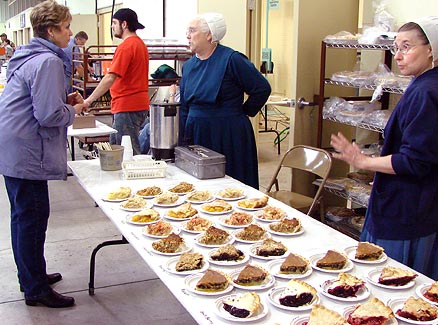
Instead, for most Americans, breakfasts is false pie - poptarts, which despite a plastic resemblance are not pies at all – because they aren’t actually food. The poptart lifestyle makes you fat, the pie lifestyle makes you thin, or thinner.

Which is why I must say to you with a heavy heart – we are facing peak pie. Corporate interventions, and the “better than homemade” slogan has resulted in a US population that mostly doesn’t know how to cook anymore. Millions of people think that pumpkin comes from a can. Farmers are still going out of business at an appalling rate. The majority of our pie ingredients are contaminated by pesticides. Our ability to provide for our pie needs is deeply threatened. We are facing the final destruction of the pie lifestyle – and the end of the last remnents of our democracy.

Make a pie and give it to a neighbor. Give out the recipe. Get together and make pies for elderly shut ins or the school bake 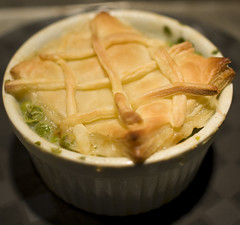

Shalom,
Sharon
Saturday, December 20, 2008
Vilsack and Obama: Farmer in Chief my Ass! by Sharon Astyk
Once again Sharon Astyk speaks my mind in words that go straight to the heart of the matter. I fervently urge you to spend some time at her blogs (caution - can be habit-forming - also, sometimes very funny, which is to say you maybe should take a pee first so you don't wet yourself - e.g. We're Gonna Need More Pie)
Casaubon's Book - Sharon Astyk
Riot 4 Austerity
Depletion & Abundance
Casaubon's Book - Sharon Astyk
Riot 4 Austerity
Depletion & Abundance
Vilsack and Obama: Farmer in Chief my Ass!
Sharon December 17th, 2008
So Tom Vilsack is going to be Secretary of Agriculture, hmmm… Let’s see, rabid ethanol proponent…check! Enthusiastic supporter of GMOs and biotechnologies…check! Totally indebted to and under the thumb of agribusiness…check! Yup, it seems clear that Obama really took Michael Pollan’s “Farmer in Chief” piece to heart ;-P. Short of actually appointing, say, Monsanto’s chairman, it is hard to imagine a choice less likely to make real shifts in our food system.
But of course, as Rod Dreher points out (quite correctly) and as Carolyn Baker points out (equally correctly), so far there’s very little from the Obama administration that should make us feel secure that what’s coming is going to shift the status quo. Ultimately, Hillary, Geithner and the rest of the crew mostly can be described as people who did things not as badly as George W. Bush and his primary appointees - but that’s hardly saying anything of note.
I was in college when Bill Clinton was elected president, and I was almost alone in my social circle in refusing to volunteer for him - I’d supported a more leftist candidate in the primaries, and despite my acute desire to believe that Clinton would offer some kind of radical change, I couldn’t quite shake the reality of his positions out of my thinking. The same is true of Obama, who, for example, wrote of dealing with the mortgage crisis in terms of the moral hazard of bailing out homeowners - but appears to have few qualms about bailing out banks.
I had precisely the same feeling during this campaign - I preferred Obama quite dramatically to Hillary Clinton, and there were genuinely moments of hopefulness in his campaign. But I kept thinking, riffing on the late, great Molly Ivins, that "you have to dance with them that brung you". That is, Obama couldn’t possibly come to power without indebting himself to people who are more invested in the status quo than in improving lives.
In order to be the president many of us hoped Obama would be, he would have to be willing to betray many of the people who brought him, and their hopes and investments in his future. This is no easy feat for anyone, and is probably less so for someone who came so far, so fast, with the hand of so many. It isn’t impossible - other presidents have done it. The man isn’t even president yet.
But presidents are known by the company they keep - the reality is that no man can supervise all the elements of the nation alone - they depend enormously on those people that Obama is appointing right now. He will not be out in the fields, or at the soup kitchens - he will rely on reports and summaries from those he appoints. And those summaries will be given by men whose viewpoints are already formed. Vilsack cannot but describe our food system through the lens of his prior investments, and this will be disastrous.
In 2002, the Atlantic ran a story by Mark Bowden called “Tales of the Tyrant” - it described what it was like to be a dictator, and imagined how Saddam Hussein’s situation must lead inevitably to his downfall. The deepest reason, Bowden argued, was that everyone lied to the dictator all the time - they couldn’t do anything else.
I’ve thought of that story a number of times in relationship to various presidencies. It is true that our presidents don’t routinely throw advisors who tell unpleasant truths into jail - but even the best of them are surrounded, not so much by people who lie all the time, but by people who tell their truth as though it were “the” truth. To some degree, of course, this is inevitable - everyone’s worldview is shaped by their experiences. But it is possible to bring in a diversity of viewpoints, to find, in multiple versions of the truth, something closer to reality. Obama has overwhelmingly chosen one, very narrow set of viewpoints - the viewpoints of people who have power now, and to whom he is already indebted for his power.
I don’t claim that there is no hope for Obama, but before he chose these people to surround him, there was hope that an ordinary man of integrity, hearing a range of viewpoints, might choose something different. Now, we have to imagine that Obama is an extraordinary man, one with the power to find unconventional paths to knowledge, and the willingness to override the viewpoints he has invested himself in. It gets harder to hope for change.
Sharon
Wednesday, December 17, 2008
Sharon Astyk's Prognostications for 2009
 Given that she nailed most of her 2008 predictions, Sharon Astyk's 2009 prognostications are worth paying attention to:
"In previous years, I was fairly lighthearted about my predictions - this year, I don’t find it possible to be. I really hope I’m wrong about this. And I hope you will make decisions based on your own judgement, not mine. These are predictions, the results of my analysis and my intuitions, and sometimes I’m good at that. But I do not claim that every word that comes out of my mouth or off my keyboard is the truth, and you should not take it as such. You are getting this free on the internet - consider what you paid for it, and value it accordingly.
1. Some measure of normalcy will hold out until late spring or early summer, mostly based on hopes for the Obama Presidency. But by late summer 2009, the aggregate loss of jobs, credit and wealth will cause an economic crisis that makes our current situation look pretty mild. With predictions of up to a million jobs lost each month, there will simply come a point at which the economy as we understand it now cannot function - we will see the modern equivalents of breadlines and stockbrokers selling apples on the streets.
2. Many plans for infrastructure investments currently being proposed will never be completed, and many may never be started, because the US may be unable to borrow the money to fund them. The price of globalization will be high in terms of reduced availability of funds and resources - despite all the people who think that we’ll keep building things during a collapse, we won’t. We will have some variation on a Green New Deal in the US and some nations will continue to work on renewable infrastructure, but a lot of us are going to be getting along with the fraying infrastructure, designed for a people able to afford a lot of cheap energy, that we have now. The most successful projects will be small, localized programs that distribute resources as widely as possible.
I pray that we will have the brains to ignore most other things and set up some kind of health care system, one that softens the blows here. If not, we’re really fucked - the one thing most of us can’t afford is medical care as it works now in a non-functioning economy. Unfortunately, my bet is that we don’t do something about this, but I hope to God I’m wrong.
3. 2009 will be the year that most of the most passionate climate activists (and I don’t exclude myself) have to admit that there is simply not a snowball’s chance in hell (and hell is getting toastier quickly) that we are going to prevent a 2C+ warming of the planet. We are simply too little, too late. That does not mean we will give up on everything - the difference between unchecked emissions and checked ones is still the difference between life and death for millions - but hideously, regretfully and painfully, the combination of our growing understanding of where the climate is and the economic situation will force us to begin working from the reality that the world we leave our children is simply going to be more damaged, and our legacy smaller and less worthy of us than we’d ever hoped.
4. 2008 will probably be the world’s global oil peak, but we won’t know this for a while. When we do realize it, it will be anticlimactic, because we’ll be mired in the consequences of our economic, energy and climate crisis. Lack of investment in the coming years will mean that in the end, more oil stays in the ground, which is good for the climate, but tough for our ambitions for a renewable energy economy. Over the long term, however, peak oil is very much going to come back and bite us all in the collective ass.
5. Decreased access to goods, services and food will be a reality this year. Some of this will be due to stores going out of business - we may all have to travel further to meet needs. Some will be due to suppliers going under, following the wave of merchant bankruptcies. Some may be due to disruptions in shipping and transport of supplies. Some will be due to increased demand for some items that have, up until now, been niche items, produced in small numbers for the small number of sustainability freaks, but that now seem to have widespread application. And some may be due to deflation - farmers may not be able to harvest crops because they can’t get enough for them to pay for the harvest, and the connections between those who have goods and those who need goods may be thoroughly disrupted. Meanwhile, millions more Americans will be choosing between new shoes and seeing the doctor.
6. Most Americans will see radical cut backs in local services and safety nets. Funding will simply dry up for many state and local programs. Unemployment will be overwhelmed, and the federal government will have to withdraw some of its commitments simply to keep people from starving in the streets. Meanwhile, expect to see the plows stop plowing, the garbage cease to be collected, and classrooms to have 40+ kindergarteners to a class - and potentially a three or four day school week.
7. Nations will overwhelmingly fail to pony up promised commitments to the world’s poor, and worldwide, the people who did the least harm to the environment will die increasingly rapidly of starvation. This will not be inevitable, but people in the rich world will claim it is.
8. We will finally attempt to deal with foreclosures, but the falling value of housing will make it a losing proposition. Every time we bring the housing values down to meet the reality, the reality will shift under our feet. Many of those who are helped will end up foreclosed upon anyway (as is already the case) and others will simply see no point in paying their mortgage when, by defaulting, they could qualify for lowered payments (as is already the case). Ultimately, the issue will probably self resolve in either some kind of redistribution plan that puts people in foreclosed houses with minimal mortgaging, with foreclosures dragging down enough banks that people find it feasible to simply stop paying mortgages that are now unenforceable, or with civil unrest that leads people simply to take back housing for the populace. I don’t have a bet on which one, and I don’t think it will be resolved in 2009.
9. By the end of the year, whether or not we will collapse or have collapsed will continue to be hotly debated by everyone who can still afford their internet service. No one will agree on what the definition of collapse actually is, plenty of people will simply be living their old lives, only with a bit less, while others will be having truly apocalyptic and deeply tragic losses. Some will see the victims as lazy, stupid, alien and worthless, no matter how many there are. Others will look around them and ask “how did I not see that this was inevitable?” Many people will be forced to see that the poor are not a monolith of laziness and selfishness when they become poor. We will know that we are in our situation only in retrospect, only in hindsight - our children will have a better name for the experience than we will, caught up in our varied personal senses of what is happening Meanwhile, each time things get harder most of us will believe they are at the bottom, that things are now “normal” and adapt, until it becomes hard to remember what our old expectations were.
10. Despite how awful this is, the reality is that not everything will fall apart. In the US, we will find life hard and stressful, but we will also go forward. People will suck a lot up and retrench. It will turn out that ordinary people were always better than commentators at figuring out what to do - that’s why they stopped shopping even while people were begging them to keep buying. So they’ll move in with their siblings and grow gardens and walk away from their overpriced houses, or fight to keep them. Some of them will suffer badly for it, but a surprising number of people will simply be ok in situations that until now, they would have imagined were impossible to survive. We will endure, sometimes even find ways of loving our new lives. There will be acts of remarkable courage and heroism, and acts of the most profound evil and selfishness. There will be enormous losses - but we will also discover that most of us are more than we think we are - can tolerate more and have more courage and compassion than we believe of ourselves.
An early Happy New Year, everyone. May you know better than you deserve and see others at their best in these hard times."
Friday, November 21, 2008
The Competence Project: How to Get Competent, and What You Get If You Do
Sharon November 20th, 2008
Ok, there was a lot of enthusiasm for my first post on my new project - people seemed to think I was starting a challenge. That hadn’t occurred to me, but heck, I’m for it - a new challenge it is. I challenge each of you to pick some area of your skill set that’s kind of weak and strengthen it. And when you feel like you’ve gotten competent, well, pick a new skill.
In the other thread, Dewey had the best idea (thanks Dewey!) - I’m going hand out official “Competence Project Merit Badges” (and hope various scouting organizations won’t sue me ;-)) to people who meet their goals. So post your first project, and I’ll have periodic threads in which people can be awarded their merit badges for whatever skill set you are trying to gain. Merit badges are completely virtual, of course, but if someone wants to make up a spiffy visual that people can add to their blog, I’m all for it.
Several people asked how they should go about learning their skill set, and I have a few suggestions for resources. I’m sure the rest of you have some good ideas as well.
1. Apprentice yourself to someone - this is by far the very best way to learn a skill, and it can save you an awful lot of trial and error. Got a neighbor who is going hunting, fixing his roof or crocheting a sweater? Why not ask if you can help out/get some lessons from them. Barter is a great tool here.
2. Take a class. Local adult education courses often cover things like this - check out their offerings. And stores that sell craft or specialty items often have classes as well - for example, Home Depot offers regular courses, knitting and quilting shops have knitting and quilting classes, etc… Just make sure that the class you are getting works with the skill set you are trying to gain - for example, if you want to learn woodworking with hand tools, make sure that you are getting a class that teaches this.
2. Use internet video - this isn’t an option for me or the rest of the world afflicted with dial up, but it is awfully nice for those who can take advantage. That way, you can actually see how to take your radio apart, or how the purl stitch works.
3. Visit your local library and take out books designed for children. Kids books have to cut the extraneous stuff out, and offer extremely clear language and direct instructions. I finally learned how to knit by using Melanie Falick’s excellent children’s book on the subject, _Kids Knitting_ and I’ve often found books for kids and teens clearer than those for adults.
4. Find comprehensive book sources - besides the ubiquitous “Dummies” series (which varies a lot in quality), Reader’s Digest has an excellent series of how-to books that cover a wide range of skills including _The Complete Do-It Yourself Manual_ (which a builder friend noted would allow you to pretty much build a house from scratch with), _Practical Encyclopedia of Crafts_ and _Skills and Tools_. I’m also partial to Gene Logsdon’s _Practical Skills_ book.
5. Specialize, specialize. I’m a big fan of the personal library if you have space. I find it really useful to have books (or material printed from the internet - never know when the service will go down, computer will be fried or the power will be out) that give detailed information and allow you to get more advanced. Honestly, we’re not all going to get really good at a lot of these things - most of us will have pretty basic skills. Still, I think if you have the money (and these are the sorts of books that often show up quite cheaply on the internet, and frequently at yard sales) it is good to have specialized books for skills you might want or need to invest some energy in. So, for example, I think that while a general crafts book will probably teach you to knit or purl, you might want a sock knitting book, or a mitten book if you knit a lot of them. Basic woodworking stuff in the above books will get you fairly far, but if you dream of building outdoor structures, picking a book that focuses on building tools for farm and garden would be good. I find it is easiest to push myself to pick up a skill if I’m doing something I really want to do - so if you can’t bear the thought of sewing the traditional pair of pajama pants as a first project, it might be worth investing in a book that will teach you to make something you really do want to make.
Ok, everyone sign up for their first merit badge project, and in a week or two, we’ll all update each other on how it is going. My first project? I’ve got a toilet that needs replacing. Let’s just say that the replacement toilet has been sitting next to the defective toilet for a very, very long time.
Sharon
Wednesday, November 12, 2008
New Sharon Astyk Book!!!
 A Nation of Farmers: Defeating the Food Crisis On American Soil
by Sharon Astyk
Once we could fill our grocery carts with cheap and plentiful food, but not anymore. Cheap food has gone the way of cheap oil. Climate change is already reducing crop yields worldwide. The cost of flying in food from far away and shipping it across the country in refrigerated trucks is rapidly becoming unviable. Cars and cows increasingly devour grain harvests, sending prices skyrocketing. More Americans than ever before require food stamps and food pantries just to get by, and a worldwide food crisis is unfolding, overseas and in our kitchens.
We can keep hunger from stalking our families, but doing so will require a fundamental shift in our approach to field and table. A Nation of Farmers examines the limits and dangers of the globalized food system and shows how returning to the basics is our best hope. The book includes in-depth guidelines for:
- Creating resilient local food systems
- Growing, cooking, and eating sustainably and naturally
- Becoming part of the solution to the food crisis
The book argues that we need to make self-provisioning, once the most ordinary of human activities, central to our lives. The results will be better food, better health, better security, and freedom from corporations that don’t have our interests at heart.
This is critical reading for anyone who eats and cares about high-quality food.
 Sharon Astyk farms in New York, and is the author of Depletion and Abundance.
Aaron Newton is a sustainable systems land planner in North Carolina, and is the founding editor of Groovy Green.
Wednesday, October 8, 2008
Here Be Dragons: Predictions for 2008
Just found in Sharon Astyk's Riot 4 Austerity archives. She gets a high score for accuracy.
Here Be Dragons: Predictions for 2008
By Sharon • Dec 27th, 2007 •
Here Be Dragons: Predictions for 2008
By Sharon • Dec 27th, 2007 •
My intuition is that in 2008, we'll no longer be able quite to hang on. I'm going to call 2008 "The Year of Dragons" - that is, the year we get off of all the maps we've had and enter uncharted territory. once upon a time, the parts of the maps that were unknown bore the sign "Here be Dragons" - I think this is the year we'll begin getting to know the dragons on the other side of our understanding.
So here are my predictions - and again, let me reiterate that the thing that I hope makes me marginally credible is this - I do not believe that every single idea I pull out of my ass...er head is the absolute truth. And if I don't, you certainly shouldn't.
But here goes.
1. This year, the words peak oil will go mainstream, but this mainstreaming will not be matched by a subtle or nuanced understanding of what the words mean. That is, peak oil will be used for political purposes, and not necessarily ones anyone will approve of.
2. By the end of the year, there will begin to be runs on preparedness equipment and food storage, a la Y2K.
3. The NeoCons will not go gently into that good night - there will be at least one serious surprise for us. G-d willing, it won't involve the word "nukuler" or any of its cognates.
4. Hillary will not win the 2008 election. Neither, despite all the people who keep sending me emails saying he will, will Ron Paul.
5. The economy will tank. Yup, I'm really going out on a limb here.
6. Many of us will find we are being taken more seriously than we ever expected. We will still be taken less seriously than any celebrity divorce, however.
7. We'll see food riots in more nations and hunger will increase. The idea of Victory Gardens won't seem so crazy anymore.
8. The biofuels craze will begin to be thought the better of - not in time to prevent the above.
9. We will see at least one more image of desperate people, walking out of their city becuase there's no other alternative. And a lot of images of foreclosures.
10. TEOTWAKI, if it ever happens, will be delayed long enough for my book to be released this fall and to make back at least the advance, so my publisher won't have any reason to try and sue me ;-).
Ok, that last is more of a prayer than a prediction - the bad thing about writing books for a publisher that deals a lot with peak oil and climate change is that the words "if everything doesn't go to hell in a handbasket" are actually included in the legal documents (ok, I'm joking).
Those are my bets, folks. We'll reconvene in late December of next year to make fun of me and my predictions. In the meantime, a happy, safe, healthy and hopeful New Year to all!
Shalom,
Sharon

Ok, Now What?
Sharon Astyk October 5th, 2008
There are certain things in my life that fall in the category of “hideously unpleasant things I am pretty certain I can’t do jack about.” Among them are drilling in ANWR and the fact that everyone on earth wants to talk about the unbelievably boring Sarah Palin. I know many of you devote a lot of passion to protesting these things, and I’m sorry I just can’t do it - that is, I don’t think that people who are cold and without energy are ever going to turn down oil from environmentally sensitive places - in fact, I think they’d be willing to power their cars with baby harp seals (and not in a nice way) if that would work. I recognize that most people simply have to say what they think about Sarah Palin, and her hominess/titillating family gossip/experience holding off Russia with her bare hands and I might as well just listen to the 9,000 description of Tina Fay’s impression. And I knew we were going to pass a bailout bill, no matter how much it made my stomach clench up with horror. All of these things are bad, bad things that it is good to protest - but protest so that you can say you tried, not with the expectation that the laws of nature will somehow be refuted.
Why was the bailout destined to pass? Well, the most obvious reason is this - shockingly (and apparently a lot of very dim people in Washington did find this shocking), the stock market reacted to the news that they weren’t getting 700+billion dollars worth of free money pretty much like toddlers not getting lollipops. From what I’ve heard of the reaction on the House floor on Monday, the fact that the markets had their heart set on their lollipops was news. Meanwhile, it seems like foreign governments were also unhappy at the lack of lollipops, and exerted some pressure. Apparently that was pretty shocking too. And like the absentee upper class parents most congresspeople probably were, they gave in to pressure. We do not elect our government for their courage, but for their willingness to dance to the flutes of power - we want them to reflect the will of the people. And they do - the will of the people with the power to undercut their wealth and power. Unfortunately, neither you nor I are one of them.
More importantly, we’re having an election. Now the US has been afflicted with the current campaign season since, if I recall correctly, 1066, when the Normans invaded England and Hillary Clinton declared her candidacy. But pretty soon we’re actually going to have an election. And even though the bailout is not going to do jack to spare us economic disaster, if they hadn’t passed one, it would have been far to easy to hold those who did not pass it responsible for whatever comes down the pike. Now everyone gets to hold up their hands and say they tried their very hardest, really truly they did, but they just couldn’t save everyone. Central among the people who they couldn’t save (because they tried so hard) will be widows and orphans, single parents and kids, and you and me. It turns out they were so busy rescuing the rich that the fact that they let the much larger group of poor drown was just an accident.
Oh, and raping and pillaging is fun. One doesn’t just quit a hobby like that cold turkey. Shock doctrine capitalism is the name of the game, and the perpetrators aren’t ready to admit that the game is over - and of course, with Congress in their pockets, it isn’t.
There are other reasons, of course, and you can read more about them in lots of the usual spots. But the truth is that despite the mass outpouring of anger at the bailout, despite the fact that the people spoke, not because they were too stupid to understand that the economy was tanking, but because they didn’t want to throw good money after bad - despite all that, the bailout was inevitable and it happened. And the only good thing I can say about this is that when the economy tanks anyway, that anger may actually be a useful tool in making some change. I hope everyone out there will remember this week not only when it comes time to vote this round, but the next and the next. Some things you may not be able to stop, but that doesn’t mean you have to forgive.
So now what? What comes next in ordinary people’s lives? Well, what comes next is another series of crises. The stock market didn’t even get a bounce out of the bailout package. Sure, some things will do a little better for a short while, maybe even enough to get through the election. But don’t count on it - things are falling apart faster than anyone can glue them back together. Which means that Paulson and Bernanke are going to be back again and again and again - next to prop up the FDIC or bail out some other organization that they swear is too big to fail. And then, when the money runs out and there’s no more on offer, they will explain to us that if we’d just authorized that last print run of cash, or if we had just been better people, or hadn’t taken so much debt, or had listened to them sooner, it would all be alright, but now, well, the money’s all gone, so no point in trying to relieve the plight of ordinary people who didn’t want to give them money anyway. You can bet that the cause of the problem will be you - your failures, your credit card debt, your wanting a house, as though you (collectively, in the millions) all acted alone to take down the economy on our own private grassy knolls.
What can we do about it? Protest - because it came closer to working here than I think anyone expected it to, and it may well work sooner or later. Call and fight and be angry - don’t let them wear your anger out. Clarify - make sure that the message gets out whose fault this really is. Vote, of course, because even the lesser of two evils can be quite lesser.
But more importantly, to the extent it is possible, we need to build redundancies into the systems we depend on that don’t depend on wall street, or the stuff we shortly won’t have any money for anyway. That means everyone out there needs to look around them and ask what small piece of the infrastructure of their lives (and the lives of their community members) they can take some responsibility for. We need to all look and ask “what is my job in this new world we’re awakening to?” What the heck can I do to help mitigate this disaster?
Maybe you already know your job - it is the thing you care about, the work you do already for free or for money, in every second of spare time or 10 hours a day. You do something that matters - you provide health care, grow food, teach, mend what’s broken, feed the hungry, fight for justice - you do good work, and now you have to figure out a way to keep the work going without as much money or energy.
Or maybe you are head down in a health care crisis, a new baby, a family shift - and all you can do is prepare and protect yourselves and your families as best you can. You haven’t the time and energy to do much more than that - and your job is to get through this, so that later, you can do the work that needs doing. That’s ok - but as soon as you can, make a little time, even if it is just to check in on your neighbors or start carpooling to the grocery store.
Maybe you don’t know what your role is. Maybe you do have a little time or energy that could be used to build community, fix things, help others, but you are shy, and you don’t know what to do. And I can’t tell you exactly what you should do - you know your talents and skills best. Maybe you are a natural organizer and leader, and you should get started with your community’s victory garden movement, building the community health center or getting neighbors to pool their resources to get a shared transport network up. Maybe you are more comfortable following, in some already existing role - and it is time to get out to the local food pantry and start figuring out where they are going to get enough food to help all the hungry. Maybe you care most about kids, or elders or women or the hispanic or black or asian community, and that’s where you should concentrate your energies. Maybe you want to work with members of your faith, your family or your friends. Great - do it. But do it now.
We’re all going to need reliable sources of food.
We’re all going to need some transportation.
We’re going to need health care, and emergency services.
We’re all going to need good work - even if it is only for food.
We’re going to need ways to keep people housed, to connect folks who need homes with those who can’t keep them unless they rent some space.
A lot of people are going to need warm clothes and blankets.
A lot of people are going to need a meal, a helping hand, help with disabled family members and elders.
And folks, when the formal economy falls away, when we cannot trust our government to act in our interests, all of us have to get acting to compensate, to keep the wolf from the door.
The truth is that the bailout, on one level, was the final reminder of what Hurricane Katrina taught us, that no one is coming with a helicopter to rescue us. Fortunately, some of us have boats, and the rest of us can build life rafts, and there’s a lot we can do to rescue ourselves.
What now? It is all hands on deck, folks.
Sharon
Friday, October 3, 2008

 Crisis Shopping: Food Storage When You Haven’t Been Storing Food
 Sharon Astyk October 2nd, 2008
Several readers have asked me to do a piece on what to do if you have been procrastinating about food storage, but plan to stock up before the end of the world (I’ve heard that Paulson and Bernanke have scheduled that for this weekend, but it could potentially be moved due to a conflict with some other disaster ;-).) So for all you procrastinators out there, here are my suggestions.
Now let’s note - my first suggestion is not to procrastinate. Because unless you are fairly well off, procrastinating and buying a lot of food probably means putting it on your credit card and paying it off. Not only is this extremely risky (I would not bet on any version of the apocalypse that doesn’t actually involve real zombies to get you off the hook with your credit card - and I’m pretty sure that they have zombie collection agents already, so maybe not even then.), it means that you will pay interest on the food, thus mitigating much of the benefit of even having it. But I do also know that sometimes one gets a big check, bonus, windfall, sells something or maybe the food is worth the price. So let’s assume that you all know better, and are doing it anyway.
Let us also assume that you are doing this shortly before everyone else starts their panic buying or shortly after (which makes it harder and makes the selection of stores more crucial), and that one or two stop shopping is the name of the game - you need to get as much that is useful as possible, as quickly as possible, perhaps not using much gas. So let’s start with where to shop.
My top few choices, in no particular order:
1. BJs/Sams Club/Costco: This is probably the most accessible (ie, lots of people have these reasonably nearby) and has most of the things you’ll really want. The downside is that often the bulk prices aren’t really very much or at all cheaper than smaller sizes, that the warehouses are huge and shopping there annoying and that they probably won’t have anything ethnic, or a large selection of nutritious things. Also will probably be mobbed if there’s a real or perceived immanent crisis. My tip for shopping here: if there isn’t an immanent apocalypse, you can probably get a free 1 shot membership to do a stockup even if you can’t/don’t want to pay the fee - they usually offer trials, and if you say you’d like to check it out, this can often be arranged.
2. An Asian grocery store of some sort. Best grain source for rice and often some kinds of noodles in quantity and quality, often have large quanties of spices and useful flavorings quite cheaply. The downside is that unless you cook asian food you will be confronted by many unfamiliar items, and you may find yourself with all the ingredients for Nasi Goreng, or Palak Paneer and no recipes, or idea whether you like it ;-). Also, not common in areas without large Asian or Indian subcontinental populations, so it might not be available. Tip for shopping here: go when it is quiet (weekends are tough) and ask for help - there’s usually someone who can help you figure out what you are buying.
3. A feed store. If a panic has already begun, this might actually be your best bet for getting large quantities of edible grains and pet food (plus livestock feed if you’ve got this). If you buy organic, whole feed grains, they should be adequate for human eating - and they come in 50lb quantities. Pick up your emergency supply of dog or cat food, some seeds for spring, and cracked corn and whole oats for you (and your horses). The downside: feed grains may not be especially tasty, organic feed is pricey, feed mixes may have things you don’t want, unless you live in a reasonably rural area, there probably won’t be one. Tip for shopping here: human consumption grains would be a better choice - save this option for food for yourself for a true crisis.
4. A coop or bulk food store. Coops are great because they tend to be run by good people and have reasonable prices. Privately owned bulk food stores also have good stuff - the thing is, most of these won’t have large quantities of staples in large bags - you’ll have to empty out the bins or place an order in advance. Still, not a bad place to get unusual ingredients, seasonings, yeasts, salt, nutritional supplements and meet special dietary needs. Tip for shopping here - you might ask if they have any bulk grains they can sell in larger quantities lying around - instead of asking for “50lbs of wheat” you might come at it the other way, asking what they’ve got a lot of.
5. Odd lots store/dollar stores: These are unlikely to have large quantities of things, but if you’ve got a big enough vehicle, you might be able to buy a pallet load of weird cereal by a a manufacturer you’ve never heard of for $1 box. These are good places to get canned goods and to pick up bug out bag foods that are light, nutritionally dense and portable. Soap and shampoo are often cheap here as well, and you may be able to get a few needed household goods, a couple of extra flashlights and whatever. Tips for shopping here: if you see something you want, snag it then - inventory changes fast.
6. Supermarkets - this is the classic crisis food shopping space, and the one that tends to get ripped into pieces until all that is left is Preparation H. These are to be avoided if you can avoid them during an actual crisis. If not, get there as early as you can, avoid the bottled water aisle (store some water in empty bottles instead and save your money for food). If you must hit one of these, choose one with a health food section and bulk bins, and ideally, a supercenter sort of thing, where you can also pick up anything else you need. Tip: Even if the crisis is likely to be long term, most people see supermarkets as a place to get short term needs met - so you are likely to find that staple foods and things like vitamins sell worse than boxed chocolate chip cookies. This is good, since you want more staples than cookies.
7. Drugstores, hardware stores, etc…: I’ve included these because you may have to stop at one - you may need a refill of your medication, to fix up the family first aid kit, or to buy flashlights. If you do need to stop, and are doing them in a rush, take a couple of minutes and think about other needs you might meet in such a place - drugstores may have some food and cheap spices, hardware stores may have other useful things at reasonable prices, like seeds. I’m not saying you should buy everything in sight, just working under the assumption that you may be able to make a limited number of stops. Generally speaking, though, if you can, you might want to consolidate trips the other way, and get your meds at a place that also primarily sells food.
Ok, now what to get. This assumes you mostly eat a regular American style diet (which ideally you don’t), that we shouldn’t push you too hard, and that you will be shopping at the above sorts of stores. That is, if you normally eat a lot of dal or mung bean noodles, please do add them to your plan. This is meant to cover mainstream ground - it is not meant to imply optimalization.
Here’s what I’d concentrate on. I am not including quantities here, because I don’t know how much you can afford, how big your household is, etc… What you should do is get as much as you can afford/haul and *manage* without spoilage. That means, get only what you can find a safe, bug and rodent proof spot for.
I’m also assuming that you don’t have a lot of fancy equipment - ie, I think life would be better for you if you had a grain grinder, but I’m going to assume no.
1. Vitamins. Get enough for everyone in the household. Regular, generic mulivites are fine, and any special supplement you take (although if these are optional luxuries and money is tight, forego the vitamin E capsules for more food instead). Yes, it is better to get your nutrients from food, but this is important. Also make sure you pick up children’s or prenatal vitamins if anyone in your household has a special need for these. You might also want to pick up a couple of bottles of vitamin C tablets.
2. Rice - as much brown rice as you can eat (and remember, you may be eating a lot more of it than you have been) in 3 months, plus as much white rice as you can. Why rice? It is widely available - even supermarkets sell it in 10 or 20lb bags in many cases. It is comparatively cheap, it is hypo-allergenic (ie, nearly everyone can eat it including infants and the ill), and it is familiar to people in just about every culture in the world. Brown rice is dramatically more nutritious, but it is also prone to spoilage - maximum storage is about 1 year, and it often goes rancid before that. A not-insignificant percentage of the population can’t taste rancidity in grains at all, so won’t know if the rice is still good to eat. So it is safest to get a short time supply of brown rice, and then mostly use white rice (supplemented with more nutritous grains).
2. Flour - get as much whole wheat flour as you can use in 6 months, and then get unbleached white flour. Again, you’ll be using the less nutritious form of the grain, but at least you’ll have food.
3. Rolled or steel cut oats. Get as many packages as you can. These are fairly nutritious and will help balance out some of the white stuff in your diet. This is breakfast.
4. Legumes: These include beans, split peas, lentils, cowpeas, pigeon peas, etc… Buy 1/3 of the weight of your combined grains (flour, oats and rice) in dry form. Check out the ethnic foods section for large quantities. These will provide protein, fiber and a host of other goodies. Don’t be afraid to try unfamiliar things here - they have a fairly wide taste range, but if you can eat one, you can eat another.
5. Something that sprouts. If you get stuck eating off your stored food in the winter or a summer dry season, when not much is going on, sprouts can save you. Ideally, you’d have a variety, from broccoli to onion to mung bean… In reality, you may not have much of a choice. But a lot of things in the bulk bins at whole foods or your health store, or available other places will sprout. They include whole wheat, alfalfa sprouts (just make sure you aren’t getting seed that is treated, and only use organic), untreated sunflower seeds, and a host of designated sprouting seeds. Nutrionally, if I had a choice I’d get broccoli, alfalfa and sunflower, as well as wheat, but you’ll be fine with just one.
5. Some other protein food - unless you are quite odd, you probably will not enjoy rice and beans for dinner, bread and beans for lunch and oatmeal for breakfast every day. You will be fine eating this - maybe even healthier, but you would be happier if you had something with a bit more fat, flavor and protein density, particularly if you are shifting from an average American diet. You do not need a lot of this - you might prefer a lot, but it
Best choices:
1. Whole nuts, flaxseeds or sunflower seeds in the shell
2. Peanut butter. Not the natural stuff - you want it shelf stable and in large quantities.
3. Canned fish - don’t overdo this if you have kids, are pregnant or nursing. But canned fish does have important nutrients, is tasty and makes people happy. Canned wild salmon is lowest in mercury, but can have high levels of PCBs. Don’t forget sardines, mackerel and other unusual fishes. Don’t go crazy also because it isn’t good for what’s left of the oceans, but occasional fish is good.
4. Shelf stable tofu, dried tofu sticks (asian groceries) or other stable soy protein.
5. Canned meat - I’m not a big fan of this, generally speaking, because unless you have a ton of money, canned meat is always from horrible sources, often troublesome in environmental ways, and doesn’t taste good. But others love their spam, and I won’t try and turn you away from it. Again, though, you don’t need that much - think occasional treat, and enjoy the flavoring and fat.
6. Fat: Olive oil in metal tins keeps several years if kept cool - that’s what I’d get of the choices available, with a bit of coconut oil to provide a tasty, shelf stable fat for piecrusts and “butter.” If you have to go cheap, get what you can afford that’s not too awful.
7. Dried fruit - if you are at a Sam’s Club type-place, you can buy big sealed bags of dried raisins or cranberries or something. Otherwise, you can take what’s available at the dollar stores or go hunting in the bulk bins. You want this for nutritional reasons, and so that you don’t get so constipated you can’t breathe. Also good for kids, to help them transition, or picky adults who are kind of like kids.
8. Powdered milk, soy, or rice milk. This is for calcium, protein to enable you to bake, to add creaminess to things, etc…. It will never taste like real milk, but you can live with it. It lasts a long time, and you can use it baking if nothing happens, so you might as well get as much as you can.
9. Salt - get a bunch, iodized for eating (you only need a little of this - and if you don’t want to store iodized salt or want something better, you can also buy dulse or kelp supplements to meet this need, but the easiest, most stable source is iodized salt) and uniodized for preserving, livestock if you’ve got it, brushing teeth, etc… This is cheap, and necessary to life.
10. Sweeteners - unless you have weaned yourself off of this entirely, you will want these. Sugar is probably cheapest, a lot of bulk honey is watered down or sugar syruped up. But you can use maple syrup, sugar, sorghum or whatever is most easily available. You may also need to stretch it - so work on reducing sugar now. We don’t need anywhere near as much as we eat.
11. Canned vitamin rich vegetables. Get a couple of flats each of pumpkin/squash/sweet potatoes, and some kind of canned green (mustard or turnip greens hold together better than spinach). If you are used to eating fresh, these will not taste as good as fresh - but can be mixed into things in the background to add nutrition. Make sure that you use the liquid from the greens as well. Some canned fruit is nice too, if you have room/can afford it. Canned pineapple is, to my mind, the best tasting commercially canned fruit.
Alternately (and better), you might be able to hit a farmstand and get sweet potatoes, cabbage and turnips, which would be much better for you, tastier and local, but the assumption of this discussion is that you aren’t doing that. Still, if there’s anyway to buy fresh food that can be root cellared, you’ll be a lot happier than relying on canned veggies.
12. Something(s) to flavor water/powdered milk. This depends on your preference, but if you are using non-traditional water sources, or drinking powdered milk for the first time, making it taste better will be worth a lot. Plus, if you are a tea or coffee person, you will be sad without them. So get vacuum packed cans of coffee, or lots of tea, cocoa. And if you have kids, or vitamin C worries, or the water tastes horrible, you might want to get some Tang or HiC powdered drink mix. The stuff is icky, but will add some sweetness, and also some nutrition, while covering the taste of bad water.
13. This is controversial, but you might want some alcohol. There are a couple of reasons. First, if things are bad enough and you have no major responsibilities, you might want to get drunk. Second, and more practically, a small amount of alcohol in your water will kill many bacteria, and is safer than inadequately filtered water. Oh, and you can probably use it like money to get other things.
14. Lots of seasonings. Varying your meals is key. Buy lots of spices, and you may also want ketchup, mustard, hot sauce, chili-garlic paste, fermented black beans, chutney, worcestershire…whatever. Depending on what you can afford and where you are, don’t forget this.
15. Get some treats. You will need them. So put some smoked oysters, a few bags of chocolate chips, some beef jerky, peanut brittle - whatever you or your family crave. I’d also suggest some kind of small candy that stores fairly well (we use those tiny dum-dum lollipops which come in bags of a zillion) to be doled out as rewards for children who are eating their new diet reasonably graciously and responding to their new reality - they are small and sweet and ease transitions. Adults might need other bribes. Also, don’t forget the ingredients for your special Easter bread, matza balls, or whatever other special occasions your family will still want to remember.
16. Some things that are dense and require minimal cooking in case you have to evacuate or if you are under stress - some ramen, some dried fruit, energy bars, instant bean soups, canned soup, etc…
Then add some extra batteries (if you aren’t already stocked), gas for the car and the can, a way to cook without power (sterno, camp stove, woodstove, more propane for the grill), and water purifiers (it will be easiest if you get this first). Ta da! You are ready for the zombies!
Sharon
Subscribe to:
Posts (Atom)