Saturday, June 28, 2008

Transforming Your Urban Backyard

Transforming Your Urban Backyard

Posted in Land, Urban Projects by Mal McKenna on the June 26th, 2008

Many people living in the suburbs and cities would like to ‘have a go’ at living a more sustainable and satisfying life and yet are daunted by what they view as lack of space and appropriate surroundings. It is easy to say “I just don’t have the space here!” or “Oh, my soil is terrible - I couldn’t grow a thing!” One of the enjoyable aspects of permaculture design is the challenge of recognising ‘problems’ and turning them into solutions. Sometimes all it takes is a shift in perception to turn a frustrating obstacle into a much needed asset.

by Mal McKenna and Phil Dickie
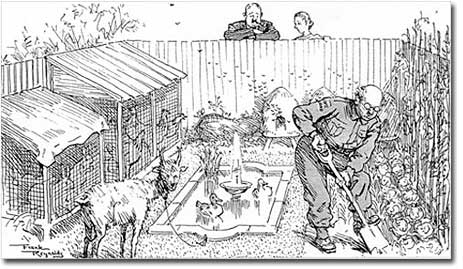
Most of us would probably prefer to impose our designs on grand vistas of idyllic acreage. However, most of us also have to make do with something much smaller, like a suburban backyard. If this is a matter of great regret remember it is also a peculiarly affluent First World perspective - we live in a world where many have no choice but to live off far less than a quarter acre and many for whom even this is an impossible aspiration.

How do you make the best of a backyard garden? Ultimately, it is your experiment; there is no universal backyard plan. As every yard will be different it is totally up to you or your family to decide what you would like to create. You may wish to begin with small projects such as creating a suntrap to give you a warm place to sit and have your breakfast on chilly mornings - even to provide your breakfast if you grow the right species. You could also plan a shady nook for those hot summer days, maybe in the form of a shade tree, maybe a small pergola covered in juicy grapes. The following tips and inspirations, derived from experience both tragic and comical, might help in whatever backyard transformation you may choose.

Starting Out

In this society, gardening is a big business burdened with experts telling you what you need to do and most importantly, what you need to buy, spray, spread, plant and so on ad infinitum. Balls! - It is your backyard and gardening is not about feeding the economic machinery. Think of gardening as contemplative fun, productive and meaningful labour and a place to escape the manufactured stresses of everyday life. Go and sit in it, and get a feel for it. Before you know it you are starting to evolve the plan.

The Plan

Elements to consider include aspect, climate, your time, budget, needs and future plans and, most important in the city, your neighbours. Shade is often a constraint in built-up areas - give some thought to the extra shade you will create when all those fruit trees grow.

Consider the existing structures and features. Are you happy with their placements? Are they productive and useful - or are they dysfunctional and a maintenance hassle? Translate your ideas and feeling onto a piece of paper or several pieces of paper. Draw in what exists and what will stay, as well as such constraints as windblown or shaded areas. Then allocate general areas for trees, annual vegetables, animals, access paths and other needs such as clothes lines and play areas. Don’t go overboard on function - humanity has aesthetic and spiritual needs as well. Exotica such as herb spirals, mandala gardens, banana circles, ponds and bird baths can be a combination of the aesthetic and the functional.

If you need ideas there is a wealth of knowledge in books, magazines, and other people’s experience to help you draw up a plan. Send away for seed catalogues, visit local nurseries. Talk to your friends and neighbours, find out what grows well in your area. Visit other lots and take note of the structures and gardens. Observe why the connections between some components work well and others don’t. Note where your friends spend most of their time in their lots, and why. Observation at this point is the key.

Also remember ‘the problem is the solution’ philosophy. Perhaps your lot is concreted and you do not wish to jackhammer any of it to dig in a pond. The solution? Make use of an old bathtub or build your pond on top of the concrete using bricks, rocks and an old tractor or truck tyre.

The Soil

Soil is fundamental but don’t despair if yours is not ideal. Most Australian soils lack something. You can, if you wish, spend hundreds of dollars on soil tests. Alternatively, check out your soil yourself - is it full of life, particularly of the wormy variety? If it is not - it needs organic matter at the very least. Soil pH, or the acidity or the lack thereof, is also important enough to test for because it determines the availability of minerals. Bare soil is a no-no in the tropics and the subtropics, so mulch is important in these areas. Growing your own leguminous mulch is one of the best methods of soil improvement anyway. Think about improving soil quality through what you put on top of the soil and let the earthworms incorporate (an ancient practice going under such modern brand names as sheet mulching, no dig gardening and the magic of mulch).

Loosen compacted soil with a garden fork. Drainage is also important, as most trees like good drainage. Poor drainage may be a matter of poor soil texture (which can be improved) and/or topography (which might be difficult to change). Clay soils might appreciate the addition of sand and vise versa, but it is also hard to go wrong (in the longer term) with the addition of organic matter (general panacea for all soil problems). Rock dusts (quarry wastes) or even soil from somewhere else may supply the minerals that your soil lacks. Soil from elsewhere may also contain microorganisms missing from your soil - if you chance upon a tree growing better than your own of the same variety, take a handful of soil from underneath it and if you are lucky you may have acquired some beneficial bacteria and/or fungi. To a large extent if you look after your soil, your plants will look after themselves.

Getting It All In

In a small area, the main concern is space. Following the recommendations of your local agricultural inspector or the directions on seed packets might leave you just enough room for one small tree and a lettuce plant in a small backyard. However, small areas can be intensively planted as they can be (relatively) intensively cared for. Getting it all in is a matter of going up, going down, going sideways, and going with the flow (the McKenna theory of lateral gardening).

Going Up

This is a matter of using your vertical or high spaces as a growing support (or creating some where they do not exist) Consider even the roof; around the world many do. Overhangs can be the location of hanging trellises. High fences are natural trellises, as are houses and retaining walls, ‘feral’ or pioneer trees, balconies, chook houses, garages or even old clothes lines past their prime. The vine is the plant category invented to take advantage of natural or artificial trellises, to insulate, to shade, to beautify and to cool. Chicken wire, spread over surfaces, hanging down, pinned up or on any type of framework is the substance created to give the vine a home.

Plants of various heights, a balcony, or pots of various heights, can make the most of a scarce commodity like sunlight or horizontal space. Mounds, and such constructions as herb spirals also make the most of space by incorporating a vertical element into an otherwise uninspiring horizontal surface. Trees intent on taking over the yard can be kept small and productive (and their fruit within reach) by being potted, or tip and/or root pruned. Vertical stacking is the technical term for the art of putting things on top of each other - sheet mulching on concrete, vines on trees, beehives on roofs, ponds on top of spirals, gardens on roofs, bureaucrats in big tall buildings in city centres. Often the main limits are a lack of imagination and the willingness to experiment.

Going Down

Underground is the unseen dimension. Some plants feed deep and some feed shallow and so can be planted close together. Not enough soil depth? Why not dig out paths to subsoil level and build up topsoil elsewhere with the soil? Ponds are an obvious way of going down productively; a flow can be created between ponds at different levels. Ponds can also be terraced internally to suit the differing depth requirements of various plants. Water can be an extremely productive medium; rather than persist with a drainage problem area, why not turn it into a water-based garden, digging some areas down to create ponds and raising better drained mounds in other areas. Likewise, where drainage is poor but there is some slope, a chisel plough or like implement can be used to direct subterranean water from where it is not needed to where it might be more useful.

It is preferable to try and trap nutrients and water that naturally escape your system. You can use deep or spike rooted plants which can then be harvested as mulch - leucaena and comfrey are good examples. Water running down a slope to waste may be caught in contour depressions or into a hole to water a specific tree a short distance downhill. In sandy soils, where the water runs straight through, it may pay to bury subterranean water containers. And although it may be heresy to the local council, it is a fact that roof water and many needed nutrients are directed down subterranean pipeways to unproductive or destructive ends in river and seas. If possible this flow should be interrupted and the water tank and occasional piddle in the garden be considered useful subversion.

Going Sideways

This is the art of horizontal stacking, fitting more into less. Classic examples are the keyhole bed or its derivative, the mandala garden, where you get more access with less path; and the banana circle, where a single compost heap and watering point keep multiple plants happy. Edge is a useful concept here; wiggly edges - to ponds, garden beds and any ‘boundary’ - give more horizontal space, greater productivity and more interest to the system. Going sideways is also about connecting the elements and having them serve more than one purpose; as in Bill Mollison’s Parable of the Chicken. A mulberry is both chook and human food - why not plant it in the chook pen? A pigeon pea is potentially food, a mulch source and a soil improver - best incorporated in a garden as all three. It is hard to imagine a more multipurpose object than a chicken - egg and fertiliser producer, weed, pest and scraps eater, garden hoe, pet or, in a mutually exclusive use, Christmas dinner. In a small backyard, totally free-range chickens are usually garden destroyers; some form of confinement in a run is usually necessary.

Companion planting is an example of the same principle - nature seems to demonstrate that monocultures are preferred only by pests and modern agriculture. Background reading, observation around your area and some judicious experimentation are the way to find out what goes with what. Intensive vegetable gardens and mature trees do not generally go together so allow for each separately at the planning stage.

Going With

This is the Zen dimension, making the best of what is or turning problems into solutions. Very few of us inherit a blank slate with perfect soil, aspect and no problem plants, structures, conditions or neighbours. Rather than change the problem soil, why not find plants or uses suited to it, for example, blueberries in acid soil, ponds in poor drainage areas. Problem trees can be ready-made trellises, or can be brought down gradually through top and root pruning and turned into mulch as you go. Excess wind can be diverted to useful purposes as well as being blocked or impeded. Light or dark colouring, whether of leaves or walls, can reflect or absorb sunlight. As for neighbours, very few can remain hostile in the face of gifts of eggs, fruit or honey; this can be a beginning to co-operative actions on other fronts such as noise, traffic and community facilities.


Sometimes, it is just the mindset that is at fault; a whole destructive industry is based on paranoia about weeds, defined as plants we don’t want. However, weeds can also be thought of as soil protectors, indicators or improvers, many are food (for people, chooks, bees and pest predators) and most make good mulch and compost. An even more destructive industry is devoted to pests, seemingly defined as the entire insect population of the planet. Pests can be redefined as a vital signal of imbalance, as a tolerable nuisance on the way to generating its own solution if left alone, as predator (bird, fish, frog, insect and elsewhere, human) food, or as pollinators, scavengers or self motivated secateurs.

In transforming your backyard you may also like to create a recycling system. This may include recycling grey water, food scraps and/or excess produce. If you have space for small animals and/or poultry you will find that they handle most of the scraps, otherwise all scraps can be put in the compost. Chooks do not eat onions, garlic, citrus skins, tea or coffee. Most plain paper can be used for sheet mulching. Leftover cardboard can be used for pathways and other materials which are slow to break down can be ’slow composted’ in a banana or paw paw circle.

Continuing to Learn

This has been but a brief flit through backyard possibilities. Remember, a welter of additional information is available through books, courses and from other backyard gardeners. However, your greatest teacher is likely to be your own backyard - if you get down there and interact with all your senses. Much of the most productive time spent in a garden is not that spent digging and working but that spent sitting and contemplating.

Wednesday, June 25, 2008

Twenty Years Later: Tipping Points Near on Global Warming

Published on Tuesday, June 24, 2008 by The Huffington Post

Twenty Years Later: Tipping Points Near on Global Warming
Dr. James Hansen by James Hansen

[Monday] I testified to Congress about global warming, 20 years after my June 23, 1988 testimony, which alerted the public that global warming was underway. There are striking similarities between then and now, but one big difference.

Again a wide gap has developed between what is understood about global warming by the relevant scientific community and what is known by policymakers and the public. Now, as then, frank assessment of scientific data yields conclusions that are shocking to the body politic. Now, as then, I can assert that these conclusions have a certainty exceeding 99 percent.

The difference is that now we have used up all slack in the schedule for actions needed to defuse the global warming time bomb. The next president and Congress must define a course next year in which the United States exerts leadership commensurate with our responsibility for the present dangerous situation.

Otherwise it will become impractical to constrain atmospheric carbon dioxide, the greenhouse gas produced in burning fossil fuels, to a level that prevents the climate system from passing tipping points that lead to disastrous climate changes that spiral dynamically out of humanity’s control.

Changes needed to preserve creation, the planet on which civilization developed, are clear. But the changes have been blocked by special interests, focused on short-term profits, who hold sway in Washington and other capitals.

I argue that a path yielding energy independence and a healthier environment is, barely, still possible. It requires a transformative change of direction in Washington in the next year.

On June 23, 1988 I testified to a hearing, organized by Senator Tim Wirth of Colorado, that the Earth had entered a long-term warming trend and that human-made greenhouse gases almost surely were responsible. I noted that global warming enhanced both extremes of the water cycle, meaning stronger droughts and forest fires, on the one hand, but also heavier rains and floods.

My testimony two decades ago was greeted with skepticism. But while skepticism is the lifeblood of science, it can confuse the public. As scientists examine a topic from all perspectives, it may appear that nothing is known with confidence. But from such broad open-minded study of all data, valid conclusions can be drawn.

My conclusions in 1988 were built on a wide range of inputs from basic physics, planetary studies, observations of on-going changes, and climate models. The evidence was strong enough that I could say it was time to “stop waffling.” I was sure that time would bring the scientific community to a similar consensus, as it has.

While international recognition of global warming was swift, actions have faltered. The U.S. refused to place limits on its emissions, and developing countries such as China and India rapidly increased their emissions.

What is at stake? Warming so far, about two degrees Fahrenheit over land areas, seems almost innocuous, being less than day-to-day weather fluctuations. But more warming is already “in the pipeline,” delayed only by the great inertia of the world ocean. And climate is nearing dangerous tipping points. Elements of a “perfect storm,” a global cataclysm, are assembled.

Climate can reach points such that amplifying feedbacks spur large rapid changes. Arctic sea ice is a current example. Global warming initiated sea ice melt, exposing darker ocean that absorbs more sunlight, melting more ice. As a result, without any additional greenhouse gases, the Arctic soon will be ice-free in the summer.

More ominous tipping points loom. West Antarctic and Greenland ice sheets are vulnerable to even small additional warming. These two-mile-thick behemoths respond slowly at first, but if disintegration gets well under way, it will become unstoppable. Debate among scientists is only about how much sea level would rise by a given date. In my opinion, if emissions follow a business-as-usual scenario, sea level rise of at least two meters is likely within a century. Hundreds of millions of people would become refugees, and no stable shoreline would be reestablished in any time frame that humanity can conceive.

Animal and plant species are already being stressed by climate change. Species can migrate in response to movement of their climatic zone, but some species in polar and alpine regions will be pushed off the planet. As climate zones move farther and faster, climate change will become the primary cause of species extinction. The tipping point for life on the planet will occur when so many interdependent species are lost that ecosystems collapse.

The shocking conclusion, documented in a paper2 I have written with several of the world’s leading climate experts, is that the safe level of atmospheric carbon dioxide is no more than 350 ppm (parts per million), and it may be less. Carbon dioxide amount is already 385 ppm and rising about 2 ppm per year. Shocking corollary: the oft-stated goal to keep global warming less than two degrees Celsius (3.6 degrees Fahrenheit) is a recipe for global disaster, not salvation.

These conclusions are based on paleoclimate data showing how the Earth responded to past levels of greenhouse gases and on observations showing how the world is responding to today’s carbon dioxide amount. The consequences of continued increase of greenhouse gases extend far beyond extermination of species and future sea level rise.

Arid subtropical climate zones are expanding poleward. Already an average expansion of about 250 miles has occurred, affecting the southern United States, the Mediterranean region, Australia and southern Africa. Forest fires and drying-up of lakes will increase further unless carbon dioxide growth is halted and reversed.

Mountain glaciers are the source of fresh water for hundreds of millions of people. These glaciers are receding world-wide, in the Himalayas, Andes and Rocky Mountains. They will disappear, leaving their rivers as trickles in late summer and fall, unless the growth of carbon dioxide is reversed.

Coral reefs, the rainforest of the ocean, are home to one-third of the species in the sea. Coral reefs are under stress for several reasons, including warming of the ocean, but especially because of ocean acidification, a direct effect of added carbon dioxide. Ocean life dependent on carbonate shells and skeletons is threatened by dissolution as the ocean becomes more acid.

Such phenomena, including the instability of Arctic sea ice and the great ice sheets at today’s carbon dioxide amount, show that we have already gone too far. We must draw down atmospheric carbon dioxide to preserve the planet we know. A level of no more than 350 ppm is still feasible, with the help of reforestation and improved agricultural practices, but just barely ­ time is running out.

The steps needed to halt carbon dioxide growth follow from the size of fossil carbon reservoirs. Coal towers over oil and gas. Phase out of coal use except where the carbon is captured and stored below ground is the primary requirement for solving global warming.

Oil is used in vehicles, where it is impractical to capture the carbon. But oil is running out. To preserve our planet we must also ensure that the next mobile energy source is not obtained by squeezing oil from coal, tar shale or other fossil fuels.

Fossil fuel reservoirs are finite, which is the main reason that prices are rising. We must move beyond fossil fuels eventually. Solution of the climate problem requires that we move to carbon-free energy promptly.

Special interests have blocked transition to our renewable energy future. Instead of moving heavily into renewable energies, fossil companies choose to spread doubt about global warming, as tobacco companies discredited the smoking-cancer link. Methods are sophisticated, including disguised funding to shape school textbook discussions.

CEOs of fossil energy companies know what they are doing and are aware of long-term consequences of continued business as usual. In my opinion, these CEOs should be tried for high crimes against humanity and nature. If their campaigns continue and “succeed” in confusing the public, I anticipate testifying against relevant CEOs in future public trials.

Conviction of ExxonMobil and Peabody Coal CEOs will be no consolation, if we pass on a runaway climate to our children. Humanity would be impoverished by ravages of continually shifting shorelines and intensification of regional climate extremes. Loss of countless species would leave a more desolate planet.

If politicians remain at loggerheads, citizens must lead. We must demand a moratorium on new coal-fired power plants. We must block fossil fuel interests who aim to squeeze every last drop of oil from public lands, off-shore, and wilderness areas. Those last drops are no solution. They provide continued exorbitant profits for a short-sighted self-serving industry, but no alleviation of our addiction or long-term energy solution.

Moving from fossil fuels to clean energy is challenging, yet transformative in ways that will be welcomed. Cheap, subsidized fossil fuels engendered bad habits. We import food from halfway around the world, for example, even with healthier products available from nearby fields. Local produce would be competitive if not for fossil fuel subsidies and the fact that climate change damages and costs, due to fossil fuels, are also borne by the public.

A price on emissions that cause harm is essential. Yes, a carbon tax. Carbon tax with 100 percent dividend is needed to wean us off fossil fuel addiction. Tax and dividend allows the marketplace, not politicians, to make investment decisions.

Carbon tax on coal, oil and gas is simple, applied at the first point of sale or port of entry. The entire tax must be returned to the public, an equal amount to each adult, a half-share for children. This dividend can be deposited monthly in an individual’s bank account.

Carbon tax with 100 percent dividend is non-regressive. On the contrary, you can bet that low and middle income people will find ways to limit their carbon tax and come out ahead. Profligate energy users will have to pay for their excesses.

Demand for low-carbon high-efficiency products will spur innovation, making our products more competitive on international markets. Carbon emissions will plummet as energy efficiency and renewable energies grow rapidly. Black soot, mercury and other fossil fuel emissions will decline. A brighter, cleaner future, with energy independence, is possible.

Washington likes to spend our tax money line-by-line. Swarms of high-priced lobbyists in alligator shoes help Congress decide where to spend, and in turn the lobbyists’ clients provide “campaign” money.

The public must send a message to Washington. Preserve our planet, creation, for our children and grandchildren, but do not use that as an excuse for more tax-and-spend. Let this be our motto: “One hundred percent dividend or fight! No more alligator shoes!”

The next president must make a national low-loss electric grid an imperative. It will allow dispersed renewable energies to supplant fossil fuels for power generation. Technology exists for direct-current high-voltage buried transmission lines. Trunk lines can be completed in less than a decade and expanded analogous to interstate highways.

Government must also change utility regulations so that profits do not depend on selling ever more energy, but instead increase with efficiency. Building code and vehicle efficiency requirements must be improved and put on a path toward carbon neutrality.

The fossil-industry maintains its stranglehold on Washington via demagoguery, using China and other developing nations as scapegoats to rationalize inaction. In fact, we produced most of the excess carbon in the air today, and it is to our advantage as a nation to move smartly in developing ways to reduce emissions. As with the ozone problem, developing countries can be allowed limited extra time to reduce emissions. They will cooperate: they have much to lose from climate change and much to gain from clean air and reduced dependence on fossil fuels.

We must establish fair agreements with other countries. However, our own tax and dividend should start immediately. We have much to gain from it as a nation, and other countries will copy our success. If necessary, import duties on products from uncooperative countries can level the playing field, with the import tax added to the dividend pool.

Democracy works, but sometimes churns slowly. Time is short. The 2008 election is critical for the planet. If Americans turn out to pasture the most brontosaurian congressmen, if Washington adapts to address climate change, our children and grandchildren can still hold great expectations.

Dr. James Hansen directs the NASA Goddard Institute for Space Studies in New York City and is Adjunct Professor of Earth Sciences at Columbia University’s Earth Institute. Since the mid-1970s, Dr. Hansen has focused on studies and computer simulations of the Earth’s climate, for the purpose of understanding the human impact on global climate. He is best known for his testimony on climate change to Congress in the 1980s that helped raise broad awareness of the global warming issue. In recent years Dr. Hansen has drawn attention to the danger of passing climate tipping points, producing irreversible climate impacts that would yield a different planet from the one on which civilization developed. Dr. Hansen disputes the contention, of fossil fuel interests and governments that support them, that it is an almost god-given fact that all fossil fuels must be burned with their combustion products discharged into the atmosphere. Instead Dr. Hansen has outlined steps that are needed to stabilize climate, with a cleaner atmosphere and ocean, and he emphasizes the need for the public to influence government and industry policies.

Copyright © 2008 HuffingtonPost.com, Inc.

Sunday, June 22, 2008

Handy Farm Devices and How to Make Them

Handy Farm Devices and How to Make Them
by Rolfe Cobleigh
Associate Editor American Agriculturist
Illustrated New York
Orange Judd Company 1910

http://journeytoforever.org/farm_library/device/devicesToC.html
1. Workshop and Tools
The Farmer's Workshop
Running the Grindstone
A Homemade Anvil
Making a New Tool
How to Make a Shaving Horse
A Convenient Farm Horse
A Wire Splicer
Serviceable Homemade Level
To Make a Handle Stay On
A Tool Box Requisite
Soldering

2. The Steel Square
Lumber Rule
The Brace Rule
The Octagon Scale
The Miter Box
Truing the Square
Making a Straight Edge
Rafters
Stair Stringer
The 47th Problem of Euclid
The Rule of 6, 8 and 10
Angles
Plotting Angles

3. In and Around the House
The Step-Saving Dumb Waiter
Rack for Preserves
Transforming a Washstand
Homemade Dresser
Kitchen Window Cabinet
To Let in More Light
A Barrel Cradle
To Protect Baby from Hot Stove
A Box for Clothes
Scoops from Tin Cans
A Homemade Folding Table
A Homemade Butter Worker
Home Cheesemaking
Cutting the Curd
Pressing and Curing
Washes While Reading
Tread Power in the Dairy
A Lamp for Cooking
Hot Water All Night

3. In and Around the House (part II)
How to Cut Bread Even
Homemade Water Cooler
Keep Food Cool in Summer
A Cooler Dummy
An Outdoor Closet
Homemade Refrigerator
Iceless Butter and Milk Cooler
A Ventilated Pump Platform
Cleaning a Well
Dog Power for Pump
Filter for Cistern Water
A Handy Water Filter
Delivering Mail by Trolley
Beauty in a Barrel
Storage Bin for Vegetables
An Inexpensive Cellar
Clothesline Up and Down
A Clothes Horse
A Toilet Closet
Revolving Cellar Shelf
Water Supply for Farmhouse
Installation and Operation
Experience with Water Supply System
Warning Against Fire
Where to Hang a Fire Ladder

4. Barns and Stock
A Handy Feed Basket
Make the Horse Eat Slowly
Stalls Better than Stanchions
Good Ties for Cows
Handy Calf-feeding Device
Management of Kicking Cows
A Handy Milking Stool
The Ever Ready Stool
Cheap Milking Stool
Keep Stools Clean
A Useful Stock Cart
How to Stake out Stock
Feed Box for Field
Cheap Sheds of Straw
Feed Trough for Sheep
A Novel Feed Rack
A Wheelbarrow Sheep Trough
Packing the Fleece
Easy to Handle Heavy Hogs
Heating Water for Hog Killing
A Farm Slaughterhouse
Keep Pigs out of Feed Trough
Movable House for Breeding Sows
Well-arranged Hog Lots
Handy Pig Catcher
Stairs for the Barn
Hang Up the Lantern
Arrangement for Weighing
A Barn Windlass
Grain Box Easy to Empty
Easily Constructed Grain Bins
A Convenient Barn Truck
Takes a Man's Place
A Handy Bag Holder
A Corn Husking Rack
A Homemade Feed Cutter
Saw Root Cutter
Homemade Cabbage Cutter
A Substantial Driveway

5. Poultry and Bees
Feeding Dry Ground Grain
Keeping the Water Clean
A Watering Rack for Hens
Drinking Fountain
Folding Chicken Roost
A Good Poultry Nest
Two Coops from a Barrel
A Box Chicken Coop
A Low Poultry Run
A Portable Chicken Coop
A Homemade Brooder
Movable Brooder House
A Very Cheap Henhouse
A Daylight Chicken Catcher
A Simple Hawk Trap
Scare Away Crows and Hawks
Practical Hives and Hive Making
Device for Extracting Beeswax
Self-feeder for Bees

6. Garden and Orchard
An Iron Hoop Trellis
Plant Supports of Barrel Hoops
A Folding Trellis
Easy Way to Pole Beans
Trellis that Stands Alone
Protecting Newly Set Plants
Making the Hotbed
Making Permanent Hotbeds
Heat for Hotbeds
Cold Frames and Their Management
A Hand Garden Cultivator
A Convenient Garden Stool
Watering Seed Soil Made Easy
Catching Owls and Hawks
Moving a Large Tree
Transplanting Trees
Homemade Fruit Picker
A Truss Ladder
Orchard Ladder on Wheels
Convenient Sorting Tables

7. Field and Wood
Portable Hay Derrick
A Wire Tightener
Fence Wire Reel
Safe Way to String Barbed Wire
A Boxed Stone Boat
A Homemade Road Roller
An Old-fashioned Drogue
A Ditching Scraper
Bridge for a Small Stream
Dam for Farm Pond
Sowing Seed Evenly
Berry Crate Carrier
Handy Loading Device
Rack for Hauling Fodder
Pulling Fence Posts
One Way to Pull Stumps
Simple Land Measure
Storing Water
Getting a Supply of Fuel
Simplest of All Camping Tents

8. Gates and Doors
Keeping a Gate from Sagging
An Easily Opened Gate
A Gate that Never Sags
A Cheap Gate
A Simple Farm Gate
An Easily Regulated Gate
Gate to Overcome Snowdrifts
A Time Saver
Keep the Gate Open
Good Bars for the Farm
Durable Floating Fence
Fence Across a Stream
Temporary Sheep Fence
Fastening Heavy Doors
Hold the Barn Doors Shut
Fastening the Stable Door
Homemade Door Latch

9. When We Build
Important Points in House Building
A Very Convenient House
Building a Block House
A Practical Round Barn
A Well-Arranged Barn
A Handy Small Barn
The Farmer's Icehouse
Location and Building
Framing the Icehouse
Ice and Milk Houses Combined
Small Greenhouses
Material for Construction
Set Glass in Warm Weather
Covering with Hotbed Sash
Wire Fence Corn Crib
How to Lay a Floor
An Inexpensive Veranda

9. When We Build (part II)
Concrete on the Farm
Mixing the Cement
Making Concrete Blocks
To Operate the Machine
Blocks of Different Shapes
Another Style of Mold
Regulating the Height of the Blocks
Filling the Molds
Mixing Cement for Brick
Reinforcement for Concrete
Making a Frostproof Cellar
A Summer Cool Room
A Concrete Smokehouse
Laying a Concrete Floor
Making a Concrete Walk
Cementing a Cistern Wall
Special Uses for Cement
A Time-honored Handy Device

10. Worth Knowing
Freezing Ice in Blocks
Saving the Seed Corn
Rack for Seed Corn
Drying and Keeping Seed Corn
Weight Lifter
Strong and Simple Wagon Jack
A Jack for Heavy Wagons
A Cheap Wheelbarrow
A Wheelbarrow Cheap and Strong
How to Hang a Kettle
A Snow Plow
Temporary Smoking Device
Homemade Heater and Cooker
Use for a Tough Log
A Handy Wood Splitter
How to Split Wood
A Pulling Hammer
Mounting the Farm Anvil
Sorting Potatoes Quickly
Handling Potatoes Easily
Cutting Seed Potatoes
Another Seed Potato Cutter
How to Test Seed Corn
Reading the Results
Killing Insects in Grain
Binding Pins for Hay
Combined Drag and Harrow
How to Handle a Rope
Tying Some Useful Knots
Carrying a Barrel Made Easy
Harness Clamp

10. Worth Knowing (part II)
Substitute for Pipe Wrench
Market Wagon Conveniences
Carrying Butter to Town
To Sharpen Scissors
How to Paper a Room
Choose Judiciously
Paste and Tools
Trimming and Cutting
Hanging the Paper
Practical and Economical
The Farm Blacksmith Shop
Why the Shop Pays
Blacksmithing Not Hired Man's Work
Horseshoe Lever
How to Paint Tin Roofs
Preserving Wood
To Preserve Shingles
To Render Wood Fireproof
Fireproof Wash for Shingles
Petrified Wood
How to Season Wood
Bleaching Wood
Wood Polish
Furniture Polish
Size Stains
Dark Wood Stain
Red Stain for Wood
Liquid Glue
Cement for Metal and Glass
Cement for Broken China
Cement for Crockery and Glass
Mending Glassware
Armenian Cement
Japanese Cement
Roofing Preparation
Fire Kindlers
Mending Pipes with Water On
To Join Water Pipes
Welding Metals
Grinding Tools

Monday, June 16, 2008

IPC9 to be held in Africa in 2009

IPC9 to be held in Africa in 2009


Planning is underway for the next International Permaculture Conference and Convergence, IPC 9, which will be in Africa in October & November, 2009. The Coordinator of IPC 9 is Mugove Walter Nyika of the Regional Schools and Colleges Permaculture (RESCOPE) Programme, in Malawi.

IPC9 Dates Announced:
  • PDC Course (IPC9c), Harare, Zimbabwe, 11-23 October, 2009
  • Conference (IPC9a), Pretoria, South Africa, 26-28 October, 2009
  • Convergence (IPC9b), Mulanje, Malawi, 2-7 November, 2009
  • Site Tours (IPC9d), 8-20 November, 2009

The proposed theme for IPC 9 is "Designing solutions for a sustainable future".

Thursday, June 12, 2008

The World According to Monsanto


The World According to Monsanto

On March 11 a new documentary was aired on French television (ARTE – French-German cultural tv channel) by French journalist and film maker Marie-Monique Robin, The World According to Monsanto - A documentary that Americans won’t ever see. The gigantic biotech corporation Monsanto is threatening to destroy the agricultural biodiversity which has served mankind for thousands of years.
http://wideeyecinema.com/?p=105

Thursday, May 29, 2008

100 Things You Can Do to Get Ready for Peak Oil

100 Things You Can Do to Get Ready for Peak Oil

Sharon Astyk February 22nd, 2008

SPRING

  1. Rethink your seed starting regimen. How will you do it without potting soil, grow lights and warming mats. Consider creating manure heated hotbeds, using your own compost, building a greenhouse, or coldframe, direct seeding early versions of transplanted crops, etc…
  2. Your local feed store has chicks right now - even suburbanites might consider ordering a few bantam hens and keeping them as exotic birds. Worth a shot, no? You can grow some feed in your garden for them, as well as enjoying the eggs.
  3. Order enough seeds for three years of gardening. If by next spring, we are all unable to get replacement seed, will you have produced everything you need? What if you can’t grow for a year because of some crisis? Order extras from places with cheap seed like www.fedcoseeds.com, www.superseeds.com, www.rareseed.com.
  4. Yard sale season will begin soon in the warmer parts of the country, and auctions are picking up now in the North. Stocking up on things like shoes, extra coats, kids clothing in larger sizes, hand tools, garden equipment is simply prudent - and can save a lot of money.
  5. The real estate “season” will begin shortly, with families wanting to get settled in new homes during the summer, before the school year starts. If you are planning on buying or selling this year, now is the time to research the market, new locations, find that country property or the urban duplex with a big yard.
  6. Once pastures are flush, last year’s hay is usually a bargain, and many farmers clean out their barns. Manure and old hay are great soil builders for anyone.
  7. Check out your local animal shelter and adopt a dog or cat for rodent control, protection and friendship during peak oil.
  8. As things green up, begin to identify and use local wild edibles. Eat your lawn’s dandelions, your daylily shoots, new nettles. Hunt for morels (learn what you are doing first!!) and wild onions. Get in the habit of seeing what food there is to be had everywhere you go.
  9. Set up rain barrel or cistern systems and start harvesting your precipitation.
  10. Planning to only grow vegetables? Truly sustainable gardens include a lot of pretty flowers, which have value as medicinals, dye and fiber plants, seasoning herbs, and natural cleaners and pest repellents. Instead of giving up ornamentals altogether, grow a garden full of daylilies, lady’s mantle, dye hollyhocks and coreopsis, foxgloves, soapwort, bayberry, hip roses, bee balm and other useful beauties.
  11. Get a garden in somewhere around you - campaign to turn open space into a community garden, ask if you can use a friend’s backyard, get your company or church, synagogue, mosque or school to grow a garden for the poor. Every garden and experienced gardener we have is a potential hedge against the disaster.
  12. Join a CSA if you don’t garden, and get practice cooking and eating a local diet in season.
  13. Eggs and greens are at their best in spring - dehydrated greens and cooked eggshells, ground up together add calcium and a host of other nutrients to flour, and you won’t taste them. We’re not going to be able to afford to waste food in the future, so get out of the habit now.
  14. Make rhubarb, parsnip or dandelion wine for later consumption.
  15. Now that warmer weather is here, start walking for more of your daily Needs. Even a four or five mile walk is quite reasonable for most healthy people.
  16. Start a compost pile, or begin worm composting. Everyone can and should compost. Even apartment dwellers can keep worms or a compost bin and use the product as potting soil.
  17. Use spring holidays and feasts as a chance to bring up peak oil with friends and family. Freedom and rebirth are an excellent subjects to lead into the Long Emergency.
  18. Store the components of some traditional spring holiday foods, so that in hard times your family can maintain its traditions and celebrations.
  19. With the renewal of the building season, now is the time to scavenge free building materials, like cinder blocks, old windows and scrap wood - with permission, of course.
  20. Try and adapt to the spring weather early - get outside, turn down your heat or bank your fires, cut down on your fuel consumption as though you had no choice. Put on those sweaters one more time.
  21. Shepherds are flush with wool - now is the time to buy some fleece and start spinning! Drop spindles are easy to make and cheap to use. Check out www.learntospin.com
  22. Take a hard look back over the last winter - if you had had to survive on what you grew and stored last year, would you have made it? Early spring was famously the “starving time” when stores ran out and everyone was hungry. Remember, when you plan your food needs, that not much produces early in spring, and in northern climates. A winter’s worth of food must last until May or June.
  23. Trade cuttings and divisions, seeds and seedlings with your neighbors. Learn what’s out there in your community, and sneak some useful plants into your neighbors’ garden.
  24. If you’ve got a nearby college, consider scavenging the dorm dumpsters. College students often leave astounding amounts of stuff behind including excellent books, clothes, furniture, etc…
  25. Say a schecheyanu, a blessing, or a prayer. Or simply be grateful for a series of coincidences that permit us to be here, in this place, as the world and the seasons come to life again. Try to make sure that this year, this time, you will take more joy in what you have, and prepare a bit better to soften the blow that is about to fall.

SUMMER

  1. If you don’t can or dehydrate, now is the time to learn. In most climates, you can waterbath can or dehydrate with a minimum of purchased materials, and produce is abundant and cheap. If you don’t garden, check out your local farmstand for day-old produce or your farmer’s market at the end of the day - they are likely to have large quantities they are anxious to get rid of. Wild fruits are also in abundance, or will be.
  2. Consider dehydrating outer leaves of broccoli, cabbage, etc…, and grinding the dried mixture. It can be added to flours to increase the nutritional value of your bread.
  3. Buy hay in the summer, rather than gradually over the winter. Now is an excellent time to put up simple shelters for hay storage, to avoid high early spring and winter prices.
  4. Firewood, woodstoves and heating materials are at their cheapest right now. Invest now for winter. The same is true Insulating materials.
  5. Back to school planning is a great time to reconsider transportation in light of peak oil. Can your children walk? Bike? If they cannot do either for reasons of safety (rather than distance) could an adult do so with them? Could you hire a local teenager to take them to school on foot or by wheel? Can you find ways to carpool, if you must drive? Grownups can do this too.
  6. Also when getting ready to go back to school, consider the environmental impact of your scheduling and activities - are there ways to minimize driving/eating out/equipment costs/fuel consumption? Could your family do less in formal “activities” and more in family work?
  7. Consider either home schooling or engaging in supplemental home education. Your kids may need a large number of skills not provided by local public schools, and a critical perspective that they certainly won‘t learn in an institutional setting. Teach them.
  8. Try and minimize air conditioning and electrical use during high Summer. Take cool showers or baths, use ice packs, reserve activity When possible for early am or evening. Rise at 4 am and get much of your work done then.
  9. Consider adding a solar powered attic fan, available from Real Goods www.realgoods.com.
  10. Don’t go on vacation. Spend your energy and money making your home A paradise instead. Throw a barbecue, a party or an open house, and invite the neighbors in. Get to know them.
  11. Be prepared for summer blackouts, some quite extensive. Have emergency supplies and lighting at hand.
  12. Practice living, cooking and camping outside, so that you will be comfortable doing so if necessary. Everyone in the family can learn basic outdoors person skills.
  13. Make your own summer camp. Instead of sending kids to soccer camp, create an at-home skills camp that helps prepare people for peak oil. Invite the neighbor kids to join you. Have a blast!
  14. Begin adapting herbs and other potted plants to indoor culture. Consider adding small tropicals - figs, lemons, oranges, even bananas can often be grown in cold climate homes. Obviously, if you live in a warm climate well, be prepared for some jealousy from the rest of us come February ;-).
  15. Plant a fall garden in high summer - peas, broccoli, kale, lettuces, beets, carrots, turnips, etc… All of the above will last well into early Winter in even the harshest climates, and with proper techniques or In milder areas, will provide you with fresh food all year long
  16. Put up a new clothesline! Consider hand washing clothes outside, Since everyone will probably enjoy getting wet (and cool) anyhow.
  17. If you have access to safe waters, go fishing. Get some practice, and learn a new skill.
  18. Encourage pick-up games at your house. Post-peak, children will need to know how to entertain themselves.
  19. For teens, encourage them to develop their own home businesses over The summers. Whether doing labor or creating a product, you may rely On them eventually to help support the family. Or have them clean out Your closets and attic and help you reorganize. Let them sell the stuff.
  20. Buy a hand pushed lawn mower if you have less than 1 acre of grass. New ones are easy to push and pleasant, and will save you energy and that unpleasant gas smell.
  21. Keep an eye out for unharvested fruits and nuts - many suburban and rural areas have berry and fruit bushes that no one harvests. Take advantage and put up the fruit.
  22. Practice extreme water conservation during the summer. Mulch to reduce the need for irrigation. Bathe less often and with less water. Reduce clothes washing when possible.
  23. This is an excellent time to toilet train children - they can run around naked If necessary and accidents will do no harm. Try and get them out of diapers now, before winter.
  24. Consider replacing lawns with something that doesn’t have to be mown - ground covers like vetch, moss, even edibles like wintergreen or lingonberry, chamomile or mint.
  25. If it is summer time, then the living is probably easy. Take some time to enjoy it - to picnic, to celebrate democracy (and try and bring one about ;-), to explore your own area, walk in the nearby woods.

FALL

  1. Simple, cheap insulating strategies (window quilts and blankets, draft stoppers, etc…) are easily made from cheap or free materials - goodwill, for example, often has jeans, tshirts and shrunken wool sweaters, of quality too poor to sell, that can be used for quilting material and batting. They are available where I am for a nominal price, and I’ve heard of getting them free.
  2. Stock up for winter as though the hard times will begin this year. Besides dried and canned foods, don’t forget root cellarable and storable local produce, and season extension (cold frames, greenhouses, etc…) techniques for fresh food when you make your food inventory.
  3. Thanksgiving sales tend to be when supermarkets offer the cheapest deals on excellent supplements to food storage, like shortening, canned pumpkin, spices, etc… I’ve also heard of stores giving turkeys away free with grocery purchases - turkeys can then be cooked, canned and stored. Don’t forget to throw in storable ingredients for your family’s holiday staples - in hard times, any kind of celebration or continuity is appreciated.
  4. Go leaf rustling for your garden and compost pile. If you happen into places where people leave their leaves out for pickup, grab the bags and set them to composting or mulching your own garden.
  5. Plant a last crop of over wintering spinach, and enjoy in the fall and again in spring.
  6. Or consider planting a bed of winter wheat. Chickens can even graze it lightly in the fall, and it will be ready to harvest in time to use the bed for your fall garden. Even a small bed will make quite a bit of fresh, delicious bread.
  7. Hit those last yard sales, or back to school sales and buy a few extra clothes (or cloth to make them) for growing children and extra shoes for everyone. They will be welcome in storage, particularly if prices rise because of trade issues or inflation.
  8. The best time to expand your garden is now - till or mulch and let sod rot over the winter. Add soil amendments, manure, compost and lime.
  9. Now is an excellent time to start the 100 mile diet in most locales - stores and farms and markets are bursting with delicious local produce and products. Eat local and learn new recipes.
  10. Rose hip season is coming - most food storage items are low in accessible vitamin C. Harvest wild or tame unsprayed rose hips, and dry them for tea to ensure long-term good health. Rose hips are delicious mixed with raspberry leaves and lemon balm.
  11. Discounts on alcohol are common between Halloween and Christmas - this is an excellent time to stock up on booze for personal, medicinal, trade or cooking. Pick up some vanilla beans as well, and make your own vanilla out of that cheap vodka.
  12. Gardening equipment, and things like rainbarrels go on sale in the late summer/early fall. And nurseries often are trying to rid themselves of perennial plants - including edibles and medicinals. It isn’t too late to plant them in most parts of the country, although some care is needed in purchasing for things that have become rootbound.
  13. Local honey will be at its cheapest now - now is the time to stock up. Consider making friends with the beekeeper, and perhaps taking lessons yourself.
  14. Fall is the cheapest time to buy livestock, either to keep or for butchering. Many 4Hers, and those who simply don’t want to keep excess animals over the winter are anxious to find buyers now. In many cases, at auction, I see animals selling for much less than the meat you can expect to obtain from their carcass is worth.
  15. Most cold climate housing has or could have a “cold room/area” - a space that is kept cool enough during the fall and winter to dispense with the necessity of a refrigerator, but that doesn’t freeze. If you have separate fridge and freezer, consider disconnecting your fridge during the cooler weather to save utility costs and conserve energy. You can build a cool room by building in a closet with a window, and Insulating it with styrofoam panels
  16. Now is a great time to build community (and get stuff done) by instituting a local “work bee” - invite neighbors and friends to come help either with a project for your household, or to share in some good deed for another community member. Provide food, drink, tools and get to work on whatever it is (building, harvesting, quilting, knitting - the sky is the limit), and at the same time strengthen your community. Make sure that next time, the work benefits a different neighbor or community member.
  17. Most local charities get the majority of their donations between now and December. Consider dividing your charitable donations so that they are made year round, but adding extra volunteer hours to help your group handle the demands on them in the fall.
  18. Many medicinal and culinary herbs are at their peak now. Consider learning about them and drying some for winter use.
  19. If there is a gleaning program near you (either for charity or personal use) consider joining. If not, start one. Considerable amounts of food are wasted in the harvesting process, and you can either add to your storage or benefit your local shelters and food pantries.
  20. Dig out those down comforters, extra blankets, hats with the earflaps, flannel jammies, etc… You don’t need heat in your sleeping areas - just warm clothes and blankets.
  21. Learn a skill that can be done in the dark or by candlelight, while sitting with others in front of a heat source. Knitting, crocheting, whittling, rug braiding, etc… can all be done mostly by touch with little light, and are suitable for companionable evenings. In addition, learn to sing, play instruments, recite memorized speeches and poetry, etc… as something to do on dark winter evenings.
  22. While I wouldn’t expect deer or turkey hunting to be a major food source in coming times (I would expect large game to be driven back to near-extinction pretty quickly), it is worth having those skills, and also the skills necessary to catch the less commonly caught small game, like rabbits, squirrel, etc…
  23. Use a solar cooker or parabolic solar cooker whenever possible To prepare food. Or eat cool salads and raw foods. Not only won’t you heat up the house, but you’ll save energy.
  24. A majority of children are born in the summer / early fall, which suggests that some of us are doing more than keeping warm ;-). Now is a good time to get one’s birth control updated ;-).
  25. Celebrate the harvest - this is a time of luxury and plenty, and should be treated as such and enjoyed that way. Cook, drink, eat, talk, sing, pray, dance, laugh, invite guests. Winter is long and comes soon enough. Celebrate!

WINTER

  1. Your local adult education program almost certainly has something useful to teach you - woodworking, crocheting, music training, horseback riding, CPR, herbalism, vegetarian cookery… take advantage of people who want to teach their skills
  2. Get serious about land use planning - even if you live in a suburban neighborhood, you can find ways to optimize your land to produce the most food, fuel and barterables. Sit down and think hard about what you can do to make your land and your life more sustainable in the coming year.
  3. The Winter lull is an excellent time to get involved in public affairs. No matter how cynical you tend to be, nothing ever changed without engagement. So get out there. Stand for office. Join. Volunteer.
  4. Now is the time to prepare for illness - keep a stock of remedies, including useful antibiotics (although know what you are doing, don’t just buy them and take them), vitamin C supplements (I like elderberry syrup), painkillers, herbs, and tools for handling even serious illness by yourself. In the event of a truly severe epidemic of flu or other illness, avoiding illness and treating sick family members at home whenever possible may be safer than taking them to over-worked and over-crowded hospitals (or, it may not - but planning for the former won’t prevent you from using the hospital if you need it).
  5. Most schools would be delighted to have volunteers come in and talk about conservation, gardening, small livestock, home-scale mechanics, ham radio, etc…, and most homeschooling families would be similarly thrilled. Consider offering to teach something you know that will be helpful post-peak (although I wouldn’t recommend discussing peak oil with any but the oldest teenagers, and not even that without their parents permission
  6. Now is the time to convince your business, synagogue, church, school, community center to put a garden on that empty lawn. If you start the campaign now, you can be ready to plant in the spring. Produce can be shared among participants or offered to the needy.
  7. The one-two punch of rising heating oil and gas prices may well be what is needed to make your family and friends more receptive to the peak oil message. Try again. At the very least, emphasize the options for mitigating increased economic strain with sustainable practices.
  8. Get together with neighbors and check in on your area’s elderly and disabled people. Make a plan that ensures they will be checked on during bad weather, power outages, etc… Offer help with stocking up for winter, or maintaining equipment. And watch for signs that they are struggling economically.
  9. Work on raising money and getting help with local poverty-abatement programs. After the holidays, people struggle. They get hungry and cold. Remember, besides the fact that it is the right thing to do, the life you save may be your own.
  10. Get out and enjoy the cold weather. It is hard to adapt to colder temperatures if you spend all your time huddled in front of a heater. Ski, snowshoe, sled, shovel, have a snowball fight, build a hut, go winter camping, but get comfortable with the cold, snowy world around you.
  11. Have your chimney(s) inspected, and learn to clean your own. Learn to care for your kerosene lamps, to use candles safely, and how to use and maintain your smoke and CO detectors and fire extinguishers. Winter is peak fire season, so keep safe.
  12. Grow sprouts on your windowsill.
  13. Now is an excellent time to reconsider how you use your house. Look around - could you make more space? House more people? Do projects more efficiently? Add greenhouse space? Put in a homemade composting toilet? Work with what you have to make it more useful.
  14. If a holiday gift exchange is part of your life, make most of your gifts. Knit, whittle, build, sew, or otherwise create something beautiful for the people you love.
  15. If someone wants to buy you something, request a useful tool or preparedness Item, or a gift certificate to a place like Lehmans or Real Goods. Considering giving such gifts to friends and family - a solar crank radio, an LED flashlight, cast iron pans, These are useful and appreciated items whether or not you believe in peak oil.
  16. Do a dry run in the dead of winter. Turn out all the power, turn off the water. Turn off all fossil-fuel sources of heat, and see how things go for a few days. Use what you learn to improve your preparedness, and have fun while doing it.
  17. Learn to mend clothing, patch and make patchwork out of old clothes.
  18. Write letters to people. The post is the most reliable way of communicating, and letters last forever.
  19. Make a list of goals for the coming year, and the coming five years. Start keeping records of your goals and your successes and failures.
  20. Keep a journal. Your children and grandchildren (or someone else’s) may want to know what these days were like.
  21. Wash your hands frequently, and avoid stress. Stay healthy so that you can be useful to those around you.
  22. For those subject to depression or anxiety, winter can be hard. Find ways to relax, decompress and use work as an antidote to fear whenever possible. Get outside on sunny days, and try and exercise as much as possible to help maintain a positive attitude.
  23. Memorize a poem or song every week. No matter what happens to you, no one can ever take away the music and words you hold in your mind. You can have them as comfort and pleasure wherever you go, and in whatever circumstances.
  24. Take advantage of heating stoves by cooking on them. You can make soups or stews on top of any wood stove or even many radiators, and you can build or buy a metal oven that sits on top of woodstoves to bake in.
  25. Winter is a time of quiet and contemplation. Go outside. Hear the silence. Take pleasure in what you have achieved over the past year. Focus on the abundance of this present, this day, rather than scarcity to come.

"6-24 months before total shutdown"?

The companies that sell storage food are experiencing huge demand and some shortages. Plant a garden IMMEDIATELY and teach others. Gather mulch. Buy fruit trees / shrubs and get them planted ASAP.
Nitro-Pak Emergency Preparedness Center

http://www.lifeaftertheoilcrash.net/BreakingNews.html

...while it is still impossible to answer the question of "How much time is left", we might be able to use the price of oil and gas as some rough indicators of where we're at. We're hovering around $125/barrel and $4/gallon right now and already seeing significant slowdowns. Shutdowns likely begin around $200/barrel and $8/gallon. At $300/barrel and $12/gallon everything stops. If prices continue to rise at a pace even roughly resembling the trajectory of the past couple of years, this gives us anywhere between 6-24 months before total shutdown."

Thursday, May 8, 2008

Renaissance Farm Becomes a Realilty

My new 1/2 acre suburban mini-farm on Bloomington’s east side. This farm will also provide a venue for workshops and classes related to Permaculture design, Peak Oil preparedness, organic horticulture and gardening, and much more. This farm is, so far, one of 5 that have joined the Bloomington Permaculture Growers Cooperative.