Showing posts with label peak oil. Show all posts

Saturday, May 16, 2015

Peak Oil: A Graphic Story

Peak Oil: A Graphic Story

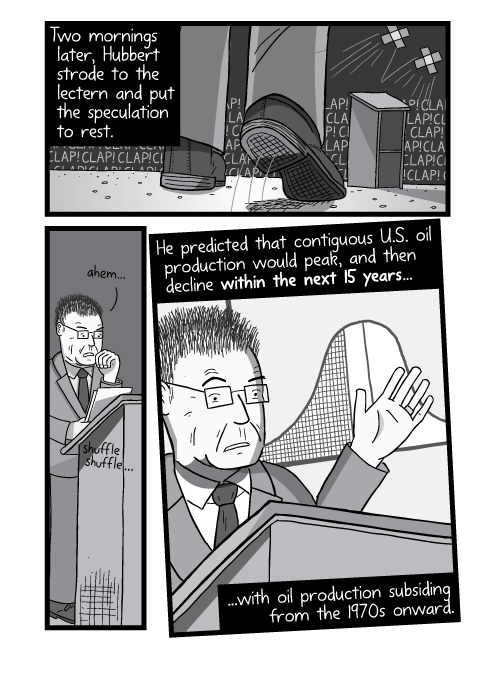
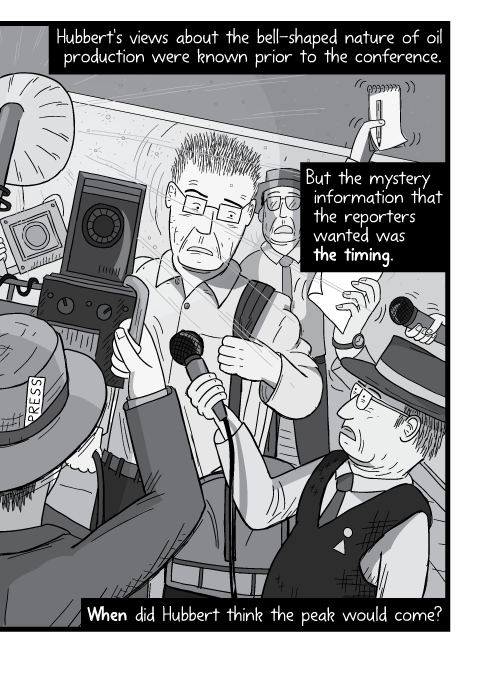
Australian artist Stuart MacMillan has spent over 700 hours creating this amazing cartoon of the life and work of M.King Hubbert. Below are just 2 images of the 139 that make up the full story.
US oil graphic US oil graphic

For more about the project, or to find out how to support Stuart's work read his blog and watch the video.

Monday, February 27, 2012

The Cybernetic Garden Farm: Information in; information out.

This unprepared, extemporaneous speech was delivered in the Fall of 2010 in Grand Rapids at the International Conference on Sustainability: Energy, Economy, Environment. It followed Nicole Foss's talk (embedded below) on how she prepared her family for peak oil and economic uncertainty.


"As a system of design, Permaculture provides a new vocabulary and pattern language for observation and action, attention and listening, that empowers people to co-design homes, neighborhoods, and communities full of truly abundant food, energy, habitat, water, income, and yields enough to share." - Keith Johnson

Educator Peter Bane is preparing for the local future, beyond the global economy and post peak oil. Bane's talk is the story of the history of permaculture, and how he has used permaculture methods to move towards a self-sustaining homestead using free or low-cost techniques.

Peter Bane has published the Permaculture Activist Magazine since 1990. He is a garden farmer with Keith Johnson in Bloomington, Indiana, where they teach permaculture design at Indiana University and elsewhere.. Peter has a bachelors from University in Illinois in political design and a diploma in permaculture design from the British Academy of Permculture design. He served on the peak oil task force for the City of Bloomington, Indiana, which was adopted in 2009 December and has recently finished working on The Permaculture Handbook: Garden Farming for Town and Country.

In this talk, Bane describes, in his own words, how he is moving beyond the money economy, to providing his essential needs from his homestead, and how he is utilizing the principles of permaculture.

Recorded at the International Conference on Sustainability: Energy, Economy, Environment 2010 hosted by Local Future and directed by Aaron Wissner.


http://www.energybulletin.net/stories/2011-10-11/how-i-prepared-my-family-peak-oil-nicole-foss

Tuesday, December 6, 2011

Steep Exponential Curves Ahead...Reduce Speed

Chris Martenson Lecture On Why The Next 20 Years Will Be Marked By The Collapse Of The Exponential Function


In this video courtesy of GoldMoney, Chris Martenson, economic analyst at chrismartenson.com and author of ‘The Crash Course’, explains why he thinks that the coming 20 years are going to look completely unlike the last 20 years. In his presentation he focuses on the so-called three “Es”: Economy, Energy and Environment. He argues that at this point in time it is no longer possible to view either one of those topics separately from one another.
Since all our money is loaned onto existence, our economy has to grow exponentially. Martenson proves this point empirically by showing a 99.9% fit of the actual growth curve of the last 40 years to an exponential curve. If we wanted to continue on this path, our debt load would have to double again over the next 10 years. By continually increasing our debt relative to GDP we are making the assumption that our future will always be wealthier than our past. He believes that this assumption is flawed and that the debt loads are already unmanageable.
Martenson explains how exponential growth works and why it is so scary that our economy is based on it. In an example he illustrates how unimaginably fast things speed up towards the end of an exponential curve. He shows that an exponential chart can be found in every one of the three “E’s” for instance in GDP growth, oil production, water use or species extinction. Due to the natural limitations on resources, Martenson comes to the conclusion that we are facing a serious energy crisis.
This energy predicament is namely that the quantity of oil as well as the quality of oil are in decline. He shows that oil discoveries peaked in 1964 and oil production peaked 40 years later. Martenson also shows how our return on invested energy is rapidly declining – the “cheap and easy” oil fields have already been exploited. In 1930 the energy return for oil was 100:1 or greater. Today it is already down to 3:1 and newer technologies such as corn-based ethanol only provide a 1.5:1 return. Martenson predicts that the time in between oil shocks will get shorter and shorter and that oil prices will go much higher.
Not only oil but also other natural resources are being rapidly used up as well. At the current projected pace of use, known reserves for many metals and minerals will be gone within the next 10 to 20 years. The energy needed to get these non-renewable resources out of the ground is growing exponentially. So we live in a world that must grow, but can’t grow and is subject to depletion. The conclusion out of all this is that our money system is poorly designed and that we need to rethink how we do things as quickly as possible.
After finishing his presentation Chris Martenson answers questions regarding a rise in efficiency, alternative technologies and oil prices. He also responds to questions regarding electricity, shale gas, gold, silver, platinum, palladium, and uranium and the race for global resources.


For more on exponential curves see http://www.youtube.com/watch?v=F-QA2rkpBSY&feature=related

Friday, December 31, 2010

"Have you heard about Peak Oil?" (video)

Well-stated overview of peak oil (using adult language) with knee-jerk conservative talking points undermined logically (imagine that!).


More details:

Sunday, December 26, 2010

Would Make a Much Better President than Obama

Ralph Nader's keynote address on Energy & Policy at the Association for the Study of Peak Oil 2010 conference.


Keynote on Energy and Policy: Ralph Nader from ASPO-USA on Vimeo.

Wednesday, December 15, 2010

Adapt or Die (I recomend adaptation...it's a lot more fun)

Peak energy, climate change, and the collapse of global civilization: the current peak oil crisis
by Tariel Mórrígan  @ Energy Bulletin

KEY POINTS

  • Peak oil is happening now.
  • The era of cheap and abundant oil is over.
  • Global conventional oil production likely peaked around 2005 – 2008 or will peak by 2011.
  • “Peak oil” refers to the maximum rate of oil production, after which the rate of production enters terminal decline.
  • Although there will be oil remaining in the ground when world oil production peaks, the remaining oil will become increasingly difficult and more costly to produce until the marginal financial and energy cost of producing oil exceeds the marginal profit and energy gained.
  • Global oil reserve discoveries peaked in the 1960's.
  • New oil discoveries have been declining since then, and the new discoveries have been smaller and in harder to access areas (e.g., smaller deepwater reserves).
  • Huge investments are required to explore for and develop more reserves, mainly to offset decline at existing fields.
  • An additional 64 mbpd of gross capacity – the equivalent of six times that of Saudi Arabia today – needs to be brought on stream between 2007 – 2030 to supply projected business as usual demand.
  • Since mid-2004, the global oil production plateau has remained within a 4% fluctuation band, which indicates that new production has only been able to offset the decline in existing production.
  • The global oil production rate will likely decline by 4 – 10.5% or more per year.
  • Substantial shortfalls in the global oil supply will likely occur sometime between 2010 – 2015.
  • Furthermore, the peak global production of coal, natural gas, and uranium resources may occur by 2020 – 2030, if not sooner.
  • Global peak coal production will likely occur between 2011 – 2025.
  • Global natural gas production will likely peak sometime between 2019 – 2030.
  • Global peak uranium will likely occur by 2015 to sometime in the 2020's.
  • Oil shortages will lead to a collapse of the global economy, and the decline of globalized industrial civilization.
  • Systemic collapse will evolve as a systemic crisis as the integrated infrastructure and economy of our global civilization breaks down.
  • Most governments and societies – especially those that are developed and industrialized – will be unable to manage multiple simultaneous systemic crises. Consequently, systemic collapse will likely result in widespread confusion, fear, human security risks, and social break down.
  • Economies worldwide are already unraveling and becoming insolvent as the global economic system can no longer support itself without cheap and abundant energy resources.
  • This current transition of rapid economic decline was triggered by the oil price shock starting in 2007 and culminating in the summer of 2008. This transition will likely accelerate and become more volatile once oil prices exceed $80 – $90 per barrel for an extended time. Demand destruction for oil may be somewhere above $80 per barrel and below $141 per barrel.
  • Economic recovery (i.e., business as usual) will likely exacerbate the global recession by driving up oil prices.
  • A managed “de-growth” is impossible, because effective mitigation of peak oil will be dependent on the implementation of mega-projects and mega-changes at the maximum possible rate with at least 20 years lead time and trillions of dollars in investments.
  • Peak oil and the events associated with it will be an unprecedented discontinuity in human and geologic history.
  • Adaptation is the only strategy in response to peak oil.
  • Mitigation and adaptation are the only strategies for climate change.
  • Peak oil crises will soon confront societies with the opportunity to recreate themselves based on their respective needs, culture, resources, and governance responses.
  • The impacts of peak oil and post-peak decline will not be the same equally for everyone everywhere at any given time.
  • There are probably no solutions that do not involve at the very least some major changes in lifestyles.
  • Local and societal responses and adaptation strategies to peak oil and climate change will vary and be influenced based on many factors including: geography, environment, access to resources, economics, markets, geopolitics, culture, religion, and politics.
  • The sooner people and societies prepare for peak oil and a post-peak oil life, the more they will be able to influence the direction of their opportunities.
  • The peak oil crisis may become an opportunity to recreate and harmonize local, regional, and international relationships and cooperation.
  • The localization of economies will likely occur on a massive scale, particularly the localization of the production of food, goods, and services.
  • Existential crises will soon confront societies with the opportunity to recreate themselves based on their respective needs, culture, resources, and governance responses.
  • If the international community does not make a transcendent effort to cooperate to manage the transition to a non-oil based economy, it may risk a volatile, chaotic, and dangerous collapse of the global economy and world population.
  • One of the most important modern technologies to preserve post-peak oil may be the Internet, which can potentially help the world stay connected in terms of communications, information, and Internet technology services even after global transportation services decline.
  • Peak oil and energy resources may offer the only viable solution and opportunity for humanity to mitigate anthropogenic climate change on a global scale – by essentially pulling the plug on the engine of the global economy that has driven the climate system to a very dangerous state.
  • The success of the Green Revolution of modern industrial agriculture since around 1950 is primarily due to its increased use of fossil fuel resources for fertilizers, pesticides, and irrigation to raise crops. Fossil fuel energy inputs greatly increased the energy-intensiveness of agricultural production, in some cases by 100 times or more.
  • Since the advent of the Green Revolution, the global human population has increased from 2.5 billion in 1950 to nearly 7 billion today.
  • Global demand for natural resources exceeded planet’s capacity to provide sustainably for the combined demands of the global population between 1970 – 1980.
  • The global population is projected to grow to around 9.2 billion by 2050.
  • Current trends in land, soil, water, and biodiversity loss and degradation, combined with potential climate change impacts, ocean acidification, a mass extinction event, and energy scarcity will significantly limit the human carrying capacity of the Earth.
  • Future climate change has the potential to substantially reduce the human carrying capacity of the Earth by 0.5 – 2 billion people, or more with abrupt climate changes.
  • The human carrying capacity of the Earth may be 0.5 – 7.5 billion people by 2050.
  • The human carrying capacity of the planet may be 0.5 – 6 billion by 2100.
  • Even when greenhouse gas emissions decline after peak oil, climate change will likely continue to be driven by human activities, but in a reduced capacity.
  • Moreover, the potential mitigation of climate change due to future energy scarcity will not stop the already committed climate changes that are in the pipeline.
  • It is possible that climate negotiations may be abandoned or at least marginalized for a long time (if not permanently) as the crisis of peak oil and economic shock and awe overwhelms the stability and security of every nation.
  • It will likely require a concerted and transcendent effort on the part of any remaining international climate negotiators, their governments, and the public to pursue a meaningful international climate policy – much less a binding international climate treaty.
  • Based on these estimates, the global population may have nearly reached or already exceeded the planet's human carrying capacity in terms of food production.

Friday, April 23, 2010

The Crash Course — Exponential Growth Meets Reality

The Crash Course — Exponential Growth Meets Reality
pm166_150.jpg
“The next twenty years will be totally unlike the last twenty… We’ll face the greatest economic and physical challenges ever seen by our country, if not humanity.”

So opens Chris Martenson’s much-viewed online Crash Course illuminating the relationship between economy, energy and the environment. Starting with the power of exponential growth, he tidily sums up our economic problems: Too Much Debt. Chris discusses the implications if we continue the status quo, and ways to prepare. He believes that “if we manage the transition elegantly we can actually improve things.” (www.chrismartenson.com).

Preparing for Disasters and Hard Times

pm170_150.jpgIn this animated dialogue, natural resource analyst Sean Brodrick provides a sharp-eyed perspective on what may be coming in this precarious economy and how to prepare for it. The author of The Ultimate Suburban Survivalist Guide, Sean is hip to peak oil and other resource declines as well as the Katrina hurricane lesson - don’t rely on government to save you during disasters. Urging us to prepare for hard times while we’re in good times, he covers smart money moves, food and water storage, basic preparations in case you have to evacuate, and creating bonds with your neighbors to increase home security. [UltimateSuburbanSurvivalist.com and UncommonWisdomDaily.com].
Sean’s Financial Crisis Survival Kit (pdf) goes into far more detail than our conversation, and covers personal financial preparedness and investment advice.

Thursday, April 8, 2010

Post Carbon Institute Links

 
Are Americans Facing Reality About Water?
Interview with Sandra Postel • March 10, 2010
Celebrating Water Week 2010, Post Carbon Institute Fellow Sandra Postel discusses what the American population needs to know, sooner rather than later, about looming water scarcities... View video
  
Fear and Loathing in Ohio
Post by Asher Miller • March 26, 2010
The passage of health care reform legislation in the House of Representatives last weekend was met with such a crescendo of hyperbole and vitriol... Read more
  
Government 'Peak Oil Summit' Starts the Process of Government Acknowledging Peak Oil?
Post by Rob Hopkins • March 24, 2010
On Monday Peter Lipman and I represented Transition Network at an event which could potentially be the day people look back to as the day when the UK government finally started to 'get' peak oil... Read more
  
It's time to deal with Peak Oil
Post by Richard Heinberg • March 19, 2010
The "Peak Oil" concept — that the world's petroleum-production rate will soon reach its maximum... Read more
  
An Interview with David Orr, author of 'Down to the Wire'
Post by Rob Hopkins • March 18, 2010
David Orr was in the UK recently, and the two of us were part of a panel at an event organised by the Prince's Foundation for the Built Environment... Read more
  
The Emergence of an Unlikely Eco-Hero: Frank Luntz' "Manifesto for a Sturdy, Stable and Robust New America"
Post by Tod Brilliant • March 17, 2010
In January of this year, American political consultant Dr. Frank Luntz released a 17-page talking points memo... Read more
  
Changing the Conversation by Making it Safe to Have the Conversation
Post by Ken White • March 12, 2010
One of foundational challenges of any social movement is "changing the conversation." That is, transforming an existing paradigm... Read more
  
Getting to work in 2010: Our new plans...
Post by Bill McKibben • March 12, 2010
Dear Friends, Well, no one said it was going to be easy. Last year, thanks to many of you, we built up enormous momentum... Read more
  
Getting the Story Right
Post by Chris Martenson • March 11, 2010
Now that I have returned from my UK trip, where I had the opportunity to present the main story of the Crash Course at the Parliament... Read more
  
The Softer Side of Sustainability
Post by Zenobia Barlow • March 8, 2010
One reason I like to host seminars at the Center for Ecoliteracy is that you never know who is going to show up... Read more
  
Life After Growth
Article by Richard Heinberg • March 3, 2010
In 2008 the U.S. economy tripped down a steep, rocky slope. Employment levels plummeted; so did purchases of autos and other consumer goods... Read more

Quacks like a duck...

rubber duckAccording to an article in Le Monde on March 25, the US Department of Energy "admits that 'a chance exists that we may experience a decline' of world liquid fuels production between 2011 and 2015 'if the investment is not there.'" This bombshell emerged in "an exclusive interview with Glen Sweetnam, main official expert on the oil market in the Obama administration."
The Le Monde article goes on: "The DoE dismisses the 'peak oil' theory, which assumes that world crude oil production should irreversibly decrease in a nearby future, in want of sufficient fresh oil reserves yet to be exploited. The Obama administration supports the alternative hypothesis of an 'undulating plateau.' Lauren Mayne, responsible for liquid fuel prospects at the DoE, explains : 'Once maximum world oil production is reached, that level will be approximately maintained for several years thereafter, creating an undulating plateau. After this plateau period, production will experience a decline.'"
In other words, we don't believe that world oil production will soon reach a maximum and begin to decline (the "peak oil theory"); instead, we believe that world oil production will reach a maximum, stay there for a few years, and then decline. That decline could commence as soon as next year.
Two comments: First, what's the difference? Is this just a way to announce Peak Oil without acknowledging it? The idea of the "undulating plateau" has been part of the Peak Oil discussion for years (see my book Powerdown), and world oil production has in fact been at a plateau since late 2004. Second, how is it that readers in France now know more about U.S. Department of Energy oil supply forecasts than Americans do? There has been no equivalent article in the mainstream press in North America.
It's time for the DoE to answer some tough questions. Too bad U.S. media outlets are evidently too timid, busy, or uninformed to bother themselves with the trivial business of alerting the American people to an impending calamity that is entirely foreseeable and that a few people in government are evidently willing to speak about (at least in code), if only someone asks.

Wednesday, November 25, 2009

Rob Hopkins at TED


Rob Hopkins reminds us that the oil our world depends on is steadily running out. He proposes a unique solution to this problem -- the Transition response, where we prepare ourselves for life without oil and sacrifice our luxuries to build systems and communities that are completely independent of fossil fuels.

Rob Hopkins is the founder of the Transition movement, a radically hopeful and community-driven approach to creating societies independent of fossil fuel.


Conclusion? - Consume MUCH Less

ARRESTING NEW THINK TANK STUDY CONCLUDES: NO COMBINATION OF ALTERNATIVE ENERGY SYSTEMS CAN REPLACE FOSSIL FUELS

Santa Rosa, CA (13. November 2009)

An alarming new study jointly released by two prominent California-based environmental/economic think tanks, concludes that unrelenting energy limits, even among alternative energy systems, will make it impossible for the industrial system to continue operating at its present scale, beyond the next few decades. The report finds that the current race by industries and governments to develop new sustainable energy technologies that can replace ecologically harmful and rapidly depleting fossil fuel and nuclear technologies, will not prove sufficient, and that this will require substantial adjustments in many operating assumptions of modern society.

The new study (“Searching for a Miracle: Net Energy Limits & the Fate of Industrial Society”) is the first major analysis to utilize the new research tools of “full life cycle assessment” and “net energy ratios” (Energy Returned on Energy Invested, EROEI), to compare all currently proposed future scenarios for how industrial society can face its long term future.

The report analyzes 18 of the most viable power production alternatives, from traditional fossil fuels and nuclear, through wind, solar, wave, geothermal, biomass, et. al. to identify their “net energy” ratios—the amount of energy that must be invested in them vs. the amount of energy they will be able to produce---as well as their environmental, social and geopolitical impacts. It also considers such important factors as resource and materials supply, resource location, transportation, waste disposal issues, and others to create a full life cycle picture of each technology’s impacts.

“Searching for a Miracle” was published by the International Forum on Globalization (IFG). The content was largely provided by the Post Carbon Institute, a think tank that works toward a transition to a more resilient, equitable, and sustainable world.

The principal author of the report is Richard Heinberg, Senior Fellow of Post Carbon Institute, and the best-selling author of such books as “The Party’s Over”, ““Peak Everything”, and “Blackout”. The editor of the project--part of the IFG’s False Solutions program--is San Francisco author Jerry Mander, who is Founder and Distinguished Fellow of IFG. His previous popular books on economics and technology include: “Four Arguments for the Elimination of Television”, “The Case Against the Global Economy”, and “Alternatives to Globalization”.

Following are a few of the main conclusions of this report:

✦ As the world’s higher-quality fossil fuel reserves rapidly deplete, no combination of alternative energy sources is likely to be sufficient to sustain industrial society at its present scale. Energy supply problems, perhaps severe, are likely during the coming decade, worsening as primary fuels become scarce and costly. Major adjustments will be required in industrial production and personal consumption; attention will need to be paid to stabilizing and reducing population levels over the long term.

✦ Fossil fuels and high-quality uranium ores are depleting rapidly; world oil production may already have peaked. Present expectations for new technological replacements are probably overly optimistic with regard to ecological sustainability, potential scale of development, and levels of “net energy” gain—i.e., the amount of energy actually yielded once energy inputs for the production process have been subtracted. Technologies such as “carbon capture and sequestration” and “4th generation” nuclear power remain largely hypothetical and may never be deployed on a large scale, while the prospects for oil shale, tar sands, and shale gas have been overstated to varying degrees.

✦ Certain energy production systems suffer from low or negative net energy gain; these include most biofuels, hydrogen systems, oil shale, tar sands, and biomass, some of which also present unacceptable environmental problems (as is also true of conventional fossil fuels and nuclear power). So far, the best prospects for large-scale production and net-energy performance remain wind energy and certain forms of solar, but these still face important limitations due to intermittency of supply, remoteness of the best resources, materials needed for large-scale deployment, and scale potential. Tidal and geothermal power—which can have high net-energy yield but suffer from a low potential energy production capacity—will prove marginally useful in a diverse future energy supply mix.

✦ Limits to future energy supply are more dramatic if environmental impacts are considered— including accelerating climate change, fresh water scarcity, destruction of food-growing lands, shortages of minerals, and threats to wildlife habitat.

✦ Given the above, it is necessary to prepare societies for dramatic shifts in consumption and lifestyle expectations. It will also be necessary to promote a new ethic of conservation throughout the industrial world. A sharp reversal of today’s globalization of commercial activity—inherently wasteful for its transport energy needs—must be anticipated and facilitated, and government leaders must encourage a rapid evolution toward economies based on localism especially for essential needs such as food and
energy. The study remarks that this is not necessarily a negative prospect, as some research shows that, once basic human needs are met, high material consumption levels do not correlate with high quality of life.

✦ The emphasis by policy makers on growth as the central goal and measure of modern economies is no longer practical or viable, as growth will be limited by both energy shortages and by society’s inability to continue venting energy production and consumption wastes (principally, carbon dioxide) into the environment without catastrophic consequences. Standards for economic success must shift from
gross metrics of economic activity, to more direct assessments of human well-being, equity, and the health of the natural world.

✦ With energy supplies diminishing, raw material resources similarly depleting, and crises such as climate change rapidly advancing, the long-term goal of satisfying the needs of the world’s poorest peoples—in their attempts to recover from centuries of colonialism, resource exploitation, and removal from traditional lands and economies—becomes ever more daunting. Efforts at relieving poverty, both domestically and internationally, will require more equitable reallocation of existing real wealth.

✦ These factors must all be taken very seriously by policy makers in all countries, and by global institutions that have thus far failed to be realistic about what will be required to avoid future social and economic breakdowns and geopolitical crises, as countries and peoples compete for dwindling energy resources, raw materials, and agricultural space. While it is not yet too late to change course, the opportunities to avoid catastrophic economic, environmental, social, and political impacts are few and quickly dwindling.

For further information, or additional copies of the report, please contact the organizations below:

POST CARBON INSTITUTE
500 N. Main St., Suite 100
Sebastopol, CA 95472 USA
Tel: +1.707.823.8700 • Fax: +1.866.797.5820
http://www.postcarbon.org • media@postcarbon.org

THE INTERNATIONAL FORUM ON GLOBALIZATION
1009 General Kennedy Avenue, Suite 2
San Francisco, California 94129 USA
T: +1.415.561.7650 • F: +1.415.561.7651
http://www.ifg.org • ifg@ifg.org

Tuesday, November 17, 2009

Bloomington Preps for Peak Oil


Peter Bane and I have been proud to contribute to the creation of the document Redefining Prosperity: Energy Descent and Community Resilience (Peter wrote the section on Food Security). Our mayor and city council really like it and it could also be adopted by the county. It will likely serve as a peak oil transition template for many other communities in Indiana and elsewhere. Please note that it is a 257 page document and may take a while to download if your server is slow. Please share.
http://bloomington.in.gov/media/media/application/pdf/6046.pdf

The specific charge of the Peak Oil Task Force is to acquire and study current and credible data; seek community feedback; coordinate efforts with other governmental agencies; work to educate the community; and, to develop a Bloomington Peak Oil Task Force Report for approval by the Mayor and Common Council outlining strategies the City and community might pursue to mitigate the effect of declining fuel supplies in areas including, but not limited to: transportation, municipal services, energy production and consumption, food security, water and wastewater.

Sunday, October 18, 2009

Declining Mexican Crude..

Where do we get our oil?

(Found at Peak Oil Hausfrau)

The U.S. produces 4.9 million barrels of oil per day and imports 9.7 million barrels of crude oil per day, with an additional 3.1 million barrels of other petroleum products per day for a net total import of 11.1 million barrels of petroleum per day (Source: EIA) - about 57% -69% of our petroleum use (percentages vary depending on source).

Where is it all coming from (2008 totals)?

Canada ranks first at 2.5 MMBO/D
Saudi Arabia is second at 1.5 MMBO/D
Mexico is third with 1.3 MMBO/D
Venezuela is fourth with 1.2 MMBO/D
Nigeria ranks fifth at 988 thousand BO/D

Next are Iraq, Algeria, Angola, and Russia.

It's nice we have such good friends! Unfortunately, one of our friends has a little problem - their oil supply appears to have peaked and is falling faster than a nasty curveball. Alas, this country gets nearly 40% of their government's national budget from their oil revenues, which are falling at such a quick rate they have to revise estimates downward almost monthly.

What is this country? Why, it's Mexico, our neighbor to the South. Their exports for the first half of 2009 fell 14.8% compared to the first half of 2008 (according to the Oil and Gas Journal), caused mainly by the collapse of the Cantarell oil field, which also happens to be the third largest oil field in the world. Hmm... output from our third highest source of oil imports is declining at a rate of almost 15% per year?

Yes, indeed, and according to the Mexican Secretary of Energy Mexico (via report from Clifford J. Wirth) is projected to stop exporting petroleum entirely by 2015. Being as resilient and non-oil dependent as we are, I imagine that losing 10% of our oil imports will cause us no issues. Surely 1.3 million barrels of oil a day can be found just lying around somewhere!

I also suppose that eliminating 40% of Mexico's budget will cause no civil unrest, searches for alternate sources of income (cocaine? marijuana? opium?), gang activity, or waves of economic refugees. After all, Mexico has never had such problems before...

Tuesday, March 3, 2009

Collapse IS the Solution

More books are cropping up with solutions to the crumbling of Empire. Not surprisingly, many of them are suggesting that the collapse of empire IS the solution. The challenge, of course, is to survive and maybe even thrive on a low-energy solar budget. Here's one you can read online:

A Matter of Scale by Keith Farnish

A Book, A Solution, A Future

"For hundreds of millennia, humans connected tightly to the land and the life forms their survival depended upon, because that was how it had to be. Failure to connect was not an option; if you didn’t know how plants grew, how animals bred, how rivers ran, how the seasons and the weather changed, then you did not survive. In some parts of the world – the Native American tribal lands of West Coast USA, the dense forests of West Papua, the deep valleys and jagged mountains of northern India – these connections remain, and cling on despite the best efforts of those who seek to gain more from the land than 'mere' survival. This connection has ebbed away from the majority of humanity, in many cases to the extent that people feel nothing for anything humans have not created themselves. But we cannot eat concrete; we cannot breathe television; we cannot drink money."

A Matter Of Scale is a free, online book which you can read here, or download to read whenever you like. Enjoy it, but don't get too comfortable...

The Author: Keith Farnish is an environmental writer, philosopher and activist. He founded The Earth Blog (www.theearthblog.org) in 2006, and writes The Unsuitablog (www.unsuitablog.com). He is also a guest author on The Sietch Blog. Keith lives in Essex with his wife and children. He is also the author of TIME'S UP!, a book about survival; about ensuring that every individual human has the means to save herself or himself from the global crisis that is unfolding.