Showing posts with label energy. Show all posts

Saturday, May 16, 2015

Peak Oil: A Graphic Story

Peak Oil: A Graphic Story

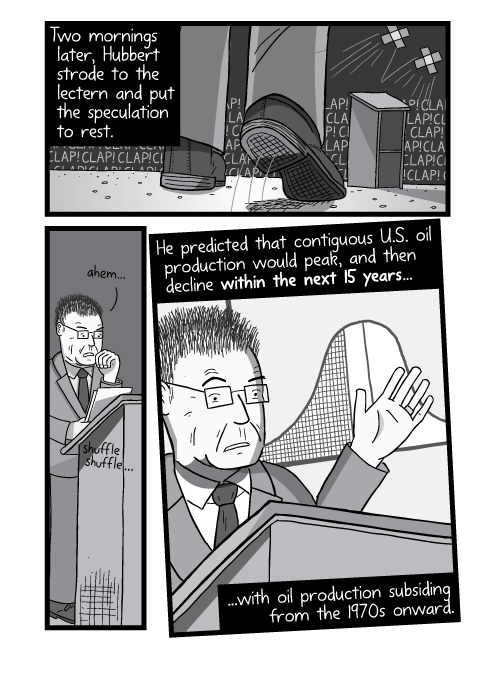
Australian artist Stuart MacMillan has spent over 700 hours creating this amazing cartoon of the life and work of M.King Hubbert. Below are just 2 images of the 139 that make up the full story.
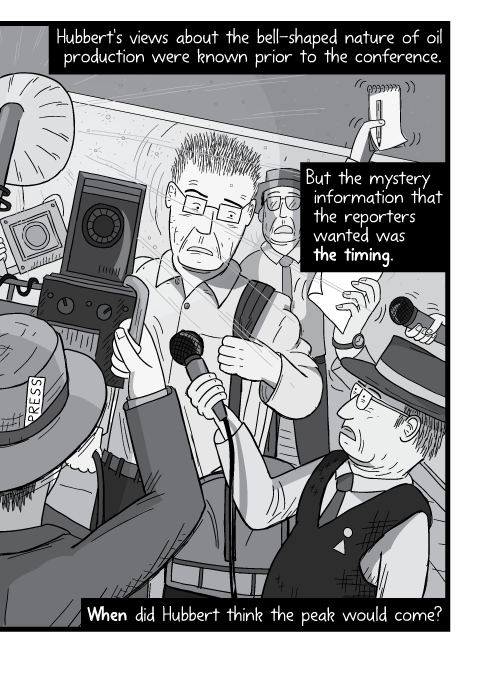
US oil graphic US oil graphic

For more about the project, or to find out how to support Stuart's work read his blog and watch the video.

Wednesday, December 15, 2010

Adapt or Die (I recomend adaptation...it's a lot more fun)

Peak energy, climate change, and the collapse of global civilization: the current peak oil crisis
by Tariel Mórrígan  @ Energy Bulletin

KEY POINTS

  • Peak oil is happening now.
  • The era of cheap and abundant oil is over.
  • Global conventional oil production likely peaked around 2005 – 2008 or will peak by 2011.
  • “Peak oil” refers to the maximum rate of oil production, after which the rate of production enters terminal decline.
  • Although there will be oil remaining in the ground when world oil production peaks, the remaining oil will become increasingly difficult and more costly to produce until the marginal financial and energy cost of producing oil exceeds the marginal profit and energy gained.
  • Global oil reserve discoveries peaked in the 1960's.
  • New oil discoveries have been declining since then, and the new discoveries have been smaller and in harder to access areas (e.g., smaller deepwater reserves).
  • Huge investments are required to explore for and develop more reserves, mainly to offset decline at existing fields.
  • An additional 64 mbpd of gross capacity – the equivalent of six times that of Saudi Arabia today – needs to be brought on stream between 2007 – 2030 to supply projected business as usual demand.
  • Since mid-2004, the global oil production plateau has remained within a 4% fluctuation band, which indicates that new production has only been able to offset the decline in existing production.
  • The global oil production rate will likely decline by 4 – 10.5% or more per year.
  • Substantial shortfalls in the global oil supply will likely occur sometime between 2010 – 2015.
  • Furthermore, the peak global production of coal, natural gas, and uranium resources may occur by 2020 – 2030, if not sooner.
  • Global peak coal production will likely occur between 2011 – 2025.
  • Global natural gas production will likely peak sometime between 2019 – 2030.
  • Global peak uranium will likely occur by 2015 to sometime in the 2020's.
  • Oil shortages will lead to a collapse of the global economy, and the decline of globalized industrial civilization.
  • Systemic collapse will evolve as a systemic crisis as the integrated infrastructure and economy of our global civilization breaks down.
  • Most governments and societies – especially those that are developed and industrialized – will be unable to manage multiple simultaneous systemic crises. Consequently, systemic collapse will likely result in widespread confusion, fear, human security risks, and social break down.
  • Economies worldwide are already unraveling and becoming insolvent as the global economic system can no longer support itself without cheap and abundant energy resources.
  • This current transition of rapid economic decline was triggered by the oil price shock starting in 2007 and culminating in the summer of 2008. This transition will likely accelerate and become more volatile once oil prices exceed $80 – $90 per barrel for an extended time. Demand destruction for oil may be somewhere above $80 per barrel and below $141 per barrel.
  • Economic recovery (i.e., business as usual) will likely exacerbate the global recession by driving up oil prices.
  • A managed “de-growth” is impossible, because effective mitigation of peak oil will be dependent on the implementation of mega-projects and mega-changes at the maximum possible rate with at least 20 years lead time and trillions of dollars in investments.
  • Peak oil and the events associated with it will be an unprecedented discontinuity in human and geologic history.
  • Adaptation is the only strategy in response to peak oil.
  • Mitigation and adaptation are the only strategies for climate change.
  • Peak oil crises will soon confront societies with the opportunity to recreate themselves based on their respective needs, culture, resources, and governance responses.
  • The impacts of peak oil and post-peak decline will not be the same equally for everyone everywhere at any given time.
  • There are probably no solutions that do not involve at the very least some major changes in lifestyles.
  • Local and societal responses and adaptation strategies to peak oil and climate change will vary and be influenced based on many factors including: geography, environment, access to resources, economics, markets, geopolitics, culture, religion, and politics.
  • The sooner people and societies prepare for peak oil and a post-peak oil life, the more they will be able to influence the direction of their opportunities.
  • The peak oil crisis may become an opportunity to recreate and harmonize local, regional, and international relationships and cooperation.
  • The localization of economies will likely occur on a massive scale, particularly the localization of the production of food, goods, and services.
  • Existential crises will soon confront societies with the opportunity to recreate themselves based on their respective needs, culture, resources, and governance responses.
  • If the international community does not make a transcendent effort to cooperate to manage the transition to a non-oil based economy, it may risk a volatile, chaotic, and dangerous collapse of the global economy and world population.
  • One of the most important modern technologies to preserve post-peak oil may be the Internet, which can potentially help the world stay connected in terms of communications, information, and Internet technology services even after global transportation services decline.
  • Peak oil and energy resources may offer the only viable solution and opportunity for humanity to mitigate anthropogenic climate change on a global scale – by essentially pulling the plug on the engine of the global economy that has driven the climate system to a very dangerous state.
  • The success of the Green Revolution of modern industrial agriculture since around 1950 is primarily due to its increased use of fossil fuel resources for fertilizers, pesticides, and irrigation to raise crops. Fossil fuel energy inputs greatly increased the energy-intensiveness of agricultural production, in some cases by 100 times or more.
  • Since the advent of the Green Revolution, the global human population has increased from 2.5 billion in 1950 to nearly 7 billion today.
  • Global demand for natural resources exceeded planet’s capacity to provide sustainably for the combined demands of the global population between 1970 – 1980.
  • The global population is projected to grow to around 9.2 billion by 2050.
  • Current trends in land, soil, water, and biodiversity loss and degradation, combined with potential climate change impacts, ocean acidification, a mass extinction event, and energy scarcity will significantly limit the human carrying capacity of the Earth.
  • Future climate change has the potential to substantially reduce the human carrying capacity of the Earth by 0.5 – 2 billion people, or more with abrupt climate changes.
  • The human carrying capacity of the Earth may be 0.5 – 7.5 billion people by 2050.
  • The human carrying capacity of the planet may be 0.5 – 6 billion by 2100.
  • Even when greenhouse gas emissions decline after peak oil, climate change will likely continue to be driven by human activities, but in a reduced capacity.
  • Moreover, the potential mitigation of climate change due to future energy scarcity will not stop the already committed climate changes that are in the pipeline.
  • It is possible that climate negotiations may be abandoned or at least marginalized for a long time (if not permanently) as the crisis of peak oil and economic shock and awe overwhelms the stability and security of every nation.
  • It will likely require a concerted and transcendent effort on the part of any remaining international climate negotiators, their governments, and the public to pursue a meaningful international climate policy – much less a binding international climate treaty.
  • Based on these estimates, the global population may have nearly reached or already exceeded the planet's human carrying capacity in terms of food production.

Saturday, December 22, 2007

101 things you can do about peak oil & climate change

1. Recycle (everything)
2. Refuse (plastic bags, excessive packaging, poor quality food)
3. Re-use (everything many times until its worn out, get creative)
4. Rethink (what you know, learn new skills for the future)
5. Repair (as much as you can, don’t just throw things away)
6. Reconnect (with nature and where your food comes from)
7. Reduce (your consumption)
8. Reclaim & rehabilitate (damaged areas)
9. Regulate (yourself, your consumption)
10. Request (use your consumer power to make changes)
11. Review (your energy use, your attitude and your progress)
12. Re-skill (learn ‘lost’ survival skills)
13. Make a conscious effort to use less natural resources - THEY ARE FINITE and will run out
14. Understand that fossil fuels are used to produce almost everything we use – and how it will change with energy descent. *Read David Holmgren's Permaculture; Principles & Pathways Beyond Sustainability
15. Buy local – food, products, services – everything you use has transportation costs attached to it
16. Only eat locally grown organic food
17. Eat in-season food (it tastes so much better)
18. Eat less meat (refuse Contained Animal Feedlot Operation-raised, hormone-fattened, antibiotic-laced meat)
19. Turn electrical appliances and lights off when not needed - be aware of "phantom" electrical use from devices that are always on, like TV's
20. Water your garden late in the afternoon or early morning when the sun is off your plants and water only when needed - water less often but deeper
21. Establish composting and worm farming systems to sequester carbon and reduce the amounts of valuable materials going to landfill and producing methane gas
22. Organic matter holds 90 percent of its own weight in water – add organic matter to your soil to turn it into a water-holding ‘tank’ that needs less watering
23. Buy fair trade products
24. When making a decision, apply permaculture principles of - care for the earth, care for all species and fair share
25. ’Check in at the check out’ - ask yourself what is a real need and what is a 'want'.
26. Question where things come from and what goes into making them before you make your purchase – use your consumer power
27. Use grey water in the garden on fruit trees
28. Mulch your garden – never, ever leave soil exposed to the sun, wind, rain and evaporation
29. Use compost, worm castings and green manure crops as fertilizers for your soil – don’t buy commercially manufactured, petro-chemical based fertilizers
30. Become informed, aware and educated
31. Collect the renewable resources we currently have more effectively (water, sun, wind)
32. Plan for a future where weather events are more intense (eg heavier rain events but fewer of them), turn down the heat in your garden with food trees and more useful trees.
33. Relearn the skills of the past for the future (food preservation, manual skills - repairing things)
34. Plan for when oil and all the things in the world that are produced using oil are more expensive and harder to get
35. Switch to the green power option on your electricity bill
36. Switch to solar, hydro or wind energy
37. Install a composting toilet (don't use between 3 gallons of quality drinking water to flush away 1/2 cup of urine - use urine in the garden)
38. Install a system that uses grey water in the toilet tank
39. Re-use every resource you have multiple times
40. Use public transport, pedal power, walk or car pool
41. Buy a smaller, more fuel efficient car
42. Turn the thermostat on your heater (or air conditioner if you have one) up (or down) one degree (this will give you a 10 per cent improvement in energy consumption)
43. Take fewer air flights
44. Offset your carbon emissions
45. Install energy efficient light bulbs, taps and shower heads
46. Take shorter showers, get a showerhead with a shut-off so you can turn off the water while soaping and shampooing, put a bucket in the shower to catch water for flushing toilet.
47. Don't wash your car - just keep the windows clean so you don't crash!
48. Use water frugally and respect each and every drop
49. Buy energy efficient appliances – check their star rating
50. Buy clothes that don’t need ironing
51. Grow your own food using organic methods – build season extenders: greenhouses, cold frames, hot boxes
52. Resist any attempt to restrict the use of household water to grow food, Let the lawn die but keep the garden growing.
53. Understand that agriculture uses 70 per cent of all water
54. Growing food at home uses one fifth of the water used in commercial growing and the amount of fuel used to get food from the farm to your table is greatly reduced
55. If you can't grow your own, buy into Community Supported Agriculture programs
56. Support local industries
57. Develop local networks and buy organic food in bulk
58. Create shade in your garden to reduce watering and around your home to reduce summer cooling costs
59. Establish major earthworks (swales, ponds, terraces, etc) now while we have the fossil fuels to run the machinery
60. Sign petitions that call for real solutions and local action to work toward a better future
61. Attend rallies and show your support for immediate and urgent action
62. Meet with local politicians and ask what they are doing - put pressure on them to act – one hand written letter equals 100 votes to them
63. Join local groups - relocalization, permaculture, community gardens, organic growing, etc network, network, network – learn, learn, learn
64. Support community groups who are working toward a sustainable future - the answer to global problems will not come from the people who caused them in the first place.
65. Support your local community gardens – volunteer or become a financial member, attend meetings, contribute your knowledge, time and skills
66. Attend film nights and learn what is happening around the world
67. Take a Permaculture Design Course!
68. Support businesses that are behaving ethically
69. Invest your money ethically
70. Visit the David Suzuki Foundation websites and see what is being done
71. Get involved in tree planting - native species in the right location
72. Read Tim Flannery's book The Weather Makers
73. Read Affluenza by Clive Hamilton or watch the video
74. Audit resources coming into your home and resources (a.k.a. waste) going out
75. Donate money to worthy causes that support community based solutions to these problems
76. If you have time - volunteer your energy and skills to causes that support community based solutions to these problems
77. Use fewer disposable products and more reusable ones
78. Buy the best quality hand tools you can afford
79. Join your local environmental group and attend talks, seminars, workshops
80. Use whatever skills you have from your working life or hobbies to spread the word (writing, photography, computer skills)
81. Knock on your neighbor's door and take them some produce from your garden
82. Teach - if you have skills others need, teach them.
83. Spend less - every dollar has greenhouse gases attached to it
84. Stop using chemical cleaners - make your own at home from sodium bicarbonate, vinegar, washing soda, etc
85. Install a water tank or two to catch rainwater.
86. Save as much gasoline as you can by walking, biking or planning your trips more efficiently
87. Teach your children to appreciate the natural world - get out into it
88. Teach your children life skills for a more sustainable future
89. Support permaculture gardens and permaculture curriculum in local schools
90. Offset your fuel emissions
91. Add lots and lots of organic matter to your soil – it draws carbon from the atmosphere and returns it to the soil
92. Garden and kitchen waste sent to landfill produces methane – a potent greenhouse gas – don’t put plant waste in your rubbish bin – compost or mulch it
93. Learn more about the ‘food miles’ your food has attached to it – demand supermarkets show food miles on their fresh produce
94. Design you home so you don’t need air conditioning and use solar passively to reduce or eliminate heating
95. Buy furniture made from sustainably-grown timber or recycle old furniture
96. Buy from butchers or farmers who supply organic, grass-fed or bio-dynamic meat
97. Buy clothes made from sustainable fibers – such as hemp or bamboo
98. Take advantage of community banks that offer discounted loans for ‘green building’
99. Use garden safe laundry detergent and re-use your laundry grey water on the garden
100. Read and subscribe to magazines such as Permaculture Activist, Mother Earth News and Organic Gardening (don't buy them at the store - it takes gas to get there and they cost more)
101. Celebrate, support and propagate diversity.