Sunday, October 12, 2008

Food system a critical issue of national security

Farmer in Chief

by Michael Pollan

Dear Mr. President-Elect,

It may surprise you to learn that among the issues that will occupy much of your time in the coming years is one you barely mentioned during the campaign: food. Food policy is not something American presidents have had to give much thought to, at least since the Nixon administration - the last time high food prices presented a serious political peril. Since then, federal policies to promote maximum production of the commodity crops (corn, soybeans, wheat and rice) from which most of our supermarket foods are derived have succeeded impressively in keeping prices low and food more or less off the national political agenda. But with a suddenness that has taken us all by surprise, the era of cheap and abundant food appears to be drawing to a close. What this means is that you, like so many other leaders through history, will find yourself confronting the fact - so easy to overlook these past few years - that the health of a nation's food system is a critical issue of national security. Food is about to demand your attention.

Complicating matters is the fact that the price and abundance of food are not the only problems we face; if they were, you could simply follow Nixon's example, appoint a latter-day Earl Butz as your secretary of agriculture and instruct him or her to do whatever it takes to boost production. But there are reasons to think that the old approach won't work this time around; for one thing, it depends on cheap energy that we can no longer count on. For another, expanding production of industrial agriculture today would require you to sacrifice important values on which you did campaign. Which brings me to the deeper reason you will need not simply to address food prices but to make the reform of the entire food system one of the highest priorities of your administration: unless you do, you will not be able to make significant progress on the health care crisis, energy independence or climate change. Unlike food, these are issues you did campaign on - but as you try to address them you will quickly discover that the way we currently grow, process and eat food in America goes to the heart of all three problems and will have to change if we hope to solve them. Let me explain.

After cars, the food system uses more fossil fuel than any other sector of the economy - 19 percent. And while the experts disagree about the exact amount, the way we feed ourselves contributes more greenhouse gases to the atmosphere than anything else we do - as much as 37 percent, according to one study. Whenever farmers clear land for crops and till the soil, large quantities of carbon are released into the air. But the 20th-century industrialization of agriculture has increased the amount of greenhouse gases emitted by the food system by an order of magnitude; chemical fertilizers (made from natural gas), pesticides (made from petroleum), farm machinery, modern food processing and packaging and transportation have together transformed a system that in 1940 produced 2.3 calories of food energy for every calorie of fossil-fuel energy it used into one that now takes 10 calories of fossil-fuel energy to produce a single calorie of modern supermarket food. Put another way, when we eat from the industrial-food system, we are eating oil and spewing greenhouse gases. This state of affairs appears all the more absurd when you recall that every calorie we eat is ultimately the product of photosynthesis - a process based on making food energy from sunshine. There is hope and possibility in that simple fact.

In addition to the problems of climate change and America's oil addiction, you have spoken at length on the campaign trail of the health care crisis. Spending on health care has risen from 5 percent of national income in 1960 to 16 percent today, putting a significant drag on the economy. The goal of ensuring the health of all Americans depends on getting those costs under control. There are several reasons health care has gotten so expensive, but one of the biggest, and perhaps most tractable, is the cost to the system of preventable chronic diseases. Four of the top 10 killers in America today are chronic diseases linked to diet: heart disease, stroke, Type 2 diabetes and cancer. It is no coincidence that in the years national spending on health care went from 5 percent to 16 percent of national income, spending on food has fallen by a comparable amount - from 18 percent of household income to less than 10 percent. While the surfeit of cheap calories that the U.S. food system has produced since the late 1970s may have taken food prices off the political agenda, this has come at a steep cost to public health. You cannot expect to reform the health care system, much less expand coverage, without confronting the public-health catastrophe that is the modern American diet.

The impact of the American food system on the rest of the world will have implications for your foreign and trade policies as well. In the past several months more than 30 nations have experienced food riots, and so far one government has fallen. Should high grain prices persist and shortages develop, you can expect to see the pendulum shift decisively away from free trade, at least in food. Nations that opened their markets to the global flood of cheap grain (under pressure from previous administrations as well as the World Bank and the I.M.F.) lost so many farmers that they now find their ability to feed their own populations hinges on decisions made in Washington (like your predecessor's precipitous embrace of biofuels) and on Wall Street. They will now rush to rebuild their own agricultural sectors and then seek to protect them by erecting trade barriers. Expect to hear the phrases "food sovereignty" and "food security" on the lips of every foreign leader you meet. Not only the Doha round, but the whole cause of free trade in agriculture is probably dead, the casualty of a cheap food policy that a scant two years ago seemed like a boon for everyone. It is one of the larger paradoxes of our time that the very same food policies that have contributed to overnutrition in the first world are now contributing to undernutrition in the third. But it turns out that too much food can be nearly as big a problem as too little - a lesson we should keep in mind as we set about designing a new approach to food policy.

Rich or poor, countries struggling with soaring food prices are being forcibly reminded that food is a national-security issue. When a nation loses the ability to substantially feed itself, it is not only at the mercy of global commodity markets but of other governments as well. At issue is not only the availability of food, which may be held hostage by a hostile state, but its safety: as recent scandals in China demonstrate, we have little control over the safety of imported foods. The deliberate contamination of our food presents another national-security threat. At his valedictory press conference in 2004, Tommy Thompson, the secretary of health and human services, offered a chilling warning, saying, "I, for the life of me, cannot understand why the terrorists have not attacked our food supply, because it is so easy to do."

This, in brief, is the bad news: the food and agriculture policies you've inherited - designed to maximize production at all costs and relying on cheap energy to do so - are in shambles, and the need to address the problems they have caused is acute. The good news is that the twinned crises in food and energy are creating a political environment in which real reform of the food system may actually be possible for the first time in a generation. The American people are paying more attention to food today than they have in decades, worrying not only about its price but about its safety, its provenance and its healthfulness. There is a gathering sense among the public that the industrial-food system is broken. Markets for alternative kinds of food - organic, local, pasture-based, humane - are thriving as never before. All this suggests that a political constituency for change is building and not only on the left: lately, conservative voices have also been raised in support of reform. Writing of the movement back to local food economies, traditional foods (and family meals) and more sustainable farming, The American Conservative magazine editorialized last summer that "this is a conservative cause if ever there was one."

There are many moving parts to the new food agenda I'm urging you to adopt, but the core idea could not be simpler: we need to wean the American food system off its heavy 20th-century diet of fossil fuel and put it back on a diet of contemporary sunshine. True, this is easier said than done - fossil fuel is deeply implicated in everything about the way we currently grow food and feed ourselves. To put the food system back on sunlight will require policies to change how things work at every link in the food chain: in the farm field, in the way food is processed and sold and even in the American kitchen and at the American dinner table. Yet the sun still shines down on our land every day, and photosynthesis can still work its wonders wherever it does. If any part of the modern economy can be freed from its dependence on oil and successfully resolarized, surely it is food.

How We Got Here

Before setting out an agenda for reforming the food system, it's important to understand how that system came to be - and also to appreciate what, for all its many problems, it has accomplished. What our food system does well is precisely what it was designed to do, which is to produce cheap calories in great abundance. It is no small thing for an American to be able to go into a fast-food restaurant and to buy a double cheeseburger, fries and a large Coke for a price equal to less than an hour of labor at the minimum wage - indeed, in the long sweep of history, this represents a remarkable achievement.

It must be recognized that the current food system - characterized by monocultures of corn and soy in the field and cheap calories of fat, sugar and feedlot meat on the table - is not simply the product of the free market. Rather, it is the product of a specific set of government policies that sponsored a shift from solar (and human) energy on the farm to fossil-fuel energy.

Did you notice when you flew over Iowa during the campaign how the land was completely bare - black - from October to April? What you were seeing is the agricultural landscape created by cheap oil. In years past, except in the dead of winter, you would have seen in those fields a checkerboard of different greens: pastures and hayfields for animals, cover crops, perhaps a block of fruit trees. Before the application of oil and natural gas to agriculture, farmers relied on crop diversity (and photosynthesis) both to replenish their soil and to combat pests, as well as to feed themselves and their neighbors. Cheap energy, however, enabled the creation of monocultures, and monocultures in turn vastly increased the productivity both of the American land and the American farmer; today the typical corn-belt farmer is single-handedly feeding 140 people.

This did not occur by happenstance. After World War II, the government encouraged the conversion of the munitions industry to fertilizer - ammonium nitrate being the main ingredient of both bombs and chemical fertilizer - and the conversion of nerve-gas research to pesticides. The government also began subsidizing commodity crops, paying farmers by the bushel for all the corn, soybeans, wheat and rice they could produce. One secretary of agriculture after another implored them to plant "fence row to fence row" and to "get big or get out."


The chief result, especially after the Earl Butz years, was a flood of cheap grain that could be sold for substantially less than it cost farmers to grow because a government check helped make up the difference. As this artificially cheap grain worked its way up the food chain, it drove down the price of all the calories derived from that grain: the high-fructose corn syrup in the Coke, the soy oil in which the potatoes were fried, the meat and cheese in the burger.

Subsidized monocultures of grain also led directly to monocultures of animals: since factory farms could buy grain for less than it cost farmers to grow it, they could now fatten animals more cheaply than farmers could. So America's meat and dairy animals migrated from farm to feedlot, driving down the price of animal protein to the point where an American can enjoy eating, on average, 190 pounds of meat a year - a half pound every day.

But if taking the animals off farms made a certain kind of economic sense, it made no ecological sense whatever: their waste, formerly regarded as a precious source of fertility on the farm, became a pollutant - factory farms are now one of America's biggest sources of pollution. As Wendell Berry has tartly observed, to take animals off farms and put them on feedlots is to take an elegant solution - animals replenishing the fertility that crops deplete - and neatly divide it into two problems: a fertility problem on the farm and a pollution problem on the feedlot. The former problem is remedied with fossil-fuel fertilizer; the latter is remedied not at all.

What was once a regional food economy is now national and increasingly global in scope - thanks again to fossil fuel. Cheap energy - for trucking food as well as pumping water - is the reason New York City now gets its produce from California rather than from the "Garden State" next door, as it did before the advent of Interstate highways and national trucking networks. More recently, cheap energy has underwritten a globalized food economy in which it makes (or rather, made) economic sense to catch salmon in Alaska, ship it to China to be filleted and then ship the fillets back to California to be eaten; or one in which California and Mexico can profitably swap tomatoes back and forth across the border; or Denmark and the United States can trade sugar cookies across the Atlantic. About that particular swap the economist Herman Daly once quipped, "Exchanging recipes would surely be more efficient."
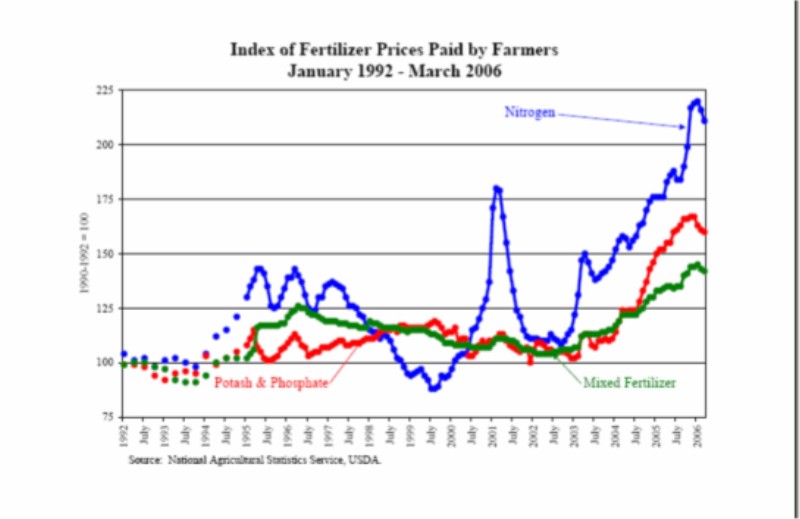
Whatever we may have liked about the era of cheap, oil-based food, it is drawing to a close. Even if we were willing to continue paying the environmental or public-health price, we're not going to have the cheap energy (or the water) needed to keep the system going, much less expand production. But as is so often the case, a crisis provides opportunity for reform, and the current food crisis presents opportunities that must be seized.

In drafting these proposals, I've adhered to a few simple principles of what a 21st-century food system needs to do. First, your administration's food policy must strive to provide a healthful diet for all our people; this means focusing on the quality and diversity (and not merely the quantity) of the calories that American agriculture produces and American eaters consume. Second, your policies should aim to improve the resilience, safety and security of our food supply. Among other things, this means promoting regional food economies both in America and around the world. And lastly, your policies need to reconceive agriculture as part of the solution to environmental problems like climate change.

These goals are admittedly ambitious, yet they will not be difficult to align or advance as long as we keep in mind this One Big Idea: most of the problems our food system faces today are because of its reliance on fossil fuels, and to the extent that our policies wring the oil out of the system and replace it with the energy of the sun, those policies will simultaneously improve the state of our health, our environment and our security.

I. Resolarizing the American Farm

What happens in the field influences every other link of the food chain on up to our meals - if we grow monocultures of corn and soy, we will find the products of processed corn and soy on our plates. Fortunately for your initiative, the federal government has enormous leverage in determining exactly what happens on the 830 million acres of American crop and pasture land.

Today most government farm and food programs are designed to prop up the old system of maximizing production from a handful of subsidized commodity crops grown in monocultures. Even food-assistance programs like WIC and school lunch focus on maximizing quantity rather than quality, typically specifying a minimum number of calories (rather than maximums) and seldom paying more than lip service to nutritional quality. This focus on quantity may have made sense in a time of food scarcity, but today it gives us a school-lunch program that feeds chicken nuggets and Tater Tots to overweight and diabetic children.

Your challenge is to take control of this vast federal machinery and use it to drive a transition to a new solar-food economy, starting on the farm. Right now, the government actively discourages the farmers it subsidizes from growing healthful, fresh food: farmers receiving crop subsidies are prohibited from growing "specialty crops" - farm-bill speak for fruits and vegetables. (This rule was the price exacted by California and Florida produce growers in exchange for going along with subsidies for commodity crops.) Commodity farmers should instead be encouraged to grow as many different crops - including animals - as possible. Why? Because the greater the diversity of crops on a farm, the less the need for both fertilizers and pesticides.

The power of cleverly designed polycultures to produce large amounts of food from little more than soil, water and sunlight has been proved, not only by small-scale "alternative" farmers in the United States but also by large rice-and-fish farmers in China and giant-scale operations (up to 15,000 acres) in places like Argentina. There, in a geography roughly comparable to that of the American farm belt, farmers have traditionally employed an ingenious eight-year rotation of perennial pasture and annual crops: after five years grazing cattle on pasture (and producing the world's best beef), farmers can then grow three years of grain without applying any fossil-fuel fertilizer. Or, for that matter, many pesticides: the weeds that afflict pasture can't survive the years of tillage, and the weeds of row crops don't survive the years of grazing, making herbicides all but unnecessary. There is no reason - save current policy and custom - that American farmers couldn't grow both high-quality grain and grass-fed beef under such a regime through much of the Midwest. (It should be noted that today's sky-high grain prices are causing many Argentine farmers to abandon their rotation to grow grain and soybeans exclusively, an environmental disaster in the making.)

Federal policies could do much to encourage this sort of diversified sun farming. Begin with the subsidies: payment levels should reflect the number of different crops farmers grow or the number of days of the year their fields are green - that is, taking advantage of photosynthesis, whether to grow food, replenish the soil or control erosion. If Midwestern farmers simply planted a cover crop after the fall harvest, they would significantly reduce their need for fertilizer, while cutting down on soil erosion. Why don't farmers do this routinely? Because in recent years fossil-fuel-based fertility has been so much cheaper and easier to use than sun-based fertility.

In addition to rewarding farmers for planting cover crops, we should make it easier for them to apply compost to their fields - a practice that improves not only the fertility of the soil but also its ability to hold water and therefore withstand drought. (There is mounting evidence that it also boosts the nutritional quality of the food grown in it.) The U.S.D.A. estimates that Americans throw out 14 percent of the food they buy; much more is wasted by retailers, wholesalers and institutions. A program to make municipal composting of food and yard waste mandatory and then distributing the compost free to area farmers would shrink America's garbage heap, cut the need for irrigation and fossil-fuel fertilizers in agriculture and improve the nutritional quality of the American diet.

Right now, most of the conservation programs run by the U.S.D.A. are designed on the zero-sum principle: land is either locked up in "conservation" or it is farmed intensively. This either-or approach reflects an outdated belief that modern farming and ranching are inherently destructive, so that the best thing for the environment is to leave land untouched. But we now know how to grow crops and graze animals in systems that will support biodiversity, soil health, clean water and carbon sequestration. The Conservation Stewardship Program, championed by Senator Tom Harkin and included in the 2008 Farm Bill, takes an important step toward rewarding these kinds of practices, but we need to move this approach from the periphery of our farm policy to the very center. Longer term, the government should back ambitious research now under way (at the Land Institute in Kansas and a handful of other places) to "perennialize" commodity agriculture: to breed varieties of wheat, rice and other staple grains that can be grown like prairie grasses - without having to till the soil every year. These perennial grains hold the promise of slashing the fossil fuel now needed to fertilize and till the soil, while protecting farmland from erosion and sequestering significant amounts of carbon.

But that is probably a 50-year project. For today's agriculture to wean itself from fossil fuel and make optimal use of sunlight, crop plants and animals must once again be married on the farm - as in Wendell Berry's elegant "solution." Sunlight nourishes the grasses and grains, the plants nourish the animals, the animals then nourish the soil, which in turn nourishes the next season's grasses and grains. Animals on pasture can also harvest their own feed and dispose of their own waste - all without our help or fossil fuel.

If this system is so sensible, you might ask, why did it succumb to Confined Animal Feeding Operations, or CAFOs? In fact there is nothing inherently efficient or economical about raising vast cities of animals in confinement. Three struts, each put into place by federal policy, support the modern CAFO, and the most important of these - the ability to buy grain for less than it costs to grow it - has just been kicked away. The second strut is F.D.A. approval for the routine use of antibiotics in feed, without which the animals in these places could not survive their crowded, filthy and miserable existence. And the third is that the government does not require CAFOs to treat their wastes as it would require human cities of comparable size to do. The F.D.A. should ban the routine use of antibiotics in livestock feed on public-health grounds, now that we have evidence that the practice is leading to the evolution of drug-resistant bacterial diseases and to outbreaks of E. coli and salmonella poisoning. CAFOs should also be regulated like the factories they are, required to clean up their waste like any other industry or municipality.

It will be argued that moving animals off feedlots and back onto farms will raise the price of meat. It probably will - as it should. You will need to make the case that paying the real cost of meat, and therefore eating less of it, is a good thing for our health, for the environment, for our dwindling reserves of fresh water and for the welfare of the animals. Meat and milk production represent the food industry's greatest burden on the environment; a recent U.N. study estimated that the world's livestock alone account for 18 percent of all greenhouse gases, more than all forms of transportation combined. (According to one study, a pound of feedlot beef also takes 5,000 gallons of water to produce.) And while animals living on farms will still emit their share of greenhouse gases, grazing them on grass and returning their waste to the soil will substantially offset their carbon hoof prints, as will getting ruminant animals off grain. A bushel of grain takes approximately a half gallon of oil to produce; grass can be grown with little more than sunshine.

It will be argued that sun-food agriculture will generally yield less food than fossil-fuel agriculture. This is debatable. The key question you must be prepared to answer is simply this: Can the sort of sustainable agriculture you're proposing feed the world?

There are a couple of ways to answer this question. The simplest and most honest answer is that we don't know, because we haven't tried. But in the same way we now need to learn how to run an industrial economy without cheap fossil fuel, we have no choice but to find out whether sustainable agriculture can produce enough food. The fact is, during the past century, our agricultural research has been directed toward the goal of maximizing production with the help of fossil fuel. There is no reason to think that bringing the same sort of resources to the development of more complex, sun-based agricultural systems wouldn't produce comparable yields. Today's organic farmers, operating for the most part without benefit of public investment in research, routinely achieve 80 to 100 percent of conventional yields in grain and, in drought years, frequently exceed conventional yields. (This is because organic soils better retain moisture.) Assuming no further improvement, could the world - with a population expected to peak at 10 billion - survive on these yields?

First, bear in mind that the average yield of world agriculture today is substantially lower than that of modern sustainable farming. According to a recent University of Michigan study, merely bringing international yields up to today's organic levels could increase the world's food supply by 50 percent.

The second point to bear in mind is that yield isn't everything - and growing high-yield commodities is not quite the same thing as growing food. Much of what we're growing today is not directly eaten as food but processed into low-quality calories of fat and sugar. As the world epidemic of diet-related chronic disease has demonstrated, the sheer quantity of calories that a food system produces improves health only up to a point, but after that, quality and diversity are probably more important. We can expect that a food system that produces somewhat less food but of a higher quality will produce healthier populations.

The final point to consider is that 40 percent of the world's grain output today is fed to animals; 11 percent of the world's corn and soybean crop is fed to cars and trucks, in the form of biofuels. Provided the developed world can cut its consumption of grain-based animal protein and ethanol, there should be plenty of food for everyone - however we choose to grow it.

In fact, well-designed polyculture systems, incorporating not just grains but vegetables and animals, can produce more food per acre than conventional monocultures, and food of a much higher nutritional value. But this kind of farming is complicated and needs many more hands on the land to make it work. Farming without fossil fuels - performing complex rotations of plants and animals and managing pests without petrochemicals - is labor intensive and takes more skill than merely "driving and spraying," which is how corn-belt farmers describe what they do for a living.

To grow sufficient amounts of food using sunlight will require more people growing food - millions more. This suggests that sustainable agriculture will be easier to implement in the developing world, where large rural populations remain, than in the West, where they don't. But what about here in America, where we have only about two million farmers left to feed a population of 300 million? And where farmland is being lost to development at the rate of 2,880 acres a day? Post-oil agriculture will need a lot more people engaged in food production - as farmers and probably also as gardeners.

The sun-food agenda must include programs to train a new generation of farmers and then help put them on the land. The average American farmer today is 55 years old; we shouldn't expect these farmers to embrace the sort of complex ecological approach to agriculture that is called for. Our focus should be on teaching ecological farming systems to students entering land-grant colleges today. For decades now, it has been federal policy to shrink the number of farmers in America by promoting capital-intensive monoculture and consolidation. As a society, we devalued farming as an occupation and encouraged the best students to leave the farm for "better" jobs in the city. We emptied America's rural counties in order to supply workers to urban factories. To put it bluntly, we now need to reverse course. We need more highly skilled small farmers in more places all across America - not as a matter of nostalgia for the agrarian past but as a matter of national security. For nations that lose the ability to substantially feed themselves will find themselves as gravely compromised in their international dealings as nations that depend on foreign sources of oil presently do. But while there are alternatives to oil, there are no alternatives to food.

National security also argues for preserving every acre of farmland we can and then making it available to new farmers. We simply will not be able to depend on distant sources of food, and therefore need to preserve every acre of good farmland within a day's drive of our cities. In the same way that when we came to recognize the supreme ecological value of wetlands we erected high bars to their development, we need to recognize the value of farmland to our national security and require real-estate developers to do "food-system impact statements" before development begins. We should also create tax and zoning incentives for developers to incorporate farmland (as they now do "open space") in their subdivision plans; all those subdivisions now ringing golf courses could someday have diversified farms at their center.

The revival of farming in America, which of course draws on the abiding cultural power of our agrarian heritage, will pay many political and economic dividends. It will lead to robust economic renewal in the countryside. And it will generate tens of millions of new "green jobs," which is precisely how we need to begin thinking of skilled solar farming: as a vital sector of the 21st-century post-fossil-fuel economy.

II. Reregionalizing the Food System

For your sun-food agenda to succeed, it will have to do a lot more than alter what happens on the farm. The government could help seed a thousand new polyculture farmers in every county in Iowa, but they would promptly fail if the grain elevator remained the only buyer in town and corn and beans were the only crops it would take. Resolarizing the food system means building the infrastructure for a regional food economy - one that can support diversified farming and, by shortening the food chain, reduce the amount of fossil fuel in the American diet.

A decentralized food system offers a great many other benefits as well. Food eaten closer to where it is grown will be fresher and require less processing, making it more nutritious. Whatever may be lost in efficiency by localizing food production is gained in resilience: regional food systems can better withstand all kinds of shocks. When a single factory is grinding 20 million hamburger patties in a week or washing 25 million servings of salad, a single terrorist armed with a canister of toxins can, at a stroke, poison millions. Such a system is equally susceptible to accidental contamination: the bigger and more global the trade in food, the more vulnerable the system is to catastrophe. The best way to protect our food system against such threats is obvious: decentralize it.

Today in America there is soaring demand for local and regional food; farmers' markets, of which the U.S.D.A. estimates there are now 4,700, have become one of the fastest-growing segments of the food market. Community-supported agriculture is booming as well: there are now nearly 1,500 community-supported farms, to which consumers pay an annual fee in exchange for a weekly box of produce through the season. The local-food movement will continue to grow with no help from the government, especially as high fuel prices make distant and out-of-season food, as well as feedlot meat, more expensive. Yet there are several steps the government can take to nurture this market and make local foods more affordable. Here are a few:

Four-Season Farmers' Markets. Provide grants to towns and cities to build year-round indoor farmers' markets, on the model of Pike Place in Seattle or the Reading Terminal Market in Philadelphia. To supply these markets, the U.S.D.A. should make grants to rebuild local distribution networks in order to minimize the amount of energy used to move produce within local food sheds.

Agricultural Enterprise Zones. Today the revival of local food economies is being hobbled by a tangle of regulations originally designed to check abuses by the very largest food producers. Farmers should be able to smoke a ham and sell it to their neighbors without making a huge investment in federally approved facilities. Food-safety regulations must be made sensitive to scale and marketplace, so that a small producer selling direct off the farm or at a farmers' market is not regulated as onerously as a multinational food manufacturer. This is not because local food won't ever have food-safety problems - it will - only that its problems will be less catastrophic and easier to manage because local food is inherently more traceable and accountable.

Local Meat-Inspection Corps. Perhaps the single greatest impediment to the return of livestock to the land and the revival of local, grass-based meat production is the disappearance of regional slaughter facilities. The big meat processors have been buying up local abattoirs only to close them down as they consolidate, and the U.S.D.A. does little to support the ones that remain. From the department's perspective, it is a better use of shrinking resources to dispatch its inspectors to a plant slaughtering 400 head an hour than to a regional abattoir slaughtering a dozen. The U.S.D.A. should establish a Local Meat-Inspectors Corps to serve these processors. Expanding on its successful pilot program on Lopez Island in Puget Sound, the U.S.D.A. should also introduce a fleet of mobile abattoirs that would go from farm to farm, processing animals humanely and inexpensively. Nothing would do more to make regional, grass-fed meat fully competitive in the market with feedlot meat.

Establish a Strategic Grain Reserve. In the same way the shift to alternative energy depends on keeping oil prices relatively stable, the sun-food agenda - as well as the food security of billions of people around the world - will benefit from government action to prevent huge swings in commodity prices. A strategic grain reserve, modeled on the Strategic Petroleum Reserve, would help achieve this objective and at the same time provide some cushion for world food stocks, which today stand at perilously low levels. Governments should buy and store grain when it is cheap and sell when it is dear, thereby moderating price swings in both directions and discouraging speculation.

Regionalize Federal Food Procurement. In the same way that federal procurement is often used to advance important social goals (like promoting minority-owned businesses), we should require that some minimum percentage of government food purchases - whether for school-lunch programs, military bases or federal prisons - go to producers located within 100 miles of institutions buying the food. We should create incentives for hospitals and universities receiving federal funds to buy fresh local produce. To channel even a small portion of institutional food purchasing to local food would vastly expand regional agriculture and improve the diet of the millions of people these institutions feed.

Create a Federal Definition of "Food." It makes no sense for government food-assistance dollars, intended to improve the nutritional health of at-risk Americans, to support the consumption of products we know to be unhealthful. Yes, some people will object that for the government to specify what food stamps can and cannot buy smacks of paternalism. Yet we already prohibit the purchase of tobacco and alcohol with food stamps. So why not prohibit something like soda, which is arguably less nutritious than red wine? Because it is, nominally, a food, albeit a "junk food." We need to stop flattering nutritionally worthless foodlike substances by calling them "junk food" - and instead make clear that such products are not in fact food of any kind. Defining what constitutes real food worthy of federal support will no doubt be controversial (you'll recall President Reagan's ketchup imbroglio), but defining food upward may be more politically palatable than defining it down, as Reagan sought to do. One approach would be to rule that, in order to be regarded as a food by the government, an edible substance must contain a certain minimum ratio of micronutrients per calorie of energy. At a stroke, such a definition would improve the quality of school lunch and discourage sales of unhealthful products, since typically only "food" is exempt from local sales tax.

A few other ideas: Food-stamp debit cards should double in value whenever swiped at a farmers' markets - all of which, by the way, need to be equipped with the Electronic Benefit Transfer card readers that supermarkets already have. We should expand the WIC program that gives farmers'-market vouchers to low-income women with children; such programs help attract farmers' markets to urban neighborhoods where access to fresh produce is often nonexistent. (We should also offer tax incentives to grocery chains willing to build supermarkets in underserved neighborhoods.) Federal food assistance for the elderly should build on a successful program pioneered by the state of Maine that buys low-income seniors a membership in a community-supported farm. All these initiatives have the virtue of advancing two objectives at once: supporting the health of at-risk Americans and the revival of local food economies.

III. Rebuilding America's Food Culture

In the end, shifting the American diet from a foundation of imported fossil fuel to local sunshine will require changes in our daily lives, which by now are deeply implicated in the economy and culture of fast, cheap and easy food. Making available more healthful and more sustainable food does not guarantee it will be eaten, much less appreciated or enjoyed. We need to use all the tools at our disposal - not just federal policy and public education but the president's bully pulpit and the example of the first family's own dinner table - to promote a new culture of food that can undergird your sun-food agenda.

Changing the food culture must begin with our children, and it must begin in the schools. Nearly a half-century ago, President Kennedy announced a national initiative to improve the physical fitness of American children. He did it by elevating the importance of physical education, pressing states to make it a requirement in public schools. We need to bring the same commitment to "edible education" - in Alice Waters's phrase - by making lunch, in all its dimensions, a mandatory part of the curriculum. On the premise that eating well is a critically important life skill, we need to teach all primary-school students the basics of growing and cooking food and then enjoying it at shared meals.

To change our children's food culture, we'll need to plant gardens in every primary school, build fully equipped kitchens, train a new generation of lunchroom ladies (and gentlemen) who can once again cook and teach cooking to children. We should introduce a School Lunch Corps program that forgives federal student loans to culinary-school graduates in exchange for two years of service in the public-school lunch program. And we should immediately increase school-lunch spending per pupil by $1 a day - the minimum amount food-service experts believe it will take to underwrite a shift from fast food in the cafeteria to real food freshly prepared.

But it is not only our children who stand to benefit from public education about food. Today most federal messages about food, from nutrition labeling to the food pyramid, are negotiated with the food industry. The surgeon general should take over from the Department of Agriculture the job of communicating with Americans about their diet. That way we might begin to construct a less equivocal and more effective public-health message about nutrition. Indeed, there is no reason that public-health campaigns about the dangers of obesity and Type 2 diabetes shouldn't be as tough and as effective as public-health campaigns about the dangers of smoking. The Centers for Disease Control estimates that one in three American children born in 2000 will develop Type 2 diabetes. The public needs to know and see precisely what that sentence means: blindness; amputation; early death. All of which can be avoided by a change in diet and lifestyle. A public-health crisis of this magnitude calls for a blunt public-health message, even at the expense of offending the food industry. Judging by the success of recent antismoking campaigns, the savings to the health care system could be substantial.

There are other kinds of information about food that the government can supply or demand. In general we should push for as much transparency in the food system as possible - the other sense in which "sunlight" should be the watchword of our agenda. The F.D.A. should require that every packaged-food product include a second calorie count, indicating how many calories of fossil fuel went into its production. Oil is one of the most important ingredients in our food, and people ought to know just how much of it they're eating. The government should also throw its support behind putting a second bar code on all food products that, when scanned either in the store or at home (or with a cellphone), brings up on a screen the whole story and pictures of how that product was produced: in the case of crops, images of the farm and lists of agrochemicals used in its production; in the case of meat and dairy, descriptions of the animals' diet and drug regimen, as well as live video feeds of the CAFO where they live and, yes, the slaughterhouse where they die. The very length and complexity of the modern food chain breeds a culture of ignorance and indifference among eaters. Shortening the food chain is one way to create more conscious consumers, but deploying technology to pierce the veil is another.

Finally, there is the power of the example you set in the White House. If what's needed is a change of culture in America's thinking about food, then how America's first household organizes its eating will set the national tone, focusing the light of public attention on the issue and communicating a simple set of values that can guide Americans toward sun-based foods and away from eating oil.

The choice of White House chef is always closely watched, and you would be wise to appoint a figure who is identified with the food movement and committed to cooking simply from fresh local ingredients. Besides feeding you and your family exceptionally well, such a chef would demonstrate how it is possible even in Washington to eat locally for much of the year, and that good food needn't be fussy or complicated but does depend on good farming. You should make a point of the fact that every night you're in town, you join your family for dinner in the Executive Residence - at a table. (Surely you remember the Reagans' TV trays.) And you should also let it be known that the White House observes one meatless day a week - a step that, if all Americans followed suit, would be the equivalent, in carbon saved, of taking 20 million midsize sedans off the road for a year. Let the White House chef post daily menus on the Web, listing the farmers who supplied the food, as well as recipes.

Since enhancing the prestige of farming as an occupation is critical to developing the sun-based regional agriculture we need, the White House should appoint, in addition to a White House chef, a White House farmer. This new post would be charged with implementing what could turn out to be your most symbolically resonant step in building a new American food culture. And that is this: tear out five prime south-facing acres of the White House lawn and plant in their place an organic fruit and vegetable garden.

When Eleanor Roosevelt did something similar in 1943, she helped start a Victory Garden movement that ended up making a substantial contribution to feeding the nation in wartime. (Less well known is the fact that Roosevelt planted this garden over the objections of the U.S.D.A., which feared home gardening would hurt the American food industry.) By the end of the war, more than 20 million home gardens were supplying 40 percent of the produce consumed in America. The president should throw his support behind a new Victory Garden movement, this one seeking "victory" over three critical challenges we face today: high food prices, poor diets and a sedentary population. Eating from this, the shortest food chain of all, offers anyone with a patch of land a way to reduce their fossil-fuel consumption and help fight climate change. (We should offer grants to cities to build allotment gardens for people without access to land.) Just as important, Victory Gardens offer a way to enlist Americans, in body as well as mind, in the work of feeding themselves and changing the food system - something more ennobling, surely, than merely asking them to shop a little differently.

I don't need to tell you that ripping out even a section of the White House lawn will be controversial: Americans love their lawns, and the South Lawn is one of the most beautiful in the country. But imagine all the energy, water and petrochemicals it takes to make it that way. (Even for the purposes of this memo, the White House would not disclose its lawn-care regimen.) Yet as deeply as Americans feel about their lawns, the agrarian ideal runs deeper still, and making this particular plot of American land productive, especially if the First Family gets out there and pulls weeds now and again, will provide an image even more stirring than that of a pretty lawn: the image of stewardship of the land, of self-reliance and of making the most of local sunlight to feed one's family and community. The fact that surplus produce from the South Lawn Victory Garden (and there will be literally tons of it) will be offered to regional food banks will make its own eloquent statement. [See what the Slow Food movement is doing at San Francisco city hall, where the above pic derives.]

You're probably thinking that growing and eating organic food in the White House carries a certain political risk. It is true you might want to plant iceberg [or romaine] lettuce rather than arugula, at least to start. (Or simply call arugula by its proper American name, as generations of Midwesterners have done: "rocket.") But it should not be difficult to deflect the charge of elitism sometimes leveled at the sustainable-food movement. Reforming the food system is not inherently a right-or-left issue: for every Whole Foods shopper with roots in the counterculture you can find a family of evangelicals intent on taking control of its family dinner and diet back from the fast-food industry - the culinary equivalent of home schooling. You should support hunting as a particularly sustainable way to eat meat - meat grown without any fossil fuels whatsoever. There is also a strong libertarian component to the sun-food agenda, which seeks to free small producers from the burden of government regulation in order to stoke rural innovation. And what is a higher "family value," after all, than making time to sit down every night to a shared meal?

Our agenda puts the interests of America's farmers, families and communities ahead of the fast-food industry's. For that industry and its apologists to imply that it is somehow more "populist" or egalitarian to hand our food dollars to Burger King or General Mills than to support a struggling local farmer is absurd. Yes, sun food costs more, but the reasons why it does only undercut the charge of elitism: cheap food is only cheap because of government handouts and regulatory indulgence (both of which we will end), not to mention the exploitation of workers, animals and the environment on which its putative "economies" depend. Cheap food is food dishonestly priced - it is in fact unconscionably expensive.

Your sun-food agenda promises to win support across the aisle. It builds on America's agrarian past, but turns it toward a more sustainable, sophisticated future. It honors the work of American farmers and enlists them in three of the 21st century's most urgent errands: to move into the post-oil era, to improve the health of the American people and to mitigate climate change. Indeed, it enlists all of us in this great cause by turning food consumers into part-time producers, reconnecting the American people with the American land and demonstrating that we need not choose between the welfare of our families and the health of the environment - that eating less oil and more sunlight will redound to the benefit of both.

Michael Pollan, a contributing writer for the magazine, is the Knight Professor of Journalism at the University of California, Berkeley. He is the author, most recently, of “In Defense of Food: An Eater’s Manifesto.”

Wednesday, October 8, 2008

No comment necessary (from All Hat No Cattle).

Plan C: cooperate, conserve, curtail....

Plan C: Individual and Community Survival Strategies for the Energy Crisis
The Fifth Annual US Conference on Peak Oil and Community Solutions October 31 - November 2, 2008 Oakland University, Rochester, Michigan www.plancconference.org

At this groundbreaking conference participants will explore strategies for reducing energy use in the areas of housing, food and transportation, including both theory and practice. We will examine the long energy decline of the 21st century, the psychological barriers to rapid change, and the challenge of persuading our communities to embrace local, low-energy living.
Attendance at this conference may be of critical importance at this time when the ongoing energy crisis is being compounded by the very real threat of credit and financial collapse.

Our survival is now, more than ever, in question.
And it is more urgent than ever that we gather in Michigan to evaluate survival strategies and disseminate skills for growing food, creating local food security in their communities, retrofitting homes to reduce reliance on fossil fuels, and educating their communities to prepare for the difficult times we are facing.

Skyrocketing oil prices, mounting geopolitical tensions, grave economic realities, and dangerous climate changes are threatening our lives and communities like never before. The age of cheap, abundant fossil fuels is coming to an end, and urgent action is required to transform our overly consumptive society into one that uses far less energy.

By acting now, you can significantly cut your personal household energy use and overall consumption, support more localized economic production, and reduce your dependence on high energy transportation in your daily life. By doing this, you will be helping to create a more resilient and sustainable community adapted to the coming economic and ecological storms.

The conference will also feature in-depth workshops and panels, Connection Café discussion tables with area experts, an eco tour slide show, screenings of award winning films, entertainment, tours of local green buildings, a Green Living Expo, and healthy shared meals.

Schedule of Presentations and Workshops:

* Keynoter John Michael Greer, author of the forthcoming The Long Descent: A User’s Guide to the End of the Industrial Age

* Keynoter Dmitry Orlov, author of Reinventing Collapse: Soviet Example and American Prospects
* Richard Heinberg, Senior Fellow, Post Carbon Institute, author of The Party’s Over and Powerdown (via webcast)
* Katrin Klingenberg, director of the Passive House Institute US
* Peter Bane, editor of Permaculture Activist
* Christopher Bedford, President of the Center for Economic Security and the Sweetwater Local Foods Market

* John Richter, co-founder of the Institute for Sustainable Energy Education

* Pat Murphy, author of Plan C: Community Survival Strategies for Peak Oil and Climate Change

* Megan Quinn Bachman, Outreach Director of Community Solutions; co-producer of The Power of Community: How Cuba Survived Peak Oil

For more information and to register, go to www.plancconference.org, contact Jill Hollowell at Upland Hills Ecological Awareness Center at
248-693-1021, or email info@plancconference.org. Note: Members of an organization or activist network are encouraged to attend as a group and receive substantial discounts for 3+ and 5+ member groups.

Here Be Dragons: Predictions for 2008

Just found in Sharon Astyk's Riot 4 Austerity archives. She gets a high score for accuracy.
Here Be Dragons: Predictions for 2008
By Sharon • Dec 27th, 2007 •

My intuition is that in 2008, we'll no longer be able quite to hang on. I'm going to call 2008 "The Year of Dragons" - that is, the year we get off of all the maps we've had and enter uncharted territory. once upon a time, the parts of the maps that were unknown bore the sign "Here be Dragons" - I think this is the year we'll begin getting to know the dragons on the other side of our understanding.

So here are my predictions - and again, let me reiterate that the thing that I hope makes me marginally credible is this - I do not believe that every single idea I pull out of my ass...er head is the absolute truth. And if I don't, you certainly shouldn't.

But here goes.

1. This year, the words peak oil will go mainstream, but this mainstreaming will not be matched by a subtle or nuanced understanding of what the words mean. That is, peak oil will be used for political purposes, and not necessarily ones anyone will approve of.

2. By the end of the year, there will begin to be runs on preparedness equipment and food storage, a la Y2K.

3. The NeoCons will not go gently into that good night - there will be at least one serious surprise for us. G-d willing, it won't involve the word "nukuler" or any of its cognates.

4. Hillary will not win the 2008 election. Neither, despite all the people who keep sending me emails saying he will, will Ron Paul.

5. The economy will tank. Yup, I'm really going out on a limb here.

6. Many of us will find we are being taken more seriously than we ever expected. We will still be taken less seriously than any celebrity divorce, however.

7. We'll see food riots in more nations and hunger will increase. The idea of Victory Gardens won't seem so crazy anymore.

8. The biofuels craze will begin to be thought the better of - not in time to prevent the above.

9. We will see at least one more image of desperate people, walking out of their city becuase there's no other alternative. And a lot of images of foreclosures.

10. TEOTWAKI, if it ever happens, will be delayed long enough for my book to be released this fall and to make back at least the advance, so my publisher won't have any reason to try and sue me ;-).

Ok, that last is more of a prayer than a prediction - the bad thing about writing books for a publisher that deals a lot with peak oil and climate change is that the words "if everything doesn't go to hell in a handbasket" are actually included in the legal documents (ok, I'm joking).

Those are my bets, folks. We'll reconvene in late December of next year to make fun of me and my predictions. In the meantime, a happy, safe, healthy and hopeful New Year to all!

Shalom,
Sharon

Ok, Now What?

Sharon Astyk October 5th, 2008

There are certain things in my life that fall in the category of “hideously unpleasant things I am pretty certain I can’t do jack about.” Among them are drilling in ANWR and the fact that everyone on earth wants to talk about the unbelievably boring Sarah Palin. I know many of you devote a lot of passion to protesting these things, and I’m sorry I just can’t do it - that is, I don’t think that people who are cold and without energy are ever going to turn down oil from environmentally sensitive places - in fact, I think they’d be willing to power their cars with baby harp seals (and not in a nice way) if that would work. I recognize that most people simply have to say what they think about Sarah Palin, and her hominess/titillating family gossip/experience holding off Russia with her bare hands and I might as well just listen to the 9,000 description of Tina Fay’s impression. And I knew we were going to pass a bailout bill, no matter how much it made my stomach clench up with horror. All of these things are bad, bad things that it is good to protest - but protest so that you can say you tried, not with the expectation that the laws of nature will somehow be refuted.

Why was the bailout destined to pass? Well, the most obvious reason is this - shockingly (and apparently a lot of very dim people in Washington did find this shocking), the stock market reacted to the news that they weren’t getting 700+billion dollars worth of free money pretty much like toddlers not getting lollipops. From what I’ve heard of the reaction on the House floor on Monday, the fact that the markets had their heart set on their lollipops was news. Meanwhile, it seems like foreign governments were also unhappy at the lack of lollipops, and exerted some pressure. Apparently that was pretty shocking too. And like the absentee upper class parents most congresspeople probably were, they gave in to pressure. We do not elect our government for their courage, but for their willingness to dance to the flutes of power - we want them to reflect the will of the people. And they do - the will of the people with the power to undercut their wealth and power. Unfortunately, neither you nor I are one of them.

More importantly, we’re having an election. Now the US has been afflicted with the current campaign season since, if I recall correctly, 1066, when the Normans invaded England and Hillary Clinton declared her candidacy. But pretty soon we’re actually going to have an election. And even though the bailout is not going to do jack to spare us economic disaster, if they hadn’t passed one, it would have been far to easy to hold those who did not pass it responsible for whatever comes down the pike. Now everyone gets to hold up their hands and say they tried their very hardest, really truly they did, but they just couldn’t save everyone. Central among the people who they couldn’t save (because they tried so hard) will be widows and orphans, single parents and kids, and you and me. It turns out they were so busy rescuing the rich that the fact that they let the much larger group of poor drown was just an accident.

Oh, and raping and pillaging is fun. One doesn’t just quit a hobby like that cold turkey. Shock doctrine capitalism is the name of the game, and the perpetrators aren’t ready to admit that the game is over - and of course, with Congress in their pockets, it isn’t.

There are other reasons, of course, and you can read more about them in lots of the usual spots. But the truth is that despite the mass outpouring of anger at the bailout, despite the fact that the people spoke, not because they were too stupid to understand that the economy was tanking, but because they didn’t want to throw good money after bad - despite all that, the bailout was inevitable and it happened. And the only good thing I can say about this is that when the economy tanks anyway, that anger may actually be a useful tool in making some change. I hope everyone out there will remember this week not only when it comes time to vote this round, but the next and the next. Some things you may not be able to stop, but that doesn’t mean you have to forgive.

So now what? What comes next in ordinary people’s lives? Well, what comes next is another series of crises. The stock market didn’t even get a bounce out of the bailout package. Sure, some things will do a little better for a short while, maybe even enough to get through the election. But don’t count on it - things are falling apart faster than anyone can glue them back together. Which means that Paulson and Bernanke are going to be back again and again and again - next to prop up the FDIC or bail out some other organization that they swear is too big to fail. And then, when the money runs out and there’s no more on offer, they will explain to us that if we’d just authorized that last print run of cash, or if we had just been better people, or hadn’t taken so much debt, or had listened to them sooner, it would all be alright, but now, well, the money’s all gone, so no point in trying to relieve the plight of ordinary people who didn’t want to give them money anyway. You can bet that the cause of the problem will be you - your failures, your credit card debt, your wanting a house, as though you (collectively, in the millions) all acted alone to take down the economy on our own private grassy knolls.

What can we do about it? Protest - because it came closer to working here than I think anyone expected it to, and it may well work sooner or later. Call and fight and be angry - don’t let them wear your anger out. Clarify - make sure that the message gets out whose fault this really is. Vote, of course, because even the lesser of two evils can be quite lesser.

But more importantly, to the extent it is possible, we need to build redundancies into the systems we depend on that don’t depend on wall street, or the stuff we shortly won’t have any money for anyway. That means everyone out there needs to look around them and ask what small piece of the infrastructure of their lives (and the lives of their community members) they can take some responsibility for. We need to all look and ask “what is my job in this new world we’re awakening to?” What the heck can I do to help mitigate this disaster?

Maybe you already know your job - it is the thing you care about, the work you do already for free or for money, in every second of spare time or 10 hours a day. You do something that matters - you provide health care, grow food, teach, mend what’s broken, feed the hungry, fight for justice - you do good work, and now you have to figure out a way to keep the work going without as much money or energy.

Or maybe you are head down in a health care crisis, a new baby, a family shift - and all you can do is prepare and protect yourselves and your families as best you can. You haven’t the time and energy to do much more than that - and your job is to get through this, so that later, you can do the work that needs doing. That’s ok - but as soon as you can, make a little time, even if it is just to check in on your neighbors or start carpooling to the grocery store.

Maybe you don’t know what your role is. Maybe you do have a little time or energy that could be used to build community, fix things, help others, but you are shy, and you don’t know what to do. And I can’t tell you exactly what you should do - you know your talents and skills best. Maybe you are a natural organizer and leader, and you should get started with your community’s victory garden movement, building the community health center or getting neighbors to pool their resources to get a shared transport network up. Maybe you are more comfortable following, in some already existing role - and it is time to get out to the local food pantry and start figuring out where they are going to get enough food to help all the hungry. Maybe you care most about kids, or elders or women or the hispanic or black or asian community, and that’s where you should concentrate your energies. Maybe you want to work with members of your faith, your family or your friends. Great - do it. But do it now.

We’re all going to need reliable sources of food.
We’re all going to need some transportation.
We’re going to need health care, and emergency services.
We’re all going to need good work - even if it is only for food.
We’re going to need ways to keep people housed, to connect folks who need homes with those who can’t keep them unless they rent some space.
A lot of people are going to need warm clothes and blankets.
A lot of people are going to need a meal, a helping hand, help with disabled family members and elders.
And folks, when the formal economy falls away, when we cannot trust our government to act in our interests, all of us have to get acting to compensate, to keep the wolf from the door.

The truth is that the bailout, on one level, was the final reminder of what Hurricane Katrina taught us, that no one is coming with a helicopter to rescue us. Fortunately, some of us have boats, and the rest of us can build life rafts, and there’s a lot we can do to rescue ourselves.

What now? It is all hands on deck, folks.

Sharon


The Green Collar Economy

How One Solution Can Fix Our Two Biggest Problems

by Van Jones

It's time to bailout both the people and the planet.
The first book from acclaimed social justice and environmental activist Van Jones, The Green Collar Economy delivers a real solution that both rescues our economy and saves the environment.

Provocative, personal, and inspirational, The Green Collar Economy is not a dire warning but rather a substantive and viable plan for solving the biggest issues facing the country--the failing economy and our devastated environment. From a distance, it appears that these two problems are separate, but when we look closer, the connection becomes unmistakable.

In The Green Collar Economy, acclaimed activist and political advisor Van Jones delivers a real solution that both rescues our economy and saves the environment. The economy is built on and powered almost exclusively by oil, natural gas, and coal, all fast-diminishing nonrenewable resources. As supplies disappear, the price of energy climbs and nearly everything becomes more expensive. With costs and unemployment soaring, the economy stalls. Not only that, when we burn these fuels, the greenhouse gases they create overheat the atmosphere. As the headlines make clear, total climate chaos looms over us. The bottom line: we cannot continue with business as usual. We cannot drill and burn our way out of these dual dilemmas.

K Jr.

Book Introduction

The Dual Crisis

The Fourth Quadrant

Eco-equity

The Green New Deal

The Future Is Now

The Government Question

Buoyancy & Hope

Instead, Van Jones illustrates how we can invent and invest our way out of the pollution-based grey economy and into the healthy new green economy. Built by a broad coalition deeply rooted in the lives and struggles of ordinary people, this path has the practical benefit of both cutting energy prices and generating enough work to pull the U.S. economy out of its present death spiral.

Rachel Carson’s 1963 landmark book Silent Spring was the pivotal ecological examination of the last century. Now, rising above the impenetrable debate over the environment and the economy, Van Jones’s The Green Collar Economy delivers a timely and essential call to action for this new century.

Friday, October 3, 2008

Crisis Shopping: Food Storage When You Haven’t Been Storing Food

Sharon Astyk October 2nd, 2008

Several readers have asked me to do a piece on what to do if you have been procrastinating about food storage, but plan to stock up before the end of the world (I’ve heard that Paulson and Bernanke have scheduled that for this weekend, but it could potentially be moved due to a conflict with some other disaster ;-).) So for all you procrastinators out there, here are my suggestions.

Now let’s note - my first suggestion is not to procrastinate. Because unless you are fairly well off, procrastinating and buying a lot of food probably means putting it on your credit card and paying it off. Not only is this extremely risky (I would not bet on any version of the apocalypse that doesn’t actually involve real zombies to get you off the hook with your credit card - and I’m pretty sure that they have zombie collection agents already, so maybe not even then.), it means that you will pay interest on the food, thus mitigating much of the benefit of even having it. But I do also know that sometimes one gets a big check, bonus, windfall, sells something or maybe the food is worth the price. So let’s assume that you all know better, and are doing it anyway.

Let us also assume that you are doing this shortly before everyone else starts their panic buying or shortly after (which makes it harder and makes the selection of stores more crucial), and that one or two stop shopping is the name of the game - you need to get as much that is useful as possible, as quickly as possible, perhaps not using much gas. So let’s start with where to shop.

My top few choices, in no particular order:

1. BJs/Sams Club/Costco: This is probably the most accessible (ie, lots of people have these reasonably nearby) and has most of the things you’ll really want. The downside is that often the bulk prices aren’t really very much or at all cheaper than smaller sizes, that the warehouses are huge and shopping there annoying and that they probably won’t have anything ethnic, or a large selection of nutritious things. Also will probably be mobbed if there’s a real or perceived immanent crisis. My tip for shopping here: if there isn’t an immanent apocalypse, you can probably get a free 1 shot membership to do a stockup even if you can’t/don’t want to pay the fee - they usually offer trials, and if you say you’d like to check it out, this can often be arranged.

2. An Asian grocery store of some sort. Best grain source for rice and often some kinds of noodles in quantity and quality, often have large quanties of spices and useful flavorings quite cheaply. The downside is that unless you cook asian food you will be confronted by many unfamiliar items, and you may find yourself with all the ingredients for Nasi Goreng, or Palak Paneer and no recipes, or idea whether you like it ;-). Also, not common in areas without large Asian or Indian subcontinental populations, so it might not be available. Tip for shopping here: go when it is quiet (weekends are tough) and ask for help - there’s usually someone who can help you figure out what you are buying.

3. A feed store. If a panic has already begun, this might actually be your best bet for getting large quantities of edible grains and pet food (plus livestock feed if you’ve got this). If you buy organic, whole feed grains, they should be adequate for human eating - and they come in 50lb quantities. Pick up your emergency supply of dog or cat food, some seeds for spring, and cracked corn and whole oats for you (and your horses). The downside: feed grains may not be especially tasty, organic feed is pricey, feed mixes may have things you don’t want, unless you live in a reasonably rural area, there probably won’t be one. Tip for shopping here: human consumption grains would be a better choice - save this option for food for yourself for a true crisis.

4. A coop or bulk food store. Coops are great because they tend to be run by good people and have reasonable prices. Privately owned bulk food stores also have good stuff - the thing is, most of these won’t have large quantities of staples in large bags - you’ll have to empty out the bins or place an order in advance. Still, not a bad place to get unusual ingredients, seasonings, yeasts, salt, nutritional supplements and meet special dietary needs. Tip for shopping here - you might ask if they have any bulk grains they can sell in larger quantities lying around - instead of asking for “50lbs of wheat” you might come at it the other way, asking what they’ve got a lot of.

5. Odd lots store/dollar stores: These are unlikely to have large quantities of things, but if you’ve got a big enough vehicle, you might be able to buy a pallet load of weird cereal by a a manufacturer you’ve never heard of for $1 box. These are good places to get canned goods and to pick up bug out bag foods that are light, nutritionally dense and portable. Soap and shampoo are often cheap here as well, and you may be able to get a few needed household goods, a couple of extra flashlights and whatever. Tips for shopping here: if you see something you want, snag it then - inventory changes fast.

6. Supermarkets - this is the classic crisis food shopping space, and the one that tends to get ripped into pieces until all that is left is Preparation H. These are to be avoided if you can avoid them during an actual crisis. If not, get there as early as you can, avoid the bottled water aisle (store some water in empty bottles instead and save your money for food). If you must hit one of these, choose one with a health food section and bulk bins, and ideally, a supercenter sort of thing, where you can also pick up anything else you need. Tip: Even if the crisis is likely to be long term, most people see supermarkets as a place to get short term needs met - so you are likely to find that staple foods and things like vitamins sell worse than boxed chocolate chip cookies. This is good, since you want more staples than cookies.

7. Drugstores, hardware stores, etc…: I’ve included these because you may have to stop at one - you may need a refill of your medication, to fix up the family first aid kit, or to buy flashlights. If you do need to stop, and are doing them in a rush, take a couple of minutes and think about other needs you might meet in such a place - drugstores may have some food and cheap spices, hardware stores may have other useful things at reasonable prices, like seeds. I’m not saying you should buy everything in sight, just working under the assumption that you may be able to make a limited number of stops. Generally speaking, though, if you can, you might want to consolidate trips the other way, and get your meds at a place that also primarily sells food.

Ok, now what to get. This assumes you mostly eat a regular American style diet (which ideally you don’t), that we shouldn’t push you too hard, and that you will be shopping at the above sorts of stores. That is, if you normally eat a lot of dal or mung bean noodles, please do add them to your plan. This is meant to cover mainstream ground - it is not meant to imply optimalization.

Here’s what I’d concentrate on. I am not including quantities here, because I don’t know how much you can afford, how big your household is, etc… What you should do is get as much as you can afford/haul and *manage* without spoilage. That means, get only what you can find a safe, bug and rodent proof spot for.

I’m also assuming that you don’t have a lot of fancy equipment - ie, I think life would be better for you if you had a grain grinder, but I’m going to assume no.

1. Vitamins. Get enough for everyone in the household. Regular, generic mulivites are fine, and any special supplement you take (although if these are optional luxuries and money is tight, forego the vitamin E capsules for more food instead). Yes, it is better to get your nutrients from food, but this is important. Also make sure you pick up children’s or prenatal vitamins if anyone in your household has a special need for these. You might also want to pick up a couple of bottles of vitamin C tablets.

2. Rice - as much brown rice as you can eat (and remember, you may be eating a lot more of it than you have been) in 3 months, plus as much white rice as you can. Why rice? It is widely available - even supermarkets sell it in 10 or 20lb bags in many cases. It is comparatively cheap, it is hypo-allergenic (ie, nearly everyone can eat it including infants and the ill), and it is familiar to people in just about every culture in the world. Brown rice is dramatically more nutritious, but it is also prone to spoilage - maximum storage is about 1 year, and it often goes rancid before that. A not-insignificant percentage of the population can’t taste rancidity in grains at all, so won’t know if the rice is still good to eat. So it is safest to get a short time supply of brown rice, and then mostly use white rice (supplemented with more nutritous grains).

2. Flour - get as much whole wheat flour as you can use in 6 months, and then get unbleached white flour. Again, you’ll be using the less nutritious form of the grain, but at least you’ll have food.

3. Rolled or steel cut oats. Get as many packages as you can. These are fairly nutritious and will help balance out some of the white stuff in your diet. This is breakfast.

4. Legumes: These include beans, split peas, lentils, cowpeas, pigeon peas, etc… Buy 1/3 of the weight of your combined grains (flour, oats and rice) in dry form. Check out the ethnic foods section for large quantities. These will provide protein, fiber and a host of other goodies. Don’t be afraid to try unfamiliar things here - they have a fairly wide taste range, but if you can eat one, you can eat another.

5. Something that sprouts. If you get stuck eating off your stored food in the winter or a summer dry season, when not much is going on, sprouts can save you. Ideally, you’d have a variety, from broccoli to onion to mung bean… In reality, you may not have much of a choice. But a lot of things in the bulk bins at whole foods or your health store, or available other places will sprout. They include whole wheat, alfalfa sprouts (just make sure you aren’t getting seed that is treated, and only use organic), untreated sunflower seeds, and a host of designated sprouting seeds. Nutrionally, if I had a choice I’d get broccoli, alfalfa and sunflower, as well as wheat, but you’ll be fine with just one.

5. Some other protein food - unless you are quite odd, you probably will not enjoy rice and beans for dinner, bread and beans for lunch and oatmeal for breakfast every day. You will be fine eating this - maybe even healthier, but you would be happier if you had something with a bit more fat, flavor and protein density, particularly if you are shifting from an average American diet. You do not need a lot of this - you might prefer a lot, but it

Best choices:

1. Whole nuts, flaxseeds or sunflower seeds in the shell

2. Peanut butter. Not the natural stuff - you want it shelf stable and in large quantities.

3. Canned fish - don’t overdo this if you have kids, are pregnant or nursing. But canned fish does have important nutrients, is tasty and makes people happy. Canned wild salmon is lowest in mercury, but can have high levels of PCBs. Don’t forget sardines, mackerel and other unusual fishes. Don’t go crazy also because it isn’t good for what’s left of the oceans, but occasional fish is good.

4. Shelf stable tofu, dried tofu sticks (asian groceries) or other stable soy protein.

5. Canned meat - I’m not a big fan of this, generally speaking, because unless you have a ton of money, canned meat is always from horrible sources, often troublesome in environmental ways, and doesn’t taste good. But others love their spam, and I won’t try and turn you away from it. Again, though, you don’t need that much - think occasional treat, and enjoy the flavoring and fat.

6. Fat: Olive oil in metal tins keeps several years if kept cool - that’s what I’d get of the choices available, with a bit of coconut oil to provide a tasty, shelf stable fat for piecrusts and “butter.” If you have to go cheap, get what you can afford that’s not too awful.

7. Dried fruit - if you are at a Sam’s Club type-place, you can buy big sealed bags of dried raisins or cranberries or something. Otherwise, you can take what’s available at the dollar stores or go hunting in the bulk bins. You want this for nutritional reasons, and so that you don’t get so constipated you can’t breathe. Also good for kids, to help them transition, or picky adults who are kind of like kids.

8. Powdered milk, soy, or rice milk. This is for calcium, protein to enable you to bake, to add creaminess to things, etc…. It will never taste like real milk, but you can live with it. It lasts a long time, and you can use it baking if nothing happens, so you might as well get as much as you can.

9. Salt - get a bunch, iodized for eating (you only need a little of this - and if you don’t want to store iodized salt or want something better, you can also buy dulse or kelp supplements to meet this need, but the easiest, most stable source is iodized salt) and uniodized for preserving, livestock if you’ve got it, brushing teeth, etc… This is cheap, and necessary to life.

10. Sweeteners - unless you have weaned yourself off of this entirely, you will want these. Sugar is probably cheapest, a lot of bulk honey is watered down or sugar syruped up. But you can use maple syrup, sugar, sorghum or whatever is most easily available. You may also need to stretch it - so work on reducing sugar now. We don’t need anywhere near as much as we eat.

11. Canned vitamin rich vegetables. Get a couple of flats each of pumpkin/squash/sweet potatoes, and some kind of canned green (mustard or turnip greens hold together better than spinach). If you are used to eating fresh, these will not taste as good as fresh - but can be mixed into things in the background to add nutrition. Make sure that you use the liquid from the greens as well. Some canned fruit is nice too, if you have room/can afford it. Canned pineapple is, to my mind, the best tasting commercially canned fruit.

Alternately (and better), you might be able to hit a farmstand and get sweet potatoes, cabbage and turnips, which would be much better for you, tastier and local, but the assumption of this discussion is that you aren’t doing that. Still, if there’s anyway to buy fresh food that can be root cellared, you’ll be a lot happier than relying on canned veggies.

12. Something(s) to flavor water/powdered milk. This depends on your preference, but if you are using non-traditional water sources, or drinking powdered milk for the first time, making it taste better will be worth a lot. Plus, if you are a tea or coffee person, you will be sad without them. So get vacuum packed cans of coffee, or lots of tea, cocoa. And if you have kids, or vitamin C worries, or the water tastes horrible, you might want to get some Tang or HiC powdered drink mix. The stuff is icky, but will add some sweetness, and also some nutrition, while covering the taste of bad water.

13. This is controversial, but you might want some alcohol. There are a couple of reasons. First, if things are bad enough and you have no major responsibilities, you might want to get drunk. Second, and more practically, a small amount of alcohol in your water will kill many bacteria, and is safer than inadequately filtered water. Oh, and you can probably use it like money to get other things.

14. Lots of seasonings. Varying your meals is key. Buy lots of spices, and you may also want ketchup, mustard, hot sauce, chili-garlic paste, fermented black beans, chutney, worcestershire…whatever. Depending on what you can afford and where you are, don’t forget this.

15. Get some treats. You will need them. So put some smoked oysters, a few bags of chocolate chips, some beef jerky, peanut brittle - whatever you or your family crave. I’d also suggest some kind of small candy that stores fairly well (we use those tiny dum-dum lollipops which come in bags of a zillion) to be doled out as rewards for children who are eating their new diet reasonably graciously and responding to their new reality - they are small and sweet and ease transitions. Adults might need other bribes. Also, don’t forget the ingredients for your special Easter bread, matza balls, or whatever other special occasions your family will still want to remember.

16. Some things that are dense and require minimal cooking in case you have to evacuate or if you are under stress - some ramen, some dried fruit, energy bars, instant bean soups, canned soup, etc…

Then add some extra batteries (if you aren’t already stocked), gas for the car and the can, a way to cook without power (sterno, camp stove, woodstove, more propane for the grill), and water purifiers (it will be easiest if you get this first). Ta da! You are ready for the zombies!

Sharon