Tuesday, August 19, 2008

Soil Erosion Worse than Ever and Still Increasing

Soil

Our Good Earth

The future rests on the soil beneath our feet.

By Charles C. Mann (author of EXCELLENT book, 1491)
Photograph by Jim Richardson

On a warm September day, farmers from all over the state gather around the enormous machines. Combines, balers, rippers, cultivators, diskers, tractors of every variety—all can be found at the annual Wisconsin Farm Technology Days show. But the stars of the show are the great harvesters, looming over the crowd. They have names like hot rods—the Claas Jaguar 970, the Krone BiG X 1000—and are painted with colors bright as fireworks. The machines weigh 15 tons apiece and have tires tall as a tall man. When I visited Wisconsin Farm Technology Days last year, John Deere was letting visitors test its 8530 tractor, an electromechanical marvel so sophisticated that I had no idea how to operate it. Not to worry: The tractor drove itself, navigating by satellite. I sat high and happy in the air-conditioned bridge, while beneath my feet vast wheels rolled over the earth.

The farmers grin as they watch the machines thunder through the cornfields. In the long run, though, they may be destroying their livelihoods. Midwestern topsoil, some of the finest cropland in the world, is made up of loose, heterogeneous clumps with plenty of air pockets between them. Big, heavy machines like the harvesters mash wet soil into an undifferentiated, nigh impenetrable slab—a process called compaction. Roots can't penetrate compacted ground; water can't drain into the earth and instead runs off, causing erosion. And because compaction can occur deep in the ground, it can take decades to reverse. Farm-equipment companies, aware of the problem, put huge tires on their machines to spread out the impact. And farmers are using satellite navigation to confine vehicles to specific paths, leaving the rest of the soil untouched. Nonetheless, this kind of compaction remains a serious issue—at least in nations where farmers can afford $400,000 harvesters.

Our species is rapidly trashing an area the size of the United States and Canada combined.

Read the rest here.

Wednesday, August 6, 2008

A Doomer's Garden

A doomer's garden

by Zachary Nowak

[Originally published on Energy Bulletin on 3 June 2008]

Now that oil is up over $130 a barrel and the subprime debacle is making everyone think that there may just be a Big Problem in the future, I would like to reopen the discussion on the menu du jour, post-Peak. Tractor trailers may not be able to bring in our Krispie Flakes and California oranges, and we may have to “make other arrangements,” as James Howard Kunstler often says, to feed ourselves. I am worried with the frequency that I see “gardens” as a solution to a breakdown in the food supply, and I would like to disabuse the peaknik crowd of this dangerous illusion.

“If there’s a problem with the food supply, I’ll just garden,” you say! If the Peak comes and causes disruptions in the food supply, your Hubbert Victory garden will see you through the winter months. I’m sure most of us love to picture ourselves putting up forty quarts of tomatoes and salting beans for the winter in a large beige crock. With your green thumb and Mason jars you’ll can enough to last until next year’s first corn comes in.

This is a nice fantasy, but I would ask the more serious to do a simple survey. Each of us likely has a friend who has a fairly large garden. Ask him or her what percentage of their family’s yearly food intake comes from the garden – I would be astounded if any say more than two percent. Annual gardening, like agriculture, takes an enormous input of energy for the return you get, and that is assuming you are good at it.

Are you good at it? How much do you know about gardening? To have a truly successful large garden you need to eliminate as many of the risks as possible. Unfortunately, the risks are myriad: poor germination, premature planting (or a late frost), garden pests (from aphids to groundhogs), too much rain, too little water, and so on. Taking each of these individually, we can see that annual gardening has a lot of luck involved in it. A good gardener buys high-quality seeds, uses cold frames to start plants before the last frost, knows the growing periods of each vegetable well, is prepared for the various “enemies” of his/her plants, and spends hours watering if need be.

What happens, though, if it doesn’t work out well? If gardening is your hobby, it’s not a problem. But in a post-Peak situation where food is tight, it just may be. Ask yourself what you know about gardening, and whether that is enough to risk your life on the tomatoes coming in and rows of corn ripening. Horticulture alone is not a valid answer unless you are already an expert, and even then it is tough. I am emphatically not saying that you should not garden – a large garden will be essential – but simply that it is dangerous to depend on gardening alone.

What then, is the answer? Lowering your inputs, increasing your outputs, and redundancy. In other words, get more food from plants that don’t require such babying, and don’t rely on just a few main crops. The key is diversification with hardier, low-maintenance crops: perennial vegetables, bush- and vine-fruits, and trees. If you’re a gardener you likely already have the two most common perennial vegetables, asparagus and rhubarb (the latter we often eat as a fruit, with strawberries), but don’t limit yourself to these! There are a number of perennial onions that come up every year without the hassle of planting sets, tubers like Jerusalem artichokes that are easy to the point of being pesky, and even old-fashioned favourites like lovage. Fruits like currants and gooseberries are easy to propagate and can, and you can even have kiwi fruit growing along your fence (it’s a smaller, hardier relative than the kiwi in the grocery stores). For trees, go beyond apples and peaches to hazelnuts, quinces, and persimmon trees. All have fewer pests than their more common cousins and produce fruit and nuts earlier and more steadily.

Of course a bountiful harvest just begs more questions, like are there other methods of preservation that are less energy-intensive than canning? This is an optimistic problem, one you should be happy to face. A much more immediate problem is feeding yourself in an uncertain world. Don’t get me wrong, I will still have an annual garden long after Hubbert’s Peak – I can’t be without tomato sauce or fresh corn – but having tried my hand at gardening, I’ve realized that it’s a gamble as far as what you get, and not one most people should make. Peakniks with green thumbs, go buy some currant bushes!

Monday, August 4, 2008

How To Explain Peak Oil To Anyone

Sharon Astyk is author of the forthcoming Depletion and Abundance: The New Home Front, Families and the Coming Ecological Crises and A Nation of Farmers. Sharon (both will be available in the Permaculture Activist online book catalog) has an M.A. and most of a Ph.D. in English literature, where her research centered upon literary, philosophical and historical responses to disaster and demographic crises in 16th and 17th century Britain. Final completion of the Ph.D. is presently on hold while she responds to the forthcoming disasters and demographic crisis of the 21st century. Five years ago, Sharon and her family moved to rural upstate New York to begin a life attempting to consume only a fair share of human resources. She and her husband, a physicist, run a small Community Supported Agriculture farm (CSA), and in their copious spare time, they are raising four sons and assorted critters and livestock. Some of her work can be seen at her blog www.casaubonsbook.blogspot.com, and at her website on peak oil preparation for families, http://www.sharonastyk.com/.


Enjoy the following article recently written by her and visit her blog and site. Be forewarned! You could lose track of time and stay there for hours.

How To Explain Peak Oil To Anyone

It has occurred to me that there must be a simple way of explaining peak oil to everyone - but most solutions have concentrated on creating a *single* simple method of explaining peak oil, when what is needed is a highly specialized approach, designed to help people grasp the issue in the most basic terms imaginable. Being a helpful sort, I have undertaken to provide those explanations. Thus, all you need to do is evaluate the person you are explaining things too, and from there, insert the proper explanation. BTW, just in case you can't figure this out, this is intended to be funny and is bound to offend someone, probably everyone. Deal.

-If the Person is a lot like: Homer Simpson

The way to explain it is: "Beer comes from oil. You use oil to run tractor to grow barley. You use oil to run fermenting equipment. You use oil to ship beer to liquor store. You use gas, made from oil, to drive drunk to the store to get beer. No oil means no more beer - ever."

The solution you offer is: "More beer good. Beer comes from oil. Must. Save. Beer."


-If the Person is a lot like: An Uber-Soccer Mom

The way to explain it is: "Yes, I heard how awful it was that the coach criticized your Christina - I agree, that he was completely out of line to hurt her self esteem like that. Speaking of self-esteem, did you know I've lost 11lbs on the 100-mile diet? I feel great, and I fit into some clothes I haven't worn since Jared was born. All that fresh produce and unprocessed food has been so wonderful - Mike says I look younger too, and it seems to improve my skin. And Jennifer is a lot less hyperactive since we've been biking everywhere. And Lisa is writing her college application essay on the impact of our environmental lifestyle changes. My friend Rita who is a guidance counselor told me that this will really help differentiate her from all the soccer players and school newspaper writers for the people at Yale. Green is the new black, you know."
The solution you offer is: That you will be thinner, happier, sexier and your kids will be smarter if you do this stuff. Oh, and btw, it saves energy too.

-If the person is a lot like: Rush Limbaugh

The way to explain it is: "Evil people in China and India are burning up all of America's oil. Those selfish bastards are trying to compete with us just so that they can have running water, and the democrats in congress won't let us nuke them like we really should. They are trying to prove that Americans can't compete without a lot of energy. We need to prove that we're better than they are, with or without oil, because God loves America best. With Jesus to help us conserve, we don't have to have oil."
The solution you offer is: Conservation is Patriotic, and a good way to stick it to people in other countries.

-If the person is a lot like: Paris Hilton

The way to explain it is: "Without oil to manufacture tv sets, run "Entertainment Tonight" and power all that tv, no one will watch what you do. No one will care if you have sex on the internet, go to jail or kill Brittney Spears with your bare hands while mud wrestling on reality tv. Yes, you'll probably still be rich enough to buy oil, but all the good hotels will be having brownouts, and everyone will be so busy trying to get alone that they won't care about you. Oh, and if they get a chance, you servants will probably kill and eat your little rat-dog."

The solution you offer: "Think how much attention Angelina Jolie got by adopting all those poor kids. Maybe you should take some of your money and adopt a whole town in Bangladesh and go carbon negative. You could have a series on almost any network but Fox about making your home environmentally sound and helping poor people get access to renewable energy."

-If the person is a lot like: Grandpa Simpson
The way to explain it is: "You know, back in the old days we didn't have all this newfangled technology crap. We just did good, hard work, and knew the value of a dollar. Back then we didn't need tv, or cell phones or cars. We didn't sit around downloading music from that there internet, we had real music, in real speakeasies, and we danced for hours. And that porno-graphy on that there filthy computer - in our day we had to do real work to see naked women, carve real peep holes through rock-hard chestnut boards. These kids today are too fat and spoiled to dance, and they wouldn't know what to do with a hoe or a horse or a jackknife if it bit them in the ass. We need legislation to get them off the streets and back onto the farms!

What to suggest: National service programs, Chain gangs and Victory Gardens


If the Person is an Aging Hippie:

What to say is: "You were right about everything. Absolutely everything. Growing your own food. Renewable energy. The economy. Drugs. How sexy greying ponytails are. Not trusting old people...oh...wait..." Well, almost everything.

What to suggest: Stop looking so smug.


-If the person is a lot like: An Economist
The way to explain the problem is this: "Ok, just for a moment, let me ask you to suspend your belief for just a moment. Imagine that unicorns and faeries roam the forests, that the sun goes around the earth and that the US has a meaningful third party. Ok, now imagine that it is just possible that we can't actually substitute grain for gasoline, or benzene for water. And further imagine that people dying is bad, even if it seems like it is good for the economy.
What to suggest: Give up now.


-If the Person is: Your Dubious Spouse What to say: "I'm doing this because I love you and I want us to have a positive future. Preparing for a low energy future will definitely bring us closer together and make our marriage stronger, happier and sexier. I can't think of anything more romantic than discussing our feelings, the current depletion rate and the latest apocalyptic novel while canning okra in the 90 degree heat. And I think you are never more beautiful than when you are putting up rainwater cachement.
What to suggest: A literal roll in the hay. Move the scythe first.


-If the person is a lot like: The President of the United States

What to say is: Ask Dick. He'll explain it to you.

What to suggest: Immediate impeachment with a heavy, blunt instrument.

Finally! SHIPPING COSTS START TO CRIMP GLOBALIZATION

Americans, and all oil-dependent nations, need to Relocalize their economies, not an easy task entangled as we are in the sticky web of global trade. Not only is it getting more expensive to get goods from elsewhere, the opposite is also true.


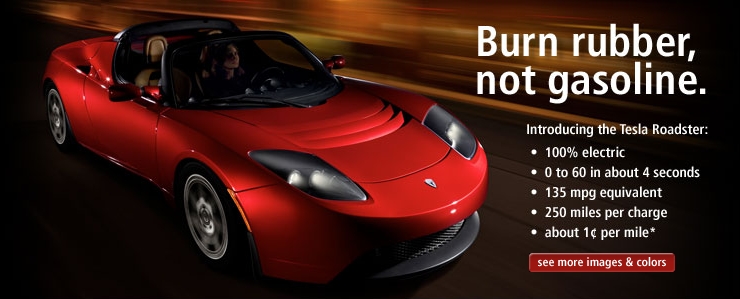
"When Tesla Motors, a pioneer in electric-powered cars, set out to make a luxury roadster for the American market, it had the global supply chain in mind. Tesla planned to manufacture 1,000-pound battery packs in Thailand, ship them to Britain for installation, then bring the mostly assembled cars back to the United States. But when it began production this spring, the company decided to make the batteries and assemble the cars near its home base in California, cutting more than 5,000 miles from the shipping bill for each vehicle. The cost of shipping a 40-foot container from Shanghai to the United States has risen to $8,000, compared with $3,000 early in the decade, according to a recent study of transportation costs. Big container ships, the pack mules of the 21st-century economy, have shaved their top speed by nearly 20 percent to save on fuel costs, substantially slowing shipping times."

“If we think about the Wal-Mart model, it is incredibly fuel-intensive at every stage, and at every one of those stages we are now seeing an inflation of the costs for boats, trucks, cars,” said Naomi Klein, the author of “The Shock Doctrine: The Rise of Disaster Capitalism.”

Full article: http://www.nytimes.com/2008/08/03/business/worldbusiness/03global.html?partner=rssnyt&emc=rss

Friday, August 1, 2008

Eat the View!!!


"Eat the View" is a campaign to plant healthy, edible landscapes in high-impact, high visibility places, whether it's the "First Lawn" or the lawn in front of your child's school.

Tuesday, July 29, 2008

Edible Forest Gardens with Dave Jacke in K'zoo Mich.

Dave JackeEdible Forest Gardens with Dave Jacke
New Food Plants, Wild Edibles, Perennial Vegetables, Native Nuts and Fruits, Design Ideas, Applied Ecology-Horticulture
Saturday, September 13 - 14, 2008.

Workshop One

ECOSYSTEM FOUNDATIONS:
Architecture and Social Structure.
How are forest ecosytems put together, and how can we use that information to design our gardens? We'll dive into those aspects of designed ecologies making visible the hidden connections between species. Dave will show us how harness the synergy naturally found in all living systems. We will use our extensive plantings at our farm for field observation and experiential classes. Taste test many different plants from around the world. From this class you will gain design ideas for your own Edible Forest Garden and new plants you can grow for your own health.
Saturday, September 13, 2008.
9:00-4:00 Lunch Included. Vegetarian Style. Includes 2 pawpaw trees, 2 beach plums, plus 4 organic fertilizer packets for completion of the workshop ($36.00 Value).>Register at our website: www.oikostreecrops.com
Call or email questions or registration: customerservice@oikostreecrops.com Cost: $90.00

Workshop Two
GARDEN LIKE THE FOREST: Self Renewing Fertility and Perennial Polyculture.

This workshop will help you think like a forest. Using the rather starchy knowledge of soil ecosystems, Dave will aid us in ways of creating self renewing fertility, boredom free. Through this whole-system approach practical solutions for site assessment, site preparation, plant selection and planting techniques will be found. "Will this grow at my place?" will be answered in full detail through interactive exercises and discussion. Design techniques that will minimize input and improve yields will be demonstrated. Here we will look at many mature specimens of fruit, nut and forage plants and taste test them along the way. New perennial vegetables will be highlighted as well showing the infinite possibilities of a forest garden. Sunday, September 14, 2008.

9:00-4:00 Lunch Included. Vegetarian Style. Includes 2 Wild Yellow Sweet Cherry trees, 2 Very Wild Asparagus plants, plus 4 organic fertilizer packets for completion of the workshop($36.00 Value).

Register at our website:www.oikostreecrops.com

Call or email questions or registration: customerservice@oikostreecrops.com

Phone 269-624-6233

Cost: $90.00 Register for both $160.00 - a savings of $20!Preregistration is highly encouraged. Late registration the day of the workshop can be done between 8:30-8:45.

Come prepared for a day of learning and fun. No rain dates.

Sorry, No plant sales on the workshop days.

Essentially, edible forest gardening is the art and science of putting plants together in woodland-like patterns that forge mutually beneficial relationships, creating a garden ecosystem that is more than the sum of its parts. You can grow fruits, nuts, vegetables, herbs, mushrooms, other useful plants, and animals in a way that mimics natural ecosystems. You can create a beautiful, diverse, high-yield garden that is largely self-maintained.


Edible Forest Gardens is a groundbreaking two-volume work that spells out and explores the key concepts of forest ecology and applies them to the needs of natural gardeners in temperate climates. Volume I lays out the vision of the forest garden and explains the basic ecological principles that make it work. In Volume II, Dave Jacke and Eric Toensmeier move on to practical considerations: concrete ways to design, establish, and maintain your own forest garden. Along the way they present case studies and examples, as well as tables, illustrations, and a uniquely valuable “plant matrix” that lists hundreds of the best edible and useful species.

Taken together, the two volumes of Edible ForestGardens offer an advanced course in ecological gardening—one that will forever change the way you look at plants and your environment.

About the Authors: Dave Jacke is the owner of Dynamics Ecological Design Associates and a longtime permaculture teacher and designer. He lives in Keene, New Hampshire. Eric Toensmeier is a plant researcher, agricultural educator, and permaculturist who lives in Holyoke, Massachusetts.

Saturday, June 28, 2008

Transforming Your Urban Backyard

Transforming Your Urban Backyard

Posted in Land, Urban Projects by Mal McKenna on the June 26th, 2008

Many people living in the suburbs and cities would like to ‘have a go’ at living a more sustainable and satisfying life and yet are daunted by what they view as lack of space and appropriate surroundings. It is easy to say “I just don’t have the space here!” or “Oh, my soil is terrible - I couldn’t grow a thing!” One of the enjoyable aspects of permaculture design is the challenge of recognising ‘problems’ and turning them into solutions. Sometimes all it takes is a shift in perception to turn a frustrating obstacle into a much needed asset.

by Mal McKenna and Phil Dickie

Most of us would probably prefer to impose our designs on grand vistas of idyllic acreage. However, most of us also have to make do with something much smaller, like a suburban backyard. If this is a matter of great regret remember it is also a peculiarly affluent First World perspective - we live in a world where many have no choice but to live off far less than a quarter acre and many for whom even this is an impossible aspiration.

How do you make the best of a backyard garden? Ultimately, it is your experiment; there is no universal backyard plan. As every yard will be different it is totally up to you or your family to decide what you would like to create. You may wish to begin with small projects such as creating a suntrap to give you a warm place to sit and have your breakfast on chilly mornings - even to provide your breakfast if you grow the right species. You could also plan a shady nook for those hot summer days, maybe in the form of a shade tree, maybe a small pergola covered in juicy grapes. The following tips and inspirations, derived from experience both tragic and comical, might help in whatever backyard transformation you may choose.

Starting Out

In this society, gardening is a big business burdened with experts telling you what you need to do and most importantly, what you need to buy, spray, spread, plant and so on ad infinitum. Balls! - It is your backyard and gardening is not about feeding the economic machinery. Think of gardening as contemplative fun, productive and meaningful labour and a place to escape the manufactured stresses of everyday life. Go and sit in it, and get a feel for it. Before you know it you are starting to evolve the plan.

The Plan

Elements to consider include aspect, climate, your time, budget, needs and future plans and, most important in the city, your neighbours. Shade is often a constraint in built-up areas - give some thought to the extra shade you will create when all those fruit trees grow.

Consider the existing structures and features. Are you happy with their placements? Are they productive and useful - or are they dysfunctional and a maintenance hassle? Translate your ideas and feeling onto a piece of paper or several pieces of paper. Draw in what exists and what will stay, as well as such constraints as windblown or shaded areas. Then allocate general areas for trees, annual vegetables, animals, access paths and other needs such as clothes lines and play areas. Don’t go overboard on function - humanity has aesthetic and spiritual needs as well. Exotica such as herb spirals, mandala gardens, banana circles, ponds and bird baths can be a combination of the aesthetic and the functional.

If you need ideas there is a wealth of knowledge in books, magazines, and other people’s experience to help you draw up a plan. Send away for seed catalogues, visit local nurseries. Talk to your friends and neighbours, find out what grows well in your area. Visit other lots and take note of the structures and gardens. Observe why the connections between some components work well and others don’t. Note where your friends spend most of their time in their lots, and why. Observation at this point is the key.

Also remember ‘the problem is the solution’ philosophy. Perhaps your lot is concreted and you do not wish to jackhammer any of it to dig in a pond. The solution? Make use of an old bathtub or build your pond on top of the concrete using bricks, rocks and an old tractor or truck tyre.

The Soil

Soil is fundamental but don’t despair if yours is not ideal. Most Australian soils lack something. You can, if you wish, spend hundreds of dollars on soil tests. Alternatively, check out your soil yourself - is it full of life, particularly of the wormy variety? If it is not - it needs organic matter at the very least. Soil pH, or the acidity or the lack thereof, is also important enough to test for because it determines the availability of minerals. Bare soil is a no-no in the tropics and the subtropics, so mulch is important in these areas. Growing your own leguminous mulch is one of the best methods of soil improvement anyway. Think about improving soil quality through what you put on top of the soil and let the earthworms incorporate (an ancient practice going under such modern brand names as sheet mulching, no dig gardening and the magic of mulch).

Loosen compacted soil with a garden fork. Drainage is also important, as most trees like good drainage. Poor drainage may be a matter of poor soil texture (which can be improved) and/or topography (which might be difficult to change). Clay soils might appreciate the addition of sand and vise versa, but it is also hard to go wrong (in the longer term) with the addition of organic matter (general panacea for all soil problems). Rock dusts (quarry wastes) or even soil from somewhere else may supply the minerals that your soil lacks. Soil from elsewhere may also contain microorganisms missing from your soil - if you chance upon a tree growing better than your own of the same variety, take a handful of soil from underneath it and if you are lucky you may have acquired some beneficial bacteria and/or fungi. To a large extent if you look after your soil, your plants will look after themselves.

Getting It All In

In a small area, the main concern is space. Following the recommendations of your local agricultural inspector or the directions on seed packets might leave you just enough room for one small tree and a lettuce plant in a small backyard. However, small areas can be intensively planted as they can be (relatively) intensively cared for. Getting it all in is a matter of going up, going down, going sideways, and going with the flow (the McKenna theory of lateral gardening).

Going Up

This is a matter of using your vertical or high spaces as a growing support (or creating some where they do not exist) Consider even the roof; around the world many do. Overhangs can be the location of hanging trellises. High fences are natural trellises, as are houses and retaining walls, ‘feral’ or pioneer trees, balconies, chook houses, garages or even old clothes lines past their prime. The vine is the plant category invented to take advantage of natural or artificial trellises, to insulate, to shade, to beautify and to cool. Chicken wire, spread over surfaces, hanging down, pinned up or on any type of framework is the substance created to give the vine a home.

Plants of various heights, a balcony, or pots of various heights, can make the most of a scarce commodity like sunlight or horizontal space. Mounds, and such constructions as herb spirals also make the most of space by incorporating a vertical element into an otherwise uninspiring horizontal surface. Trees intent on taking over the yard can be kept small and productive (and their fruit within reach) by being potted, or tip and/or root pruned. Vertical stacking is the technical term for the art of putting things on top of each other - sheet mulching on concrete, vines on trees, beehives on roofs, ponds on top of spirals, gardens on roofs, bureaucrats in big tall buildings in city centres. Often the main limits are a lack of imagination and the willingness to experiment.

Going Down

Underground is the unseen dimension. Some plants feed deep and some feed shallow and so can be planted close together. Not enough soil depth? Why not dig out paths to subsoil level and build up topsoil elsewhere with the soil? Ponds are an obvious way of going down productively; a flow can be created between ponds at different levels. Ponds can also be terraced internally to suit the differing depth requirements of various plants. Water can be an extremely productive medium; rather than persist with a drainage problem area, why not turn it into a water-based garden, digging some areas down to create ponds and raising better drained mounds in other areas. Likewise, where drainage is poor but there is some slope, a chisel plough or like implement can be used to direct subterranean water from where it is not needed to where it might be more useful.

It is preferable to try and trap nutrients and water that naturally escape your system. You can use deep or spike rooted plants which can then be harvested as mulch - leucaena and comfrey are good examples. Water running down a slope to waste may be caught in contour depressions or into a hole to water a specific tree a short distance downhill. In sandy soils, where the water runs straight through, it may pay to bury subterranean water containers. And although it may be heresy to the local council, it is a fact that roof water and many needed nutrients are directed down subterranean pipeways to unproductive or destructive ends in river and seas. If possible this flow should be interrupted and the water tank and occasional piddle in the garden be considered useful subversion.

Going Sideways

This is the art of horizontal stacking, fitting more into less. Classic examples are the keyhole bed or its derivative, the mandala garden, where you get more access with less path; and the banana circle, where a single compost heap and watering point keep multiple plants happy. Edge is a useful concept here; wiggly edges - to ponds, garden beds and any ‘boundary’ - give more horizontal space, greater productivity and more interest to the system. Going sideways is also about connecting the elements and having them serve more than one purpose; as in Bill Mollison’s Parable of the Chicken. A mulberry is both chook and human food - why not plant it in the chook pen? A pigeon pea is potentially food, a mulch source and a soil improver - best incorporated in a garden as all three. It is hard to imagine a more multipurpose object than a chicken - egg and fertiliser producer, weed, pest and scraps eater, garden hoe, pet or, in a mutually exclusive use, Christmas dinner. In a small backyard, totally free-range chickens are usually garden destroyers; some form of confinement in a run is usually necessary.

Companion planting is an example of the same principle - nature seems to demonstrate that monocultures are preferred only by pests and modern agriculture. Background reading, observation around your area and some judicious experimentation are the way to find out what goes with what. Intensive vegetable gardens and mature trees do not generally go together so allow for each separately at the planning stage.

Going With

This is the Zen dimension, making the best of what is or turning problems into solutions. Very few of us inherit a blank slate with perfect soil, aspect and no problem plants, structures, conditions or neighbours. Rather than change the problem soil, why not find plants or uses suited to it, for example, blueberries in acid soil, ponds in poor drainage areas. Problem trees can be ready-made trellises, or can be brought down gradually through top and root pruning and turned into mulch as you go. Excess wind can be diverted to useful purposes as well as being blocked or impeded. Light or dark colouring, whether of leaves or walls, can reflect or absorb sunlight. As for neighbours, very few can remain hostile in the face of gifts of eggs, fruit or honey; this can be a beginning to co-operative actions on other fronts such as noise, traffic and community facilities.


Sometimes, it is just the mindset that is at fault; a whole destructive industry is based on paranoia about weeds, defined as plants we don’t want. However, weeds can also be thought of as soil protectors, indicators or improvers, many are food (for people, chooks, bees and pest predators) and most make good mulch and compost. An even more destructive industry is devoted to pests, seemingly defined as the entire insect population of the planet. Pests can be redefined as a vital signal of imbalance, as a tolerable nuisance on the way to generating its own solution if left alone, as predator (bird, fish, frog, insect and elsewhere, human) food, or as pollinators, scavengers or self motivated secateurs.

In transforming your backyard you may also like to create a recycling system. This may include recycling grey water, food scraps and/or excess produce. If you have space for small animals and/or poultry you will find that they handle most of the scraps, otherwise all scraps can be put in the compost. Chooks do not eat onions, garlic, citrus skins, tea or coffee. Most plain paper can be used for sheet mulching. Leftover cardboard can be used for pathways and other materials which are slow to break down can be ’slow composted’ in a banana or paw paw circle.

Continuing to Learn

This has been but a brief flit through backyard possibilities. Remember, a welter of additional information is available through books, courses and from other backyard gardeners. However, your greatest teacher is likely to be your own backyard - if you get down there and interact with all your senses. Much of the most productive time spent in a garden is not that spent digging and working but that spent sitting and contemplating.

Wednesday, June 25, 2008

Twenty Years Later: Tipping Points Near on Global Warming

Published on Tuesday, June 24, 2008 by The Huffington Post

Twenty Years Later: Tipping Points Near on Global Warming
Dr. James Hansen by James Hansen

[Monday] I testified to Congress about global warming, 20 years after my June 23, 1988 testimony, which alerted the public that global warming was underway. There are striking similarities between then and now, but one big difference.

Again a wide gap has developed between what is understood about global warming by the relevant scientific community and what is known by policymakers and the public. Now, as then, frank assessment of scientific data yields conclusions that are shocking to the body politic. Now, as then, I can assert that these conclusions have a certainty exceeding 99 percent.

The difference is that now we have used up all slack in the schedule for actions needed to defuse the global warming time bomb. The next president and Congress must define a course next year in which the United States exerts leadership commensurate with our responsibility for the present dangerous situation.

Otherwise it will become impractical to constrain atmospheric carbon dioxide, the greenhouse gas produced in burning fossil fuels, to a level that prevents the climate system from passing tipping points that lead to disastrous climate changes that spiral dynamically out of humanity’s control.

Changes needed to preserve creation, the planet on which civilization developed, are clear. But the changes have been blocked by special interests, focused on short-term profits, who hold sway in Washington and other capitals.

I argue that a path yielding energy independence and a healthier environment is, barely, still possible. It requires a transformative change of direction in Washington in the next year.

On June 23, 1988 I testified to a hearing, organized by Senator Tim Wirth of Colorado, that the Earth had entered a long-term warming trend and that human-made greenhouse gases almost surely were responsible. I noted that global warming enhanced both extremes of the water cycle, meaning stronger droughts and forest fires, on the one hand, but also heavier rains and floods.

My testimony two decades ago was greeted with skepticism. But while skepticism is the lifeblood of science, it can confuse the public. As scientists examine a topic from all perspectives, it may appear that nothing is known with confidence. But from such broad open-minded study of all data, valid conclusions can be drawn.

My conclusions in 1988 were built on a wide range of inputs from basic physics, planetary studies, observations of on-going changes, and climate models. The evidence was strong enough that I could say it was time to “stop waffling.” I was sure that time would bring the scientific community to a similar consensus, as it has.

While international recognition of global warming was swift, actions have faltered. The U.S. refused to place limits on its emissions, and developing countries such as China and India rapidly increased their emissions.

What is at stake? Warming so far, about two degrees Fahrenheit over land areas, seems almost innocuous, being less than day-to-day weather fluctuations. But more warming is already “in the pipeline,” delayed only by the great inertia of the world ocean. And climate is nearing dangerous tipping points. Elements of a “perfect storm,” a global cataclysm, are assembled.

Climate can reach points such that amplifying feedbacks spur large rapid changes. Arctic sea ice is a current example. Global warming initiated sea ice melt, exposing darker ocean that absorbs more sunlight, melting more ice. As a result, without any additional greenhouse gases, the Arctic soon will be ice-free in the summer.

More ominous tipping points loom. West Antarctic and Greenland ice sheets are vulnerable to even small additional warming. These two-mile-thick behemoths respond slowly at first, but if disintegration gets well under way, it will become unstoppable. Debate among scientists is only about how much sea level would rise by a given date. In my opinion, if emissions follow a business-as-usual scenario, sea level rise of at least two meters is likely within a century. Hundreds of millions of people would become refugees, and no stable shoreline would be reestablished in any time frame that humanity can conceive.

Animal and plant species are already being stressed by climate change. Species can migrate in response to movement of their climatic zone, but some species in polar and alpine regions will be pushed off the planet. As climate zones move farther and faster, climate change will become the primary cause of species extinction. The tipping point for life on the planet will occur when so many interdependent species are lost that ecosystems collapse.

The shocking conclusion, documented in a paper2 I have written with several of the world’s leading climate experts, is that the safe level of atmospheric carbon dioxide is no more than 350 ppm (parts per million), and it may be less. Carbon dioxide amount is already 385 ppm and rising about 2 ppm per year. Shocking corollary: the oft-stated goal to keep global warming less than two degrees Celsius (3.6 degrees Fahrenheit) is a recipe for global disaster, not salvation.

These conclusions are based on paleoclimate data showing how the Earth responded to past levels of greenhouse gases and on observations showing how the world is responding to today’s carbon dioxide amount. The consequences of continued increase of greenhouse gases extend far beyond extermination of species and future sea level rise.

Arid subtropical climate zones are expanding poleward. Already an average expansion of about 250 miles has occurred, affecting the southern United States, the Mediterranean region, Australia and southern Africa. Forest fires and drying-up of lakes will increase further unless carbon dioxide growth is halted and reversed.

Mountain glaciers are the source of fresh water for hundreds of millions of people. These glaciers are receding world-wide, in the Himalayas, Andes and Rocky Mountains. They will disappear, leaving their rivers as trickles in late summer and fall, unless the growth of carbon dioxide is reversed.

Coral reefs, the rainforest of the ocean, are home to one-third of the species in the sea. Coral reefs are under stress for several reasons, including warming of the ocean, but especially because of ocean acidification, a direct effect of added carbon dioxide. Ocean life dependent on carbonate shells and skeletons is threatened by dissolution as the ocean becomes more acid.

Such phenomena, including the instability of Arctic sea ice and the great ice sheets at today’s carbon dioxide amount, show that we have already gone too far. We must draw down atmospheric carbon dioxide to preserve the planet we know. A level of no more than 350 ppm is still feasible, with the help of reforestation and improved agricultural practices, but just barely ­ time is running out.

The steps needed to halt carbon dioxide growth follow from the size of fossil carbon reservoirs. Coal towers over oil and gas. Phase out of coal use except where the carbon is captured and stored below ground is the primary requirement for solving global warming.

Oil is used in vehicles, where it is impractical to capture the carbon. But oil is running out. To preserve our planet we must also ensure that the next mobile energy source is not obtained by squeezing oil from coal, tar shale or other fossil fuels.

Fossil fuel reservoirs are finite, which is the main reason that prices are rising. We must move beyond fossil fuels eventually. Solution of the climate problem requires that we move to carbon-free energy promptly.

Special interests have blocked transition to our renewable energy future. Instead of moving heavily into renewable energies, fossil companies choose to spread doubt about global warming, as tobacco companies discredited the smoking-cancer link. Methods are sophisticated, including disguised funding to shape school textbook discussions.

CEOs of fossil energy companies know what they are doing and are aware of long-term consequences of continued business as usual. In my opinion, these CEOs should be tried for high crimes against humanity and nature. If their campaigns continue and “succeed” in confusing the public, I anticipate testifying against relevant CEOs in future public trials.

Conviction of ExxonMobil and Peabody Coal CEOs will be no consolation, if we pass on a runaway climate to our children. Humanity would be impoverished by ravages of continually shifting shorelines and intensification of regional climate extremes. Loss of countless species would leave a more desolate planet.

If politicians remain at loggerheads, citizens must lead. We must demand a moratorium on new coal-fired power plants. We must block fossil fuel interests who aim to squeeze every last drop of oil from public lands, off-shore, and wilderness areas. Those last drops are no solution. They provide continued exorbitant profits for a short-sighted self-serving industry, but no alleviation of our addiction or long-term energy solution.

Moving from fossil fuels to clean energy is challenging, yet transformative in ways that will be welcomed. Cheap, subsidized fossil fuels engendered bad habits. We import food from halfway around the world, for example, even with healthier products available from nearby fields. Local produce would be competitive if not for fossil fuel subsidies and the fact that climate change damages and costs, due to fossil fuels, are also borne by the public.

A price on emissions that cause harm is essential. Yes, a carbon tax. Carbon tax with 100 percent dividend is needed to wean us off fossil fuel addiction. Tax and dividend allows the marketplace, not politicians, to make investment decisions.

Carbon tax on coal, oil and gas is simple, applied at the first point of sale or port of entry. The entire tax must be returned to the public, an equal amount to each adult, a half-share for children. This dividend can be deposited monthly in an individual’s bank account.

Carbon tax with 100 percent dividend is non-regressive. On the contrary, you can bet that low and middle income people will find ways to limit their carbon tax and come out ahead. Profligate energy users will have to pay for their excesses.

Demand for low-carbon high-efficiency products will spur innovation, making our products more competitive on international markets. Carbon emissions will plummet as energy efficiency and renewable energies grow rapidly. Black soot, mercury and other fossil fuel emissions will decline. A brighter, cleaner future, with energy independence, is possible.

Washington likes to spend our tax money line-by-line. Swarms of high-priced lobbyists in alligator shoes help Congress decide where to spend, and in turn the lobbyists’ clients provide “campaign” money.

The public must send a message to Washington. Preserve our planet, creation, for our children and grandchildren, but do not use that as an excuse for more tax-and-spend. Let this be our motto: “One hundred percent dividend or fight! No more alligator shoes!”

The next president must make a national low-loss electric grid an imperative. It will allow dispersed renewable energies to supplant fossil fuels for power generation. Technology exists for direct-current high-voltage buried transmission lines. Trunk lines can be completed in less than a decade and expanded analogous to interstate highways.

Government must also change utility regulations so that profits do not depend on selling ever more energy, but instead increase with efficiency. Building code and vehicle efficiency requirements must be improved and put on a path toward carbon neutrality.

The fossil-industry maintains its stranglehold on Washington via demagoguery, using China and other developing nations as scapegoats to rationalize inaction. In fact, we produced most of the excess carbon in the air today, and it is to our advantage as a nation to move smartly in developing ways to reduce emissions. As with the ozone problem, developing countries can be allowed limited extra time to reduce emissions. They will cooperate: they have much to lose from climate change and much to gain from clean air and reduced dependence on fossil fuels.

We must establish fair agreements with other countries. However, our own tax and dividend should start immediately. We have much to gain from it as a nation, and other countries will copy our success. If necessary, import duties on products from uncooperative countries can level the playing field, with the import tax added to the dividend pool.

Democracy works, but sometimes churns slowly. Time is short. The 2008 election is critical for the planet. If Americans turn out to pasture the most brontosaurian congressmen, if Washington adapts to address climate change, our children and grandchildren can still hold great expectations.

Dr. James Hansen directs the NASA Goddard Institute for Space Studies in New York City and is Adjunct Professor of Earth Sciences at Columbia University’s Earth Institute. Since the mid-1970s, Dr. Hansen has focused on studies and computer simulations of the Earth’s climate, for the purpose of understanding the human impact on global climate. He is best known for his testimony on climate change to Congress in the 1980s that helped raise broad awareness of the global warming issue. In recent years Dr. Hansen has drawn attention to the danger of passing climate tipping points, producing irreversible climate impacts that would yield a different planet from the one on which civilization developed. Dr. Hansen disputes the contention, of fossil fuel interests and governments that support them, that it is an almost god-given fact that all fossil fuels must be burned with their combustion products discharged into the atmosphere. Instead Dr. Hansen has outlined steps that are needed to stabilize climate, with a cleaner atmosphere and ocean, and he emphasizes the need for the public to influence government and industry policies.

Copyright © 2008 HuffingtonPost.com, Inc.