Saturday, December 6, 2008

DIY Energy Independence

Are you handy with tools and enjoy building things? Help yourself to energy independence with 100's of do-it-yourself projects at Build it Solar:

Experimental Solar DIY Projects

Solar and renewable energy ideas and projects that look promising (or at least interesting).

One of the appealing aspects of the solar thermal area is that "garage inventors" can make meaningful advances. Some of the factors that make it possible to keep coming up with new ideas and innovations in this centuries old field are:

  • Innovative ways of combining collection, storage, insulation, and distribution of solar energy

  • New ways to integrate solar features with architectural features

  • Opportunities provided by new materials

  • Opportunities provided by increasing prices in conventional energy sources

  • Opportunities provided by the pollution consequences of conventional fuels

Wednesday, December 3, 2008

Garden Helpers: Will Work for Food

Plants That Attract Beneficial Insects
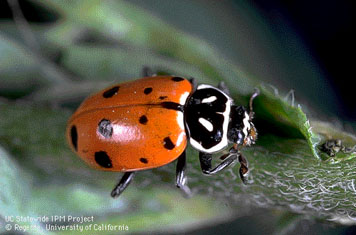
Nature is filled with "good bugs", crawling and flying creatures whose diet consists mainly of the pests that ravage garden plants. Here is a list of those good bugs and the plants that they like to visit for food and shelter. Intersperse these plants among the "problem pest areas" in your yard. Remember, though: Many chemical sprays work on both bad and good bugs. To keep the good bugs in your yard, eliminate insecticide use in the areas where they live and work.

Check out the lists here.

Tuesday, December 2, 2008

Radio Ecoshock Interviews Dmitri Orlov

http://www.ecoshock.org/downloads/economy/ES_Orlov_2.mp3
which considers...Bailout 2.0 Beta, how to find food, what to do with repatriated troops, where you can stick your money (should you still have any) to avoid being overcome by its putrid smell, and how having one's predictions come true is not necessarily a happy outcome.

Adapt or Die.....REALLY!

Found at Carolyn Baker's Speaking Truth to Power...
BEYOND CIVILIZATION: THE BIRTH OF A NEW HUMAN CULTURE, By William Kotke

Wednesday, 26 November 2008

Some think tanks are now calculating that sometime between 2030 and 2050 we will need two planet earths to provide the resources for sustaining the present trends of production and consumption. Though this seems rather sudden, there are people alive today that have seen world population double in their lifetime. We are not going to find another earth to exploit in time to prevent the inevitable explosion. We can see that the growing consumption of finite resources ends with the shattering of civilization and mass die-off (possibly excluding the remaining forager/hunter tribal groups).

Some feel the culprit is economics, some say it is politics, but the big picture is a mal-adaptation to the earth. Civilization's problem is biological. We live in a culture that extorts energy from the biological energy flows of the earth without a positive feed-back loop to replenish the source.

The food of the earth, sunlight, is consumed by the plant world to build biomass. Leaves, limbs, and other organic debris fall on the earth and are consumed by the millions of entities, both macroscopic and microscopic that make up the soil community. It is the excrement of these beings, that is in solution in the soil, that the plant roots take up for their nutrition. This then funds the drive toward more species diversity. Most plants require moderate to rich topsoil which accumulates at the rate of one inch per 300 to 1,000 years, in optimum ecologies. When the biologically maladapted human cultures of Babylonia and Han China began to "clear the land" six thousand years ago, for agriculture, the biological energy circulation ceased, because there was no longer an ecology on top to feed it.

In the Great Plains of the U.S., half the topsoil is already gone, and now the industrial farmer dumps herbicides and pesticides on the land which further kills the soil community. The farmer then replaces the soil fertility with artificial fertilizer generated from fossil fuel which is rapidly running out.

This is a small example of how the biological energy flows of the earth are being dismantled through agriculture, deforestation, desertification, pollution and building suburban houses on fertile topsoil.

Though humans have been very successful inhabitants of the earth for several million years, six thousand years of the culture that is called civilization has brought us to a catastrophe in which the human species might well become extinct, taking a large part of the life of the earth with it, ultimately by nuclear radiation.

We live in a culture that exists and grows by extorting biological energy out of the living planet, without giving anything back. This scenario presents us with choices. We can attempt to "reform" our existing culture or we can take the leap and create a new way of life, we will not have the option of doing nothing.

Adaptation to the biological energy flows of the earth is the live or die question for the human species. This is fundamentally the human predicament.

A CULTURE OF ADAPTATION

Our remote ancestors succeeded for eons of time in their biological adaptation to the life of the earth, and now if the species is to survive, we must create adaptation at the next turn of the spiral. We can't go back to wearing loincloths and eating roots and berries. The game animals are gone and the roots and berries are covered by towns. We will have to create a culture that facilitates the growth of life rather than its extirpation.

Human cultures are normally formed over long periods of time by the conditioning of the young through the generations. We do not have that luxury of time. Presently, we have tremendous amounts of information from many cultures which we can synthesize and use for ideas in creating new social institutions. We see over the past centuries a wide diversity of colonies and intentionally created communities that demonstrate creating new human culture is possible.

At the beginning of the 21st. Century the choice to live in a self- sufficient community, self- sufficient watershed, and self- sufficient bioregion, is both a survival solution and a choice to create a new reality of cultural and ecological restoration.

Given that civilization has seriously overshot its resource base and has no future, we need a new idea. Every member of the species taking biological responsibility for their existence on this planet is a new idea. If humans were becoming more responsible, we collectively could sponsor experimental self-sufficient communities in many of the earth's bioregions. These communities would be experimental in the sense that the central question of "living in balance with nature," would be addressed. We civilized are not skilled at this and experiments by different cultures in different ecological regions would move us forward.

These would be legitimate "growth" communities concentrating on the growth of living things rather than the growth of money and power over other people. If groups begin at the top of watersheds, commencing ecological restoration and slowly spread downward the test would be that clean water and air come from those areas.

Given the principle of the growth of life, ecological restoration would be the focus. Permaculture, which would grow more food per acre than the industrial system, while restoring the soil, would be used in areas near the habitation. The habitations would be hand-made from local materials.

Though this seems a tall order there are seed communities around the planet now doing this successfully (www.gaia.org). At the end of its time the old oak tree begins to disintegrate; as it does, an acorn sprouts. Our task is to encourage the sprout and to allow the old oak its passing.

Wm. H. Kötke is widely traveled and published. His most recent book, prior to Planet Garden, was the underground classic, The Final Empire: The Collapse of Civilization and the Seed of the Future. He may be contacted at wmkotke@gmail.com

ACRES of wisdom....

More excellent articles from ACRES USA (all PDFs):

Defending the Family Farm Interview: Thomas Linzey

Balance: Stability for Your Life & Farm by Joel Salatin

Everything I Want to Do Is Illegal by Joel Salatin

Industry vs. Biology — Taking on the Ethics of Industrial Agriculture by Joel Salatin

The Soil Food Web — Tuning in to the World Beneath Our Feet by Mary-Howell R. Martens

Seeds of Deception: Author Exposes the Corrupt Science of GMOs Interview: Jeff Smith

One Corporate World Interview: Gregory Palast

'Sound Science' Is Killing Us by Joel Salatin

Terra Preta: Magic Soil of the Lost Amazon by Allan Balliett

Health from the Ocean Deep: A New Approach to Holistic Healing with Sea Minerals & Herbs Interview: Gerry Amena

Soil is the FIRST crop...all else follows.

Great (PDF) article about soil improvement from ACRES USA. You can read many more here.

Chicken Soup for the Soil
by Jerry Brunetti

(snip)
Estimated Numbers of Common Micro-Organisms Found in Healthy Agricultural Soils

Bacteria 3,000,000 to 500,000,000 in 1 g.
Actinomycetes 1,000,000 to 20,000,000 in 1 g.
Fungi 5,000 to 1,000,000 in 1 g.
Protozoa 1,000 to 500,000 in 1 g.
Algae 1,000 to 500,000 in 1 g.
Yeasts 1,000 to 100,000 in 1 g.
Nematodes 10 to 5,000 in 1 g.

Monday, December 1, 2008

Learn Urban Farming

More cities ought to be thinking along these lines. Here, in Bloomington, IN, we are planning to start a similar school. More details later.

Urban farming school takes root

Instruction would be based on intensive farming on small plots

Larry Pynn, Vancouver Sun

Published: Saturday, November 29, 2008

A school of urban farming -- a North American first -- is finding fertile soil in Richmond.

Richmond's parks, recreation, and cultural services committee has unanimously endorsed the concept of an urban farm school and directed staff to investigate city land for such a project, either at Terra Nova park at the west end of Westminster Highway, or the south end of Gilbert Road.

Instruction would be based on intensive farming on small plots, a heavy dependence on physical labor, ecological sustainability and meeting local market demands, including the food needs of ethnic and immigrant communities.

Steve Bosch, Vancouver Sun

"It's human-scale agriculture, labor-intensive and production-intensive," said Kent Mullinix, a sustainable agriculture specialist at Kwantlen Polytechnic University's Institute for Sustainable Horticulture.

"Produce a lot on a little bit of land, which is entirely doable."

With the green light from Richmond, "We can now go forward and make this happen," Mullinix said in an interview.

"We're quite serious about this, about the need to advance this kind of agriculture."

Kwantlen and the Richmond food security task force have joined forces to launch the ground-breaking program in 2009 as a way to allow young farmers to get into the industry and to meet the growing demand for locally produced food.

"The potential for this kind of agriculture to develop into a substantial component of the local and regional economy cannot be understated," Mullinix said.

The program would require about two hectares of land to start, and could partner with the Richmond Fruit Tree Sharing Project, which already has a presence at the proposed city sites and is growing food for local food banks.

The school's topics would include soil management, plant science, animal husbandry and farm infrastructure, but would cover all steps in the food chain, including value-added processing, marketing, and sales.

Mullinix said the program would be flexible for students who want part-time and short-term instruction as well as those seeking a full-time four-year baccalaureate program, with an emphasis on teaching in the field rather than the traditional classroom setting.

The goal is to start the program in early 2009 with perhaps a dozen students and build from there.

In later years, students might be allocated a portion of city lands where, short of outright ownership, they could operate their own farm operation under supervision.

Fish Provide Clues to New Energy Source.

Ocean currents can power the world, say scientists

A revolutionary device that can harness energy from slow-moving rivers and ocean currents could provide enough power for the entire world, scientists claim.

Ocean currents can power the world, say scientists
Existing technologies require an average current of five or six knots to operate efficiently, while most of the earth's currents are slower than three knots. Photo: AP

The technology can generate electricity in water flowing at a rate of less than one knot - about one mile an hour - meaning it could operate on most waterways and sea beds around the globe.

Existing technologies which use water power, relying on the action of waves, tides or faster currents created by dams, are far more limited in where they can be used, and also cause greater obstructions when they are built in rivers or the sea. Turbines and water mills need an average current of five or six knots to operate efficiently, while most of the earth's currents are slower than three knots.

The new device, which has been inspired by the way fish swim, consists of a system of cylinders positioned horizontal to the water flow and attached to springs.

As water flows past, the cylinder creates vortices, which push and pull the cylinder up and down. The mechanical energy in the vibrations is then converted into electricity.

Cylinders arranged over a cubic metre of the sea or river bed in a flow of three knots can produce 51 watts. This is more efficient than similar-sized turbines or wave generators, and the amount of power produced can increase sharply if the flow is faster or if more cylinders are added.

A "field" of cylinders built on the sea bed over a 1km by 1.5km area, and the height of a two-storey house, with a flow of just three knots, could generate enough power for around 100,000 homes. Just a few of the cylinders, stacked in a short ladder, could power an anchored ship or a lighthouse.

Systems could be sited on river beds or suspended in the ocean. The scientists behind the technology, which has been developed in research funded by the US government, say that generating power in this way would potentially cost only around 3.5p per kilowatt hour, compared to about 4.5p for wind energy and between 10p and 31p for solar power. They say the technology would require up to 50 times less ocean acreage than wave power generation.

The system, conceived by scientists at the University of Michigan, is called Vivace, or "vortex-induced vibrations for aquatic clean energy".

Michael Bernitsas, a professor of naval architecture at the university, said it was based on the changes in water speed that are caused when a current flows past an obstruction. Eddies or vortices, formed in the water flow, can move objects up and down or left and right.

"This is a totally new method of extracting energy from water flow," said Mr Bernitsas. "Fish curve their bodies to glide between the vortices shed by the bodies of the fish in front of them. Their muscle power alone could not propel them through the water at the speed they go, so they ride in each other's wake."

Such vibrations, which were first observed 500 years ago by Leonardo DaVinci in the form of "Aeolian Tones", can cause damage to structures built in water, like docks and oil rigs. But Mr Bernitsas added: "We enhance the vibrations and harness this powerful and destructive force in nature.

"If we could harness 0.1 per cent of the energy in the ocean, we could support the energy needs of 15 billion people. In the English Channel, for example, there is a very strong current, so you produce a lot of power."

Because the parts only oscillate slowly, the technology is likely to be less harmful to aquatic wildlife than dams or water turbines. And as the installations can be positioned far below the surface of the sea, there would be less interference with shipping, recreational boat users, fishing and tourism.

The engineers are now deploying a prototype device in the Detroit River, which has a flow of less than two knots. Their work, funded by the US Department of Energy and the US Office of Naval Research, is published in the current issue of the quarterly Journal of Offshore Mechanics and Arctic Engineering.

Watch video demonstrations here: www.vortexhydroenergy.com

Empower Yourself and Your Community


TRANSITION UNITED STATES is a networking site for those interested in exploring and/or implementing the Transition model in their community. This site is being created through grassroots participation, and is continually evolving. It is a spontaneously arising effort to connect 'transitioners' with each other and to encourage and support the development of local Transition Initiatives.

The Transition approach empowers communities to squarely face the challenges of peak oil and climate change, and to unleash the collective genius of their own people to find the answers to this momentous question:


For all those aspects of life that this community needs in order to sustain itself and thrive, how are we going to:
  • drastically reduce carbon emissions (in response to climate change);
  • significantly rebuild resilience (in response to peak oil);
  • and greatly strengthen our local economy (in response to economic instability)?

Transition Initiatives make no claim to have all the answers, but by building on the wisdom of the past and accessing the pool of ingenuity, skills and determination in our communities, the solutions can readily emerge. Now is the time for us to take stock and start re-creating our future in ways that are not based on cheap, plentiful and polluting oil but on localized food, sustainable energy sources, resilient local economies and an enlivened sense of community well-being.