Wednesday, September 24, 2008

Bad Hair Day

by Alastair Bland

Published in the May/June 2008 issue of Orion magazine

Nature provides solutions to many problems, no matter how seemingly hopeless and messy. Take for example the November 7, 2007, oil spill in San Francisco Bay, in which fifty-eight thousand gallons of fuel gushed from the Cosco Busan‘s hull and lathered the water’s surface. It was a local disaster, no doubt, but the spill has also inspired environmentalists to begin redesigning the world’s approach to toxic-waste cleanup with two unlikely yet promising tools: human hair and mushrooms.

Coverage of the oil spill produced few remarkable images, just the standard shots of crews on beaches floundering in black sludge and handling soiled birds. But then media caught on to something that no oil spill had seen before: an activist named Lisa Gautier and several hundred volunteers were using mats of human hair to soak up the oil from the sands of Ocean Beach, just south of the Golden Gate Bridge.

As executive director of the environmental nonprofit Matter of Trust, Gautier had been storing the hair mats for just such an occasion. She explained to reporters that the mats, marketed by an Alabama gardening supply company as soil insulators, work far better at soaking up oil than conventional polypropylene mats, which are manufactured and widely used for just that purpose and are, ironically, themselves made from petroleum. Human hair is organic, biodegradable, and almost endlessly available at more than 300,000 hair salons in the United States and abroad. (See the photo gallery)

Around the Bay Area, a total of nineteen thousand gallons of spilled oil were recovered. Gautier mopped up several thousand pounds of ship fuel with her hair mats. Oil reclaimed after spills is regularly incinerated, but Gautier had a better, cleaner idea. She has long followed the work of Seattle biologist Paul Stamets, who has intensively researched the oyster mushroom’s capacity to reconfigure dangerous hydrocarbons into nontoxic—even edible—carbohydrates, and she called Stamets three days after the spill to ask if he would like to help orchestrate a demonstration of mycoremediation. Hearing that Gautier had enough ship fuel to feed an army of oyster mushrooms, Stamets was keen to offer his expertise as well as donate hundreds of pounds of mushroom mycelium, the underground fungal organism from which mushrooms sprout. But as enthusiasm mounted, authorities abruptly announced that the recovered Cosco Busan oil, along with the saturated hair mats, would be withheld as potential evidence in legal proceedings. So Gautier changed course, securing a twenty-gallon sample of ship fuel from an East Bay freighter company, as well as several buckets of used motor oil, and the experiment went forth.

On a small plot of federal land in the Presidio forest near the Golden Gate Bridge, Stamets, Gautier, and volunteers stacked hay bales like building blocks to construct a thirty-by-thirty-foot enclosure, within which they built eight square chambers. After laying a thick, waterproof tarp over the hay bales, the team filled each of the isolated chambers with oil. Two would be left as controls, one containing just motor oil, the other ship fuel. But in the other six the team added mycelium with varying mixtures of straw, sawdust, and grain. The mycelium reacted, and by mid-January, beautiful oyster mushrooms had sprouted from the cubicles of mulch. Subsequent lab analyses showed that the mixtures beneath the sprouted mushrooms were greatly thinned of hydrocarbons, and in the mushrooms themselves there remained not a trace of petroleum. It was magic. (See mycoremediation photo gallery)


Already, the idea is catching on around the world. The tremendous oil spills that struck shorelines in Russia and South Korea in late 2007 have been remedied in part with human hair mats after local activists heard of the drama in San Francisco, and in Valdez, Alaska, where oil still seeps from tide pools nineteen years after the terrible Exxon spill, locals have voiced a renewed interest in finally cleaning up the mess using the combination of hair mats and mycoremediation.

Across the water from San Francisco, too, the East Bay Depot for Creative Reuse in Oakland has partnered with Matter of Trust to launch a local hair-mat manufacturing plant—the first such facility on domestic soil (the current hair-mat supply comes mostly from China). The U.S. Coast Guard is considering signing on as a regular buyer.

Thursday, September 11, 2008

Financial Permaculture

In 1989, I was serving as Assistant Secretary of Housing. The housing bubble of the 1980’s had burst, and foreclosures were rising. The mortgage insurance funds of the Federal Housing Administration (FHA) were experiencing dramatic losses. We were losing $11 mm a year in the single-family fund. All funds had lost $2 billion in the southwest region the year before.

My staff and I did an analysis of what had caused the losses. What were the actions that we could take?

Fraud aside, the single biggest cause of losses in the FHA portfolio was a falling Popsicle Index – an index that we coined as a rule of thumb to express the health of the living equity within a place.

The Popsicle Index is the percent of people who believe that a child can leave their home, go to the nearest place to buy a popsicle, and come home alone safely. It’s an expression of the sense of intimacy and well being in a place.

Not surprisingly, there is a correlation between the financial equity or wealth in a place and the living equity or human and natural wealth. Where the people, living things and land are happy, businesses thrive, and the value of real estate is good.

Much as I tried, I found it difficult to interest anyone in a rising Popsicle Index. Countless petitioners made their way through my offices – mortgage bankers, homebuilders, realtors, low-income activists, real estate developers, tenants and city officials. Invariably what they wanted was for me to make a decision that would help them make money. Over time, I could tell what government actions would cause the stock market to go up and down by the flow of people and their various petitions. Meantime, I could not interest anyone in a rising Popsicle Index. They did not see how it could make them money.

It took many years of researching to realize what was going on in our financial systems to incentivize this behavior. In most areas of the world, places are organized by government and financed with debt.

Corporations are financed with both debt and equity. The key financial opportunity is in owning the equity. When profits increase or the perception of a company prospects improve, the stock goes up. Senior management and investors sell the shares, generating capital gains. Capital gains on stocks and real estate are primary mechanisms for creating financial wealth in our society.

As a result, corporations can make money exploiting people and places and their stock will go up. The “stock” of the place harmed will not go down; there is no ‘stock’ of the place. By centralizing our investment capital into large corporations, our financial interests are not aligned with the interests of the people and our natural environment

So what do we do? If we are to stop the financial drain on our families and communities we must change how we manage our own finances. Perhaps the way to begin is as permaculture teaches us – to listen and build out from natural systems which are, ultimately, the source of most of our wealth.

In every place, there are thousands of existing financial agreements, including laws and regulations that impact financial values. If we are to nurture and restore places, we are well served to listen to both natural systems and existing financial agreements, looking for ways of building new, fundamental alignments between land, people and their savings that reduce risk and optimize resources on an integrated basis. From years of studying the financing of places, I can assure you that those opportunities exist. Years of continuous learning, patience and collaboration will be fruitful.

In every place, people and local institutions have financial capital, typically retirement capital or various kinds of savings and reserves. Increasingly, this capital is invested through centralized institutions and financial centers.

Developing ways of creating sound investments to finance permaculture developments and the businesses that supply them would serve to spread the adoption of permaculture techniques. The more opportunities locally, or through decentralized networks, the easier it will be for people to withdraw their retirement savings from destructive systems.

The power of financially sustainable alternatives is that they help create a safe haven for billions of dollars that would like to leave more traditional investments but must have a place to go that is respectful of their precious savings and need for retirement income.

I am often told that financial tools are destructive and we should withdraw from them entirely. However, it is important to understand that millions of people have their life savings invested in that system. By choosing to not create sound, reliable alternatives, we ensure that their capital will stay invested in the old paradigm, financing destructive activities. Let’s find a way to welcome and protect their capital. Think of the potential allies we could make.

When we look at the flow of time and resources within a place where are some opportunities?

Small Business: Small business is the engine of a local economy. Look for ways to help local businesses attract and build talent and market products and services that increase local self- sufficiency. With the importance of agriculture increasing, this includes small farms too.

Government Resources: Centralization means that a greater portion of resources in a place are controlled by government, including the federal government. This money - as well as government regulations -often creates incentives out of alignment with the best interest of the local community and local natural resources. Concerted attention to understand government rules and regulations can produce opportunities for reengineering.

Distressed Assets: We are experiencing significant mortgage and other debt defaults as well as bankruptcies. Organizing ways to proactively help people harmed and reposition assets owned by distant financial institutions or government may represent an opportunity. Could these assets be “greened?”

Local Capital: Increasingly local investment capital is invested through Wall Street. Look for angel or other small investors as well as philanthropists who would be interested in creating ways to circulate more equity investment locally.

Strategic Partnerships: Every community can benefit from renewable technology and new skills. Look for ways to build linkages between a community and the enterprises and institutions that help create self- sufficiency. Such partnerships may also provide another opportunity for local capital.

Waste: Just as physical waste presents an opportunity for greening a community, so does financial waste. Study what is causing financial distress and look for opportunities to find solutions. For example, one of the biggest sources of financial waste comes from using a currency that is falling in value. Hence, the growing interest in community currencies and barter.

Align incentives: Increasing local equity investment means that investors can benefit from a wide variety of initiatives to lower costs and consumption, improve local business and markets and the flow of deposits, purchases and investments locally.

The idea of using the term Financial Permaculture to describe our efforts was coined by Thomas Hupp of the Leadership School as he, Jennifer Dauksha-English of the Center for Holistic Ecology, Greg Landau of the Ecovillage Training Institute, Carolyn Betts of Solari and I were brainstorming how to integrate Solari investment strategy with permaculture.

We decided the best way to create an integrated vision of natural and financial health within a place was to invite many more people into the conversation.

From October 24-28, with our colleagues Connie Sharp from the Sonnenschein Festival, Debbie Landers from Leadership Lewis and the team from GAIA University, we will gather with students and experts from across the country in Hohenwald, Tennessee for a five day course and simulation - Financial Permaculture: The Greening of a Rural American Community.

We would love for you to join us in the “invention room.” For more information and to register, see www.holisticecology.org.

Also see: The Farm Blog

Monday, September 8, 2008


Michael Moore's SLACKER UPRISING


Plan C 5.0: Community Solutions to Climate Change and Peak Oil

From Global Climate Solutions http://globalclimatesolutions.org/
2 09 2008

By RYAN HOTTLE
Relocalization—the process of creating sustainable and largely self-reliant communities that are all at once beautiful, prosperous, and meaningful places to live—is perhaps the single greatest step we can take to “decarbonize” our lives and thereby prepare for climate change and peak oil simultaneously.
It’s a shame and a testament to our highly compartmentalized 21st century mindset that many within the “climate change community” and the larger “sustainability community” don’t know about peak oil and the potentially damning effects it could have on our social and economic systems. For example, I take courses from highly, highly educated climate scientists who can speak for hours on, for example, the intricacies of cloud formation as it relates to sulfate particles in the atmosphere and how they are expected to change with a warming atmosphere. But ask them about “peak oil?” They don’t know what it is. Never heard of it.

You might be able to claim ignorance, but you can’t say there wasn’t anybody warning you about it or describing the solutions either. Community Solutions (www.communitysolution.org), a vibrant non-profit organization out of Yellow Springs, Ohio, has been ringing the clarion call for solutions to climate change and peak oil for over half a decade now and are preparing to host their 5
th annual conference on “Plan C: Individual Survival Strategies for the Energy Crisis.” (Conference website available here: www.plancconference.info.)

To say that the list of speakers they have lined up are good would be a gross understatement—it would be worthy to travel to hear any one of the seven amazing visionaries they have scheduled.

Among them John Michael Greer (who has recently been called “the greatest peak oil historian in the English language), Richard Heinberg (easily the most influential and prolific writer on peak oil ), Peter Bane (probably one of the top Permaculture practitioners and teachers in the world, co-editor of Permaculture Activist [www.permacultureactivist.net], and also my PC design course teacher;) and—let us not forget—Megan Quinn Bachman (Outreach director of Community Solutions—young, passionate, articulate, and a global leader—what more could you ask for?!)
The conference is scheduled to take place October 31st-November 2nd in Rochester, Michigan. In order to receive Early Registration prices you have to sign up before September 30th. The cost for the conference is a steal, in my opinion, with extremely low costs . (I should note that I am not affiliated whatsoever with the conference—I am merely a strong supporter of the great work and leadership Community Solutions has been providing over the years.)
It is function of our modernistic society that we believe that all of our problems—energy, climate, and environment—are capable of being solved with techno-fixes. Unfortunately, we may simply be out of time and energy resources to redesign our entire transportation and energy infrastructure. It’s a hard truth that many don’t want to face, but it may well be true.


Peter Bane: Permaculture wizard, activist, and friend!

Personally, I believe we should be actively working to research and develop renewable energy sources (particularly Carbon Negative Energy with biochar production in a process called pyrolysis in addition to wind and solar energy technologies), but the very first place to work on, the lowest-hanging fruit where we can save the most money and energy and where we can simultaneously prepare for peak oil and mitigate the threat of climate change is by relocalizing our communities; weatherizing and retrofitting our buildings; creating local sustainable food systems; generating healthy local economies; and utilizing the inherent wisdom of Permaculture design principles.
We have but one beautiful planet to protect and but precious little time to do it in. What we choose to do—or not to do—in the next five to ten years will make all the difference. Be prepared to work hard and work together—that’s the only way we’re going to win!

Tuesday, August 19, 2008

Soil Erosion Worse than Ever and Still Increasing

Soil

Our Good Earth

The future rests on the soil beneath our feet.

By Charles C. Mann (author of EXCELLENT book, 1491)
Photograph by Jim Richardson

On a warm September day, farmers from all over the state gather around the enormous machines. Combines, balers, rippers, cultivators, diskers, tractors of every variety—all can be found at the annual Wisconsin Farm Technology Days show. But the stars of the show are the great harvesters, looming over the crowd. They have names like hot rods—the Claas Jaguar 970, the Krone BiG X 1000—and are painted with colors bright as fireworks. The machines weigh 15 tons apiece and have tires tall as a tall man. When I visited Wisconsin Farm Technology Days last year, John Deere was letting visitors test its 8530 tractor, an electromechanical marvel so sophisticated that I had no idea how to operate it. Not to worry: The tractor drove itself, navigating by satellite. I sat high and happy in the air-conditioned bridge, while beneath my feet vast wheels rolled over the earth.

The farmers grin as they watch the machines thunder through the cornfields. In the long run, though, they may be destroying their livelihoods. Midwestern topsoil, some of the finest cropland in the world, is made up of loose, heterogeneous clumps with plenty of air pockets between them. Big, heavy machines like the harvesters mash wet soil into an undifferentiated, nigh impenetrable slab—a process called compaction. Roots can't penetrate compacted ground; water can't drain into the earth and instead runs off, causing erosion. And because compaction can occur deep in the ground, it can take decades to reverse. Farm-equipment companies, aware of the problem, put huge tires on their machines to spread out the impact. And farmers are using satellite navigation to confine vehicles to specific paths, leaving the rest of the soil untouched. Nonetheless, this kind of compaction remains a serious issue—at least in nations where farmers can afford $400,000 harvesters.

Our species is rapidly trashing an area the size of the United States and Canada combined.

Read the rest here.

Wednesday, August 6, 2008

A Doomer's Garden

A doomer's garden

by Zachary Nowak

[Originally published on Energy Bulletin on 3 June 2008]

Now that oil is up over $130 a barrel and the subprime debacle is making everyone think that there may just be a Big Problem in the future, I would like to reopen the discussion on the menu du jour, post-Peak. Tractor trailers may not be able to bring in our Krispie Flakes and California oranges, and we may have to “make other arrangements,” as James Howard Kunstler often says, to feed ourselves. I am worried with the frequency that I see “gardens” as a solution to a breakdown in the food supply, and I would like to disabuse the peaknik crowd of this dangerous illusion.

“If there’s a problem with the food supply, I’ll just garden,” you say! If the Peak comes and causes disruptions in the food supply, your Hubbert Victory garden will see you through the winter months. I’m sure most of us love to picture ourselves putting up forty quarts of tomatoes and salting beans for the winter in a large beige crock. With your green thumb and Mason jars you’ll can enough to last until next year’s first corn comes in.

This is a nice fantasy, but I would ask the more serious to do a simple survey. Each of us likely has a friend who has a fairly large garden. Ask him or her what percentage of their family’s yearly food intake comes from the garden – I would be astounded if any say more than two percent. Annual gardening, like agriculture, takes an enormous input of energy for the return you get, and that is assuming you are good at it.

Are you good at it? How much do you know about gardening? To have a truly successful large garden you need to eliminate as many of the risks as possible. Unfortunately, the risks are myriad: poor germination, premature planting (or a late frost), garden pests (from aphids to groundhogs), too much rain, too little water, and so on. Taking each of these individually, we can see that annual gardening has a lot of luck involved in it. A good gardener buys high-quality seeds, uses cold frames to start plants before the last frost, knows the growing periods of each vegetable well, is prepared for the various “enemies” of his/her plants, and spends hours watering if need be.

What happens, though, if it doesn’t work out well? If gardening is your hobby, it’s not a problem. But in a post-Peak situation where food is tight, it just may be. Ask yourself what you know about gardening, and whether that is enough to risk your life on the tomatoes coming in and rows of corn ripening. Horticulture alone is not a valid answer unless you are already an expert, and even then it is tough. I am emphatically not saying that you should not garden – a large garden will be essential – but simply that it is dangerous to depend on gardening alone.

What then, is the answer? Lowering your inputs, increasing your outputs, and redundancy. In other words, get more food from plants that don’t require such babying, and don’t rely on just a few main crops. The key is diversification with hardier, low-maintenance crops: perennial vegetables, bush- and vine-fruits, and trees. If you’re a gardener you likely already have the two most common perennial vegetables, asparagus and rhubarb (the latter we often eat as a fruit, with strawberries), but don’t limit yourself to these! There are a number of perennial onions that come up every year without the hassle of planting sets, tubers like Jerusalem artichokes that are easy to the point of being pesky, and even old-fashioned favourites like lovage. Fruits like currants and gooseberries are easy to propagate and can, and you can even have kiwi fruit growing along your fence (it’s a smaller, hardier relative than the kiwi in the grocery stores). For trees, go beyond apples and peaches to hazelnuts, quinces, and persimmon trees. All have fewer pests than their more common cousins and produce fruit and nuts earlier and more steadily.

Of course a bountiful harvest just begs more questions, like are there other methods of preservation that are less energy-intensive than canning? This is an optimistic problem, one you should be happy to face. A much more immediate problem is feeding yourself in an uncertain world. Don’t get me wrong, I will still have an annual garden long after Hubbert’s Peak – I can’t be without tomato sauce or fresh corn – but having tried my hand at gardening, I’ve realized that it’s a gamble as far as what you get, and not one most people should make. Peakniks with green thumbs, go buy some currant bushes!

Monday, August 4, 2008

How To Explain Peak Oil To Anyone

Sharon Astyk is author of the forthcoming Depletion and Abundance: The New Home Front, Families and the Coming Ecological Crises and A Nation of Farmers. Sharon (both will be available in the Permaculture Activist online book catalog) has an M.A. and most of a Ph.D. in English literature, where her research centered upon literary, philosophical and historical responses to disaster and demographic crises in 16th and 17th century Britain. Final completion of the Ph.D. is presently on hold while she responds to the forthcoming disasters and demographic crisis of the 21st century. Five years ago, Sharon and her family moved to rural upstate New York to begin a life attempting to consume only a fair share of human resources. She and her husband, a physicist, run a small Community Supported Agriculture farm (CSA), and in their copious spare time, they are raising four sons and assorted critters and livestock. Some of her work can be seen at her blog www.casaubonsbook.blogspot.com, and at her website on peak oil preparation for families, http://www.sharonastyk.com/.


Enjoy the following article recently written by her and visit her blog and site. Be forewarned! You could lose track of time and stay there for hours.

How To Explain Peak Oil To Anyone

It has occurred to me that there must be a simple way of explaining peak oil to everyone - but most solutions have concentrated on creating a *single* simple method of explaining peak oil, when what is needed is a highly specialized approach, designed to help people grasp the issue in the most basic terms imaginable. Being a helpful sort, I have undertaken to provide those explanations. Thus, all you need to do is evaluate the person you are explaining things too, and from there, insert the proper explanation. BTW, just in case you can't figure this out, this is intended to be funny and is bound to offend someone, probably everyone. Deal.

-If the Person is a lot like: Homer Simpson

The way to explain it is: "Beer comes from oil. You use oil to run tractor to grow barley. You use oil to run fermenting equipment. You use oil to ship beer to liquor store. You use gas, made from oil, to drive drunk to the store to get beer. No oil means no more beer - ever."

The solution you offer is: "More beer good. Beer comes from oil. Must. Save. Beer."


-If the Person is a lot like: An Uber-Soccer Mom

The way to explain it is: "Yes, I heard how awful it was that the coach criticized your Christina - I agree, that he was completely out of line to hurt her self esteem like that. Speaking of self-esteem, did you know I've lost 11lbs on the 100-mile diet? I feel great, and I fit into some clothes I haven't worn since Jared was born. All that fresh produce and unprocessed food has been so wonderful - Mike says I look younger too, and it seems to improve my skin. And Jennifer is a lot less hyperactive since we've been biking everywhere. And Lisa is writing her college application essay on the impact of our environmental lifestyle changes. My friend Rita who is a guidance counselor told me that this will really help differentiate her from all the soccer players and school newspaper writers for the people at Yale. Green is the new black, you know."
The solution you offer is: That you will be thinner, happier, sexier and your kids will be smarter if you do this stuff. Oh, and btw, it saves energy too.

-If the person is a lot like: Rush Limbaugh

The way to explain it is: "Evil people in China and India are burning up all of America's oil. Those selfish bastards are trying to compete with us just so that they can have running water, and the democrats in congress won't let us nuke them like we really should. They are trying to prove that Americans can't compete without a lot of energy. We need to prove that we're better than they are, with or without oil, because God loves America best. With Jesus to help us conserve, we don't have to have oil."
The solution you offer is: Conservation is Patriotic, and a good way to stick it to people in other countries.

-If the person is a lot like: Paris Hilton

The way to explain it is: "Without oil to manufacture tv sets, run "Entertainment Tonight" and power all that tv, no one will watch what you do. No one will care if you have sex on the internet, go to jail or kill Brittney Spears with your bare hands while mud wrestling on reality tv. Yes, you'll probably still be rich enough to buy oil, but all the good hotels will be having brownouts, and everyone will be so busy trying to get alone that they won't care about you. Oh, and if they get a chance, you servants will probably kill and eat your little rat-dog."

The solution you offer: "Think how much attention Angelina Jolie got by adopting all those poor kids. Maybe you should take some of your money and adopt a whole town in Bangladesh and go carbon negative. You could have a series on almost any network but Fox about making your home environmentally sound and helping poor people get access to renewable energy."

-If the person is a lot like: Grandpa Simpson
The way to explain it is: "You know, back in the old days we didn't have all this newfangled technology crap. We just did good, hard work, and knew the value of a dollar. Back then we didn't need tv, or cell phones or cars. We didn't sit around downloading music from that there internet, we had real music, in real speakeasies, and we danced for hours. And that porno-graphy on that there filthy computer - in our day we had to do real work to see naked women, carve real peep holes through rock-hard chestnut boards. These kids today are too fat and spoiled to dance, and they wouldn't know what to do with a hoe or a horse or a jackknife if it bit them in the ass. We need legislation to get them off the streets and back onto the farms!

What to suggest: National service programs, Chain gangs and Victory Gardens


If the Person is an Aging Hippie:

What to say is: "You were right about everything. Absolutely everything. Growing your own food. Renewable energy. The economy. Drugs. How sexy greying ponytails are. Not trusting old people...oh...wait..." Well, almost everything.

What to suggest: Stop looking so smug.


-If the person is a lot like: An Economist
The way to explain the problem is this: "Ok, just for a moment, let me ask you to suspend your belief for just a moment. Imagine that unicorns and faeries roam the forests, that the sun goes around the earth and that the US has a meaningful third party. Ok, now imagine that it is just possible that we can't actually substitute grain for gasoline, or benzene for water. And further imagine that people dying is bad, even if it seems like it is good for the economy.
What to suggest: Give up now.


-If the Person is: Your Dubious Spouse What to say: "I'm doing this because I love you and I want us to have a positive future. Preparing for a low energy future will definitely bring us closer together and make our marriage stronger, happier and sexier. I can't think of anything more romantic than discussing our feelings, the current depletion rate and the latest apocalyptic novel while canning okra in the 90 degree heat. And I think you are never more beautiful than when you are putting up rainwater cachement.
What to suggest: A literal roll in the hay. Move the scythe first.


-If the person is a lot like: The President of the United States

What to say is: Ask Dick. He'll explain it to you.

What to suggest: Immediate impeachment with a heavy, blunt instrument.

Finally! SHIPPING COSTS START TO CRIMP GLOBALIZATION

Americans, and all oil-dependent nations, need to Relocalize their economies, not an easy task entangled as we are in the sticky web of global trade. Not only is it getting more expensive to get goods from elsewhere, the opposite is also true.


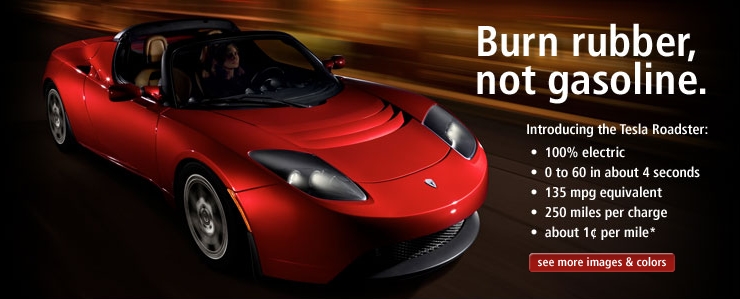
"When Tesla Motors, a pioneer in electric-powered cars, set out to make a luxury roadster for the American market, it had the global supply chain in mind. Tesla planned to manufacture 1,000-pound battery packs in Thailand, ship them to Britain for installation, then bring the mostly assembled cars back to the United States. But when it began production this spring, the company decided to make the batteries and assemble the cars near its home base in California, cutting more than 5,000 miles from the shipping bill for each vehicle. The cost of shipping a 40-foot container from Shanghai to the United States has risen to $8,000, compared with $3,000 early in the decade, according to a recent study of transportation costs. Big container ships, the pack mules of the 21st-century economy, have shaved their top speed by nearly 20 percent to save on fuel costs, substantially slowing shipping times."

“If we think about the Wal-Mart model, it is incredibly fuel-intensive at every stage, and at every one of those stages we are now seeing an inflation of the costs for boats, trucks, cars,” said Naomi Klein, the author of “The Shock Doctrine: The Rise of Disaster Capitalism.”

Full article: http://www.nytimes.com/2008/08/03/business/worldbusiness/03global.html?partner=rssnyt&emc=rss

Friday, August 1, 2008

Eat the View!!!


"Eat the View" is a campaign to plant healthy, edible landscapes in high-impact, high visibility places, whether it's the "First Lawn" or the lawn in front of your child's school.