Thursday, January 8, 2009

Peak Moment Features Robert Hirsch & Kyle Saunders

Broadening the Peak Oil Conversation

from Peak Moment Television

aspo-usa_notice.jpgpm135_150.jpgSenior energy analyst Robert Hirsch reflects on the immediate liquid fuels problem, and the rebuilding of our entire energy system which will take at least twenty years. He reflects on comments made during the ASPO-USA 2008 conference presentations, noting that he remains optimistic about American response to the daunting challenges ahead.

Political science professor is the “Professor Goose” behind the Oil Drum website. He champions the need to learn from one another about complex, interdependent topics like the economy, energy, noting that every piece of information we can get can reduce uncertainty. In the question-and-answer session at the close of ASPO-USA’s 2008 conference, presenters respond about the current financial chaos and resource scarcity, how to encourage intelligent political action, the need for a peak oil high-visibility champion, peak oil’s relationship to climate change, and suggestions for household energy reduction. [www.theoildrum.com]

Umm...plant more trees maybe?...Terra preta?..Carbon Farming?

How humans cooled the earth -- 500 years ago

From Salon.com

One of the tell-tale signs of a really thought-provoking book is that soon after reading it, you start seeing its thesis replicated everywhere you look. So it has been with one of the tomes I referred to in yesterday's post "Polynesian Chickens in Peru and other Mysteries," Charles Mann's "1491: New Revelations of the Americas Before Columbus."

The massive depopulation of the Americas via smallpox, hepatitis and other diseases introduced by Westerners (perhaps as much as 95 percent of the existing population died in vast pandemics) and the large landscape-altering scale of agriculture practiced across the "New World" by pre-Columbian cultures are two of the big themes of "1491." Both popped up in a presentation made by two scientists at the annual meeting of the American Geophysical Union last December. (Thanks to MongaBay for the tip.)

The scientists contend that after the die-off, massive reforestation on abandoned agricultural land occurred on a large enough scale to contribute significantly to the period of global cooling between 1500 and 1750 known as the "Little Ice Age."

After examining soil samples and sediment cores from numerous locations in Central and South America, Richard Nevle, a visiting scholar at Stanford's Department of Geological and Environmental Sciences at Stanford, and Dennis Bird, also from Stanford, concluded that the reforestation sequestered as much as 10 to 50 percent of the carbon necessary to cool the earth. Up until 1500, the soil samples showed a steady increase in charcoal content, likely generated from human-caused fire used to clear forest. After 1500, the scientists discovered a drastic drop in charcoal content. No more burning.

The scientists acknowledge that reforestation was just one factor in contributing to global cooling. It may not even have been the most critical factor. But the research is sobering nonetheless, in its hint as to humanity's power to alter the fundamental characteristics of life on this planet, long before we were burning fossil fuels as if there were no tomorrow. We did it back then, we're doing it now, and maybe, just maybe, if we exert our collective will in the proper direction, we can fix our mistakes.

Let's just hope it doesn't require another vast die-off to set things to rights.

Transition Indiana / Bloomington Launch on Cable Access

At the 7:00 PM Thursday Peak Oil Task Force meeting on Jan 8, Zach Mermel and Keith Johnson will introduce the Transition Movement to the task force members and on the following evening the meeting will be broadcast on the local Community Access Television Services on Channel 12 (dedicated to Bloomington City Government meetings and events). This will be a more or less formal and public launch of both Transition Indiana and Transition Bloomington.

We anticipate that this could generate new members and co-participants in the redesign process for a transition to a sustainable regional culture.


A general plan is emerging to create alliances with other local groups to create events and merge memberships for a broader outreach. For more information and opportunities to get involved go to these websites:


Transition Indiana http://transitionindiana.ning.com/
Transition Indiana on Blogspot http://transitionindiana.blogspot.com/
Transition US http://www.transitionus.org/
Alliance for a Post-Petroleum Local Economy http://relocalize.net/groups/applebloomington
Permaculture and Regenerative Design News http://kjpermaculture.blogspot.com/
Bloomington Permaculture Guild http://bloomingtonpermacultureguild.blogspot.com/

Tuesday, January 6, 2009

Weather (catastrophe) or not.

When contemplating the imminence of climate change and peak oil you may find it useful to remember that catastrophe is a matter of perspective. My sister forwarded this notice from 'The Mining Journal', Marquette , Mi.
The text is purportedly from a county emergency manager out in the western part of the Upper Peninsula of Michigan after a snow storm last winter. (Snopes has declared it an urban legend.)

"WEATHER BULLETIN
Up here in the Northern part of Michigan we just recovered from an Historic Event --- may I even say a "Weather Event" of "Biblical Proportions" --- with an historic blizzard of up to 44" inches of snow and winds to 90 MPH that broke trees in half, knocked down utility poles, stranded hundreds of motorists in lethal snow banks, closed ALL roads, isolated scores of communities and cut power to 10's of thousands.

FYI:
George Bush did not come.
FEMA did nothing.
No one howled for the government.
No one blamed the government.
No one even uttered an expletive on TV.
Jesse Jackson or Al Sharpton did not visit.
Our Mayors did not blame Bush or anyone else.
Our Governor did not blame Bush or anyone else either
CNN, ABC, CBS, FOX, or NBC did not visit - or report on this category 5 snow storm
Nobody demanded $2,000 debit cards.
No one asked for a FEMA Trailer House.
No one looted.
Nobody - I mean NOBODY - demanded the government do something.
Nobody EXPECTED the government to do anything either.
No Larry King, no Bill O'Reilly, no Oprah, no Chris Mathews and no Geraldo Rivera.
No Sean Penn, no Barbara Streisand, no Hollywood types to be found.
Nope, we just melted the snow for water, sent out caravans of SUV's to pluck people out of snow engulfed cars.
The tow truck drivers pulled people out of snow banks and didn't ask for a penny!
Local restaurants made food, and the police and fire departments delivered it to the snow bound families....
Families took in the stranded people - total strangers.
We fired up wood stoves, broke out coal oil lanterns or Coleman lanterns.
We put on an extra layers of clothes because up here it is "Work or Die".
We did not wait for some affirmative action government to get us out of a mess created by being immobilized by a welfare program that trades votes for "sittin' at home" checks.
Even though a Category "5" blizzard of this scale has never fallen this early, we know it can happen and how to deal with it ourselves.
"In my many travels, I have noticed that once one gets north of about 48 degrees North Latitude, 90% of the world's social problems evaporate."
It does seem that way, at least to me.
I hope this gets passed on..
Maybe .... SOME people will get the message... The world does NOT owe you a living."

Ok, so Yoopers (as they are called) barely blink when their world is inundated by conditions that would cripple most communities. And, as this report illustrates, there's a bit of "Nyahh, nyahh, you pussy wusses" attitude. Can they deal as effectively with an economic crisis of "Biblical" proportions or a changing climate that delivers similar weather more often? Will they have the funds to maintain and fuel the army of snow plows? Time will tell. Still it makes you think. Are they truly more prepared and resilient?

Call for submissions to Permaculture Activist #72

"Permaculture Abroad" will be the theme of issue #72. May 2009. What's going on, permaculturally speaking, in the rest of the world will be the topic, with significant focus on permaculture in Africa, the continental host of the International Permaculture Convergence #9 in 2009, The deadline for submissions is March 1, 2009.
Please read the Writer Guidelines before submitting articles.

Monday, January 5, 2009

Nonviolent pate' from happy geese a la Sousa

At the Taste3 conference, chef Dan Barber tells the story of a small farm in Spain that has found a humane way to produce foie gras. Raising his geese in a natural environment, farmer Eduardo Sousa embodies the kind of food production Barber believes in.

Dan Barber is a chef and a scholar -- relentlessly pursuing the stories and reasons behind the foods we grow and eat. He's the chef and co-owner of Blue Hill, in New York and Westchester.

Visit the Blue Hill Farm Know Thy Farmer page.

Sunday, January 4, 2009

Males of All Species Are Becoming More Female

I first learned about endocrine disruptors about 14 years ago. The problems have only grown since then.

Pollution Puts Men in Danger

Thousands of chemicals released into the environment are interfering with animal and human endocrine systems, resulting in physical changes. Comprehensive research indicates that these chemicals, nicknamed “gender-benders,” are causing the males in many species to become feminized.

In British lowland rivers, 50 percent of male fish were found to be growing eggs in their testes, the Independent reported. Other discovered anomalies include hermaphrodite polar bears or deer with abnormal antler growth.

The full report of the Chem TRUST study, “Effects of Pollutants on the Reproductive Health of Male Vertebrate Wildlife—Males Under Threat,” is available on the organization’s Web site. It emphasizes that the study, which focuses primarily on animals, is also relevant for humans, because “All vertebrates have similar sex hormone receptors.” Thus, the feminization of other animals could indicate a similar pattern in humans. The study also lists the symptoms found in each of numerous species tested, some of which include testicular cancer.

The ill effects of these chemicals have in fact been documented for the human male populations as well. A study led by the Center for Reproductive Epidemiology at the University of Rochester examined baby boys from three different regions of the United States whose mothers had been exposed to substances containing phthalates. Researchers tested expectant mothers for the presence of these chemicals in their urine. Mothers with higher levels of the chemical tended to give birth to baby boys with smaller penises and in some cases, incompletely descended testicles.

Manufacturers of these chemicals, which are used in nail polish, hairspray and perfume bottles, suggested that it was unwise to jump to conclusions based on just one study. However, researchers have also found that male mice exposed to the chemical grow up to have more feminine physical traits, and have found similar results in human boys.

I've got a nitrogen fixation......

Nitrogen Fixing Trees - The Multipurpose Pioneers

Animal Forage, Food Forests, Food Plants - Perennial, Fungi, Plant Systems, Rehabilitation, Soil Biology, Trees — by Craig Elevitch

The myths about the wonders of nitrogen fixing trees are many. Craig Elevitch (see bio at bottom) and Kim Wilkinson explain how to use them effectively.

Nitrogen Fixing Trees for Permaculture


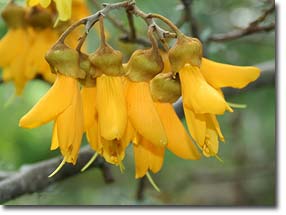
Flowers of the leguminous tree, Kowhai,
the national flower of New Zealand

Nitrogen fixation is a pattern of nutrient cycling which has successfully been used in perennial agriculture for millennia. This article focuses on legumes, which are nitrogen fixers of particular importance in agriculture. Specifically, three legumes (nitrogen fixing trees, hereafter called NFTs) are especially valuable in subtropical and tropical permaculture. They can be integrated in a permaculture system to restore nutrient cycling and fertility self-reliance.

On unvegetated sites, "pioneer" plants (plants which grow and thrive in harsh, low-fertility conditions) begin the cycling of nutrients by mining and accumulating available nutrients. As more nutrients enter the biological system and vegetative cover is established, conditions for other non-pioneering species become favourable. Pioneers like NFTs tend to benefit other forms of life by boosting fertility and moderating harsh conditions.

Nitrogen fixing trees are often deep rooted, which allows them to gain access to nutrients in subsoil layers. Their constant leaf drop nourishes soil life, which in turn can support more plant life. The extensive root system stabilises soil, while constantly growing and atrophying, adding organic matter to the soil while creating channels for aeration. There are many species of NFTs that can also provide numerous useful products and functions, including food, wind protection, shade, animal fodder, fuel wood, living fence, and timber, in addition to providing nitrogen to the system.

Craig Elevitch is based in Hawaii and has been working for island resource self-sufficiency since 1989. He directs Agroforestry Net, a nonprofit educational organization dedicated to empowering people in agroforestry and ecological resource management. The organization’s internationally recognized publications have guided thousands of readers in becoming more proficient in ecological food production, agroforestry, and permaculture. Craig edits The Overstory, a monthly agroforestry journal with over 8,000 subscribers in 185 countries. His books include Agroforestry Guides for Pacific Islands (2000), The Overstory Book: Cultivating Connections with Trees (2004), and Traditional Trees of Pacific Islands: Their Culture, Environment, and Use (2006), all of which promote diverse agricultural systems that produce abundant food and other resources. Further information and free downloads at Agroforestry.net.

Read the rest here...

Friday, January 2, 2009

Permaculture Mediacology

Bridging media literacy with ecoliteracy, Mediacology seeks to redefine media education so that it harmonizes with ecological design principles.

Traditional media literacy models are mostly left-brained, inherited from the legacy of alphabetic literacy, the Gutenberg press revolution, and industrial mass media production. New digital media radically alter the environment. Their nonlinear, multisensory, field-like properties are more right brain oriented. Consequently, rather than focus exclusively on deconstructing the products of design objects (such as an advertisement “text”), digital learning should respond to the design of the system itself, including cultural and cognitive bias.

Mediacology proposes a design-for-pattern approach called “Media Permaculture,” which restructures media literacy to be in sync with new media practices connected with sustainability and the perceptual functions of the right brain hemisphere. In the same way that permaculture approaches gardening by establishing the natural parameters of its ecological niche, Media Permaculture explores the individual’s “mediacological niche” in the context of knowledge communities. By applying bioregional thinking to the symbolic order, Media Permaculture redresses the standard one-size-fits-all literacy model by taking into account diverse cognitive strategies and emerging convergence media practices.

Drawing on his extensive experience as a grassroots mediamaker and time spent teaching media at Native American schools, Antonio Lopez applies a practical knowledge of alternative media, crosscultural communication and ecology to build a meaningful theory of media education.

Media Permaculture